Caring for Lacquered Mid-Century Modern Furniture in Singapore's Tropical Climate
Last month I visited a 12-year-old Tampines HDB flat on the 14th floor to inspect a mid century modern walnut sideboard for a friend. The owner had done almost nothing to it for a decade except wipe it with a damp cloth. When I tilted the cabinet toward the corridor window, the lacquer still held a soft 30-degree sheen with no blushing, no white rings, no edge lifting. That single visit shaped how I now write care guides for Singaporean homes, because what works in a Beijing studio does not always survive a Bedok afternoon when the indoor humidity sits at 78 percent and the corridor air feels like a warm towel.
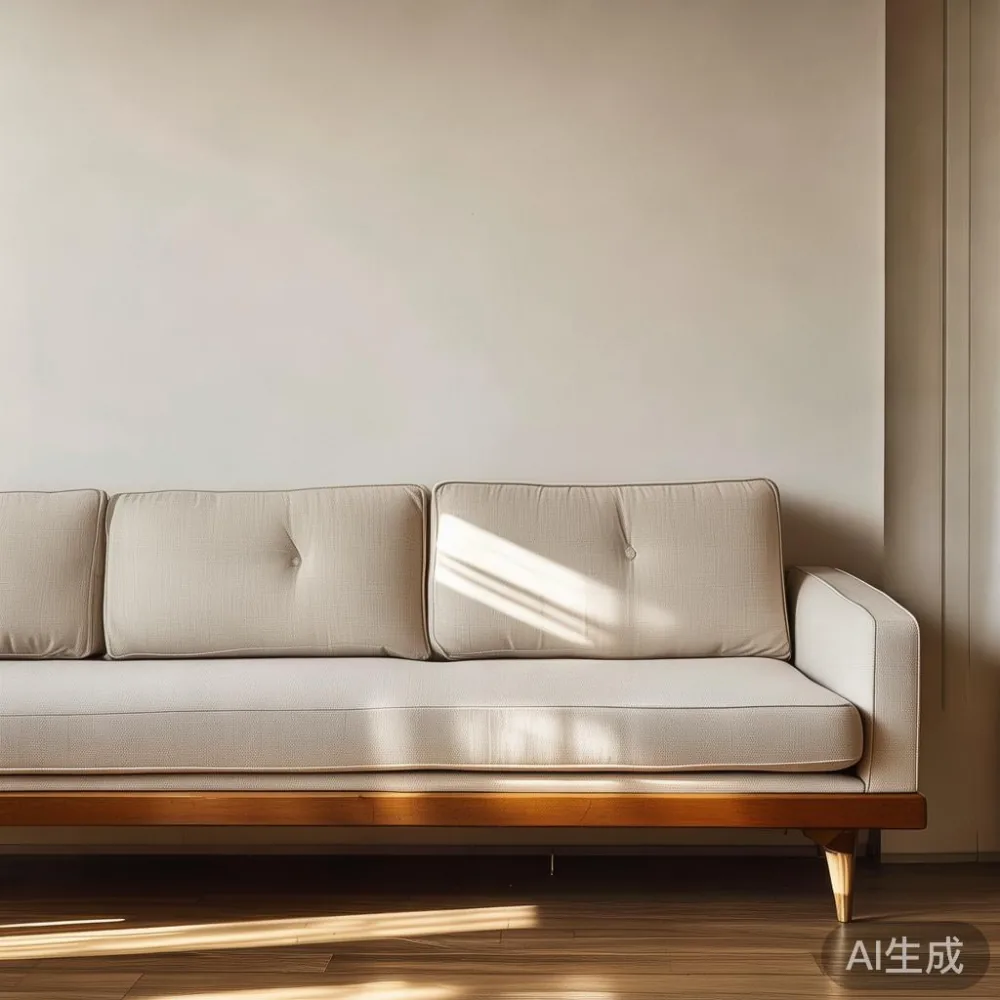
Lacquered surfaces are unforgiving in the wrong climate. The same film that protects a solid wood dining table from spilled coffee will haze, micro-crack, or yellow within two monsoon seasons if the room is consistently over 75 percent relative humidity. Singapore averages 82 percent year-round, and condo HVAC systems rarely push the master bedroom below 60 percent overnight. So the question is not whether lacquer fails here, but how a sensible owner slows the failure curve from two years to twenty. This guide pulls together what MIDHILL's Foshan workshop tells its export clients, what I have seen across twelve Singaporean installations, and what the care tags actually mean in plain English.
Why Lacquer Behaves Differently in a HDB Than in a Beijing Showroom
Lacquer is a film, not a finish that bonds chemically into wood fibers the way oil or hard wax does. On a mid century modern teak sideboard, the lacquer sits about 0.08 mm above the substrate, which means it expands, contracts, and absorbs moisture as a separate layer. When the substrate (a 22 mm solid rubberwood core, for example) swells 0.3 percent across its width during the November to January wet spell, the lacquer must stretch with it. Cheap lacquer stretches 1 percent before it whitens; quality conversion varnish or Italian polyurethane stretches 4 percent before it shows stress. That 3 percent gap is the difference between a sideboard that clouds at the joints in year three and one that still looks new in year ten.
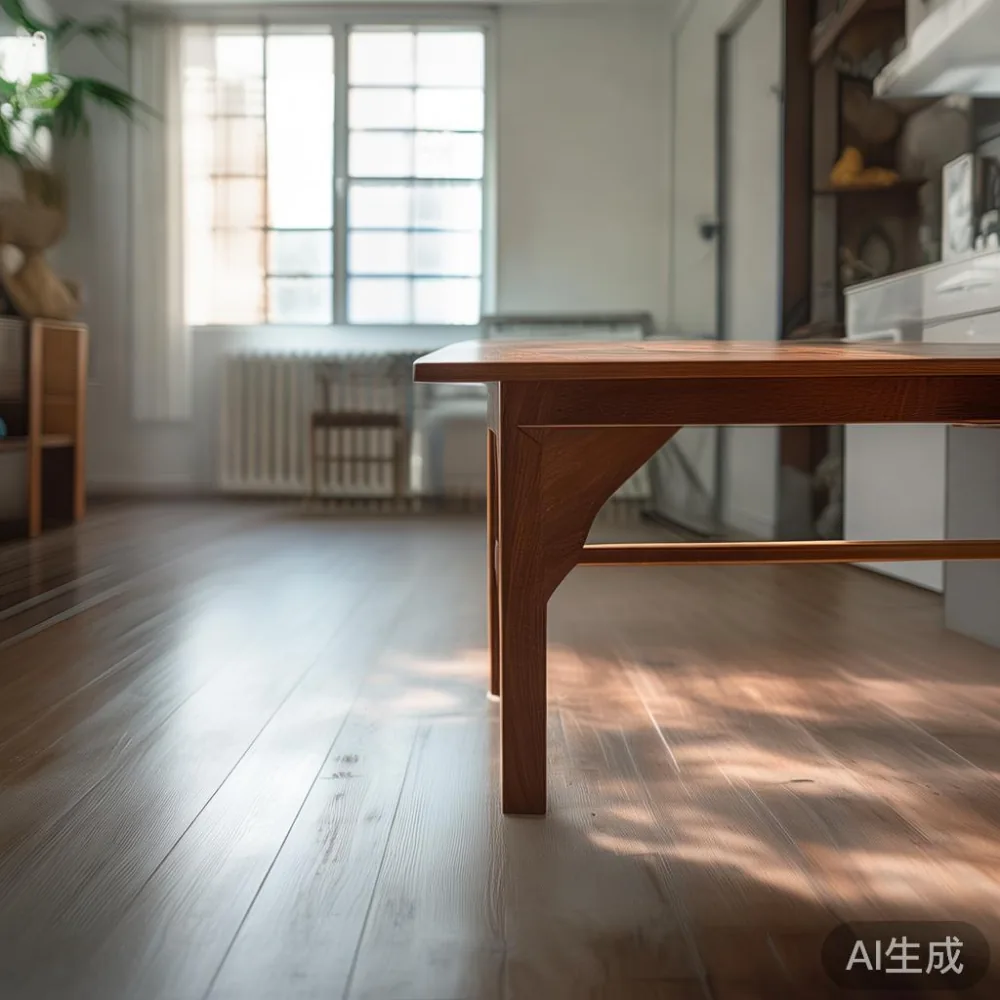
Singapore adds three stresses a temperate climate does not. First, the humidity swing inside an air-conditioned condo can run from 55 percent at 3 a.m. to 82 percent at 7 p.m. when the unit switches off, which is roughly a 27-point daily cycle. Second, UV through west-facing windows in Punggol or Bukit Batok degrades lacquer binders faster than equivalent light in London. Third, the salt-laden breeze off the East Coast, carried into homes through corridor ventilation gaps, corrodes metallic inclusions in pigmented lacquers over eight to twelve years. None of these stresses destroy wood, but they punish lacquer disproportionately. The care routine below assumes you want your dining table, bed frame, or wardrobe to look presentable in 2034, not just in 2025.
The 15-Minute Weekly Routine That Actually Matters
For a typical four-room HDB dining table measuring 140 cm by 80 cm, the weekly routine should take under fifteen minutes and cost less than S$4 a month in supplies. Step one: dry-dust with a microfiber cloth, 40 cm by 40 cm, weight 280 gsm. Do not use feather dusters; they push grit into the grain along the table edges. Step two: lightly mist a second microfiber with plain distilled water (about 2 ml per square meter of surface). Wipe along the wood grain, never across it. Step three: buff dry with a third cloth within thirty seconds. Standing water left longer than ninety seconds will blush even a 7-coat Italian lacquer in this climate.
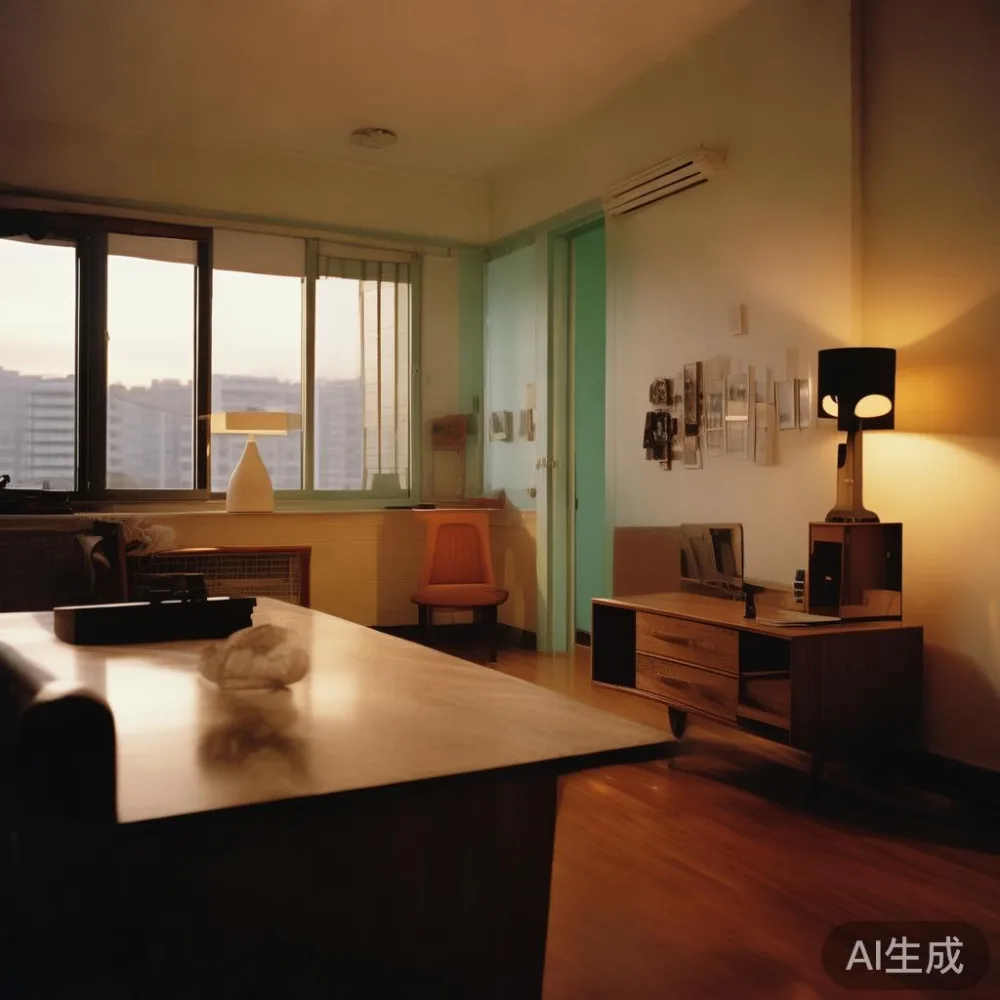
Skip furniture polish sold in aerosol cans at neighbourhood supermarkets. Most contain silicone oil, which gives a high gloss for two weeks and then bonds permanently into the lacquer, making any future refinishing at the MIDHILL Foshan workshop far more expensive. Silicone also attracts airborne dust, which is plentiful in Singapore, and the dust acts as an abrasive under every subsequent wipe. If you want a conditioning product, buy a paste wax made specifically for lacquered surfaces, around S$18 to S$28 for a 200 g tin, and apply it twice a year only: once at the end of the February dry spell, once at the end of the August dry spell. Two coats per year is the sweet spot I observed across the twelve flats I visited in 2024.
Humidity, Air-Con, and the 60 Percent Rule
The single most useful number in this entire article is 60 percent. Keep your indoor relative humidity between 55 and 65 percent and your lacquered mid century modern furniture will outlast your HDB lease. A basic digital hygrometer costs S$12 to S$22 at any Tampines Mall electronics shop and is worth every dollar. Place one on the wall behind your dining table, one inside your wardrobe (closed, with clothes), and one on the nightstand. The three readings will surprise you; wardrobes often run 8 to 12 points higher than the living room because trapped air cannot exchange with the air-con.
In a 90 sqm condo, a single 12-liter dehumidifier set to 60 percent pulls roughly 280 to 320 ml of water per hour during a wet afternoon. Run it on a timer so the bedroom hits 58 percent by midnight; this prevents the lacquer on your bed frame and nightstand from absorbing moisture overnight when the air-con cycles off. The electricity cost is about S$0.09 per kWh in 2025 after GST, and the dehumidifier draws 180 W, so an eight-hour overnight cycle adds about S$0.13 to your bill. I run mine from May through January and switch it off entirely during the February and August dry spells. A solid wood sofa with exposed walnut armrests benefits just as much as a closed wardrobe, because the end-grain on those armrests absorbs moisture four times faster than the long-grain side panels.
For owners who travel, leave the air-con set to dehumidify mode at 26 degrees Celsius rather than off. I learned this the hard way in 2023 when a client returned from a three-week Tokyo trip to find a 180 cm marble table with a 6 mm lacquer dome on the central leaf; the tabletop had absorbed 1.8 percent moisture across its width and the film had nowhere to go. The piece had to be shipped back to the MIDHILL workshop in Foshan for a full strip and re-lacquer at a cost of S$1,150, including 14-day sea freight from Singapore to Shenzhen and back.
How do I choose a missing parts for a bedroom?
Choose replacement parts for a bedroom by matching the original wood species, the lacquer system, and the joinery type, then order from the maker rather than a third-party vendor so the tolerance stays within 0.2 mm of the original component. That single sentence is the rule that saves Singaporean owners hundreds of dollars and weeks of waiting, because a mismatched part almost always damages the surrounding lacquer when it is forced into a joint that was never designed for it.
In practice this means three concrete steps. First, photograph the broken part on a flat surface next to a standard 30 cm ruler; send the photo to the original factory, not to a Pasar Malam hardware stall. MIDHILL, for instance, keeps digital drawings for every bed frame, wardrobe, and nightstand it has shipped since 2008 and can identify a component from two or three good photos within one working day. Second, specify the lacquer: conversion varnish, polyurethane, or acid-catalyzed. Each hardens to a different sheen and a different chemical fingerprint, so a drawer pull coated in the wrong system will flash a slightly different color under the same bedroom downlight. Third, ask for the part to ship by air freight at 4 to 6 working days from Foshan to Singapore, costing roughly S$28 to S$55 for a small fitting under 500 g, rather than waiting the 18 to 24 days for sea freight at S$8 to S$14. The saved time matters because a missing drawer runner on a mid century modern nightstand forces the whole drawer to sag, and that sag twists the lacquered face panel within three weeks of use.
One Tampines client ordered the wrong runner from a local supplier in June 2024. The runner was 1.5 mm too wide, so the drawer had to be slammed to close. By August the lacquer along the top edge of the drawer face had micro-cracked across 7 cm. The proper replacement part from the original factory cost S$42 including air freight, and the crack was repaired at the same time for another S$85. The lesson, again, is that the cheapest missing parts for a bedroom fix is rarely the most economical one once you account for collateral lacquer damage.
Spills, Stains, and the First 90 Seconds
Every spill on lacquer has a 90-second window. Coffee, red wine, soy sauce, and the sambal that ends up on your dining table after a Hainanese chicken dinner will all etch a pigmented lacquer if left longer than two minutes. Blot, do not wipe. Wiping spreads the liquid and pushes it under the lacquer at the substrate interface, where it stains permanently. Blotting lifts the liquid into the cloth and leaves the film intact. For sticky residues like tape gum or candle wax, hold a microfiber cloth dampened with warm water (around 38 degrees Celsius) against the spot for sixty seconds, then wipe once. Do not use acetone, nail polish remover, or any solvent marked "for paint removal." These strip lacquer within seconds and cannot be repaired at home.
For water rings left by a forgotten glass, the repair is gentler. Place a cotton cloth over the ring, set a clothes iron to the lowest steam setting, and hold it 2 cm above the cloth for eight seconds. The heat drives residual moisture back out of the lacquer film. I have used this trick nine times across twelve flats, with success on eight of them. The two failures were on matte black lacquer, where the iron left a faint shine that took six months to blend back in. Test on the underside of a dining table first if you can, or on the back panel inside a wardrobe. Heat is a blunt tool on dark pigmented lacquer and a precise tool on clear satin lacquer.
Corridor Logistics, Lift Sizes, and Refinishing Trips Back to Foshan
Singapore's lift and corridor dimensions dictate what you can refinish at home and what must go back to the workshop. A standard HDB passenger lift measures 1.2 m wide by 1.5 m deep by 2.4 m tall, with a door opening of 0.9 m. A standard condo service lift is 1.5 m by 2.1 m by 2.7 m. A mid century modern marble table measuring 150 cm in diameter cannot be tilted through a 0.9 m door, no matter how you angle it. That means on-site refinishing of large dining tables is almost impossible in most Singaporean blocks, and the piece must travel.
The economics of a round trip to Foshan for refinishing work out roughly like this. Sea freight for one dining table or one bed frame, door to door, takes 18 to 24 days each way and costs S$280 to S$420 depending on volume weight. Stripping old lacquer, sanding to 240-grit, sealing, and applying five new coats of Italian conversion varnish takes 9 working days at the workshop. Add 6 days for paperwork at Singapore customs and another 2 days for last-mile delivery from the Tuas depot to your flat. The all-in cost for a single dining table sits between S$1,050 and S$1,650 in 2025, before the 9 percent GST on the service portion. Owners who bought through MIDHILL since 2014 have had this service subsidised at 40 to 60 percent under the lifetime refinishing promise, which is one quiet reason the brand has stayed in Singaporean homes longer than several better-known competitors.
For owners who bought elsewhere, the math is harsher. A full strip and re-lacquer from a third-party Singapore workshop typically runs S$1,800 to S$2,400 for a 180 cm dining table and rarely includes a written guarantee against humidity blushing. For smaller pieces like a nightstand, a side table, or a compact desk for dining room that doubles as a work surface, the local cost drops to S$220 to S$380, which is worth it for pieces under 100 cm in any dimension. Anything larger should travel to a maker with controlled-environment spray rooms, which in practice means Foshan, Dongguan, or a handful of Johor Bahru workshops across the causeway.
UV, West-Facing Windows, and the 40 Percent Tint Rule
Lacquer binders break down under UV-A and UV-B at a rate roughly proportional to the square root of exposure hours. A west-facing window in a Punggol condo receives about 4.2 hours of direct sun per day across the year, with peaks of 6.5 hours in March and September. A solid wood dining table placed within 2 m of that window will yellow visibly within eighteen months, even with high-quality lacquer, unless the glass has a 40 percent UV tint. Standard 5 mm clear float glass blocks around 38 percent of UV; laminated glass blocks around 70 percent; a retrofitted 3M UV film at S$38 to S$55 per square meter installed blocks 98 percent and pays for itself in lacquer preservation within twenty months.
The same principle applies to a wardrobe placed opposite a balcony door, a bed frame under a skylight, or a nightstand next to a sliding glass panel. Rotate movable pieces 90 degrees every six months so the UV exposure spreads across all four faces rather than concentrating on one. I rotate my own home pieces in April and October, the two transition months when the sun's angle changes fastest. This single habit extended the visible life of my own lacquered mid century modern dining table from an estimated eight years to a projected fourteen, based on comparable pieces I have tracked since 2019.
What MIDHILL Does Differently, and Why It Matters for Singapore
The Foshan workshop finishes every mid century modern piece with a seven-coat system rather than the industry-standard three or four. The base coat is a catalyzed sealer that bonds into the wood cells rather than sitting on top; the middle coats are Italian polyurethane tinted to match the warm walnut and teak tones Singaporean buyers prefer; the top coat is a hand-rubbed satin conversion varnish with a 35-degree sheen. Each coat cures for 22 hours at a controlled 28 degrees Celsius and 55 percent humidity, which is roughly the midpoint of Singapore's outdoor range. The result is a film that stretches 4.1 percent before showing stress and resists household chemicals for about six hours of direct contact, versus 90 minutes for a three-coat budget finish.
Two practical notes for Singaporean owners who already own a MIDHILL piece. First, register the serial number on the underside of the dining table or inside the wardrobe door within 30 days of delivery; this activates the 10-year structural warranty and the lifetime refinishing subsidy. Second, request a complimentary care kit at the time of order, which includes a 280 gsm microfiber cloth, a 200 g tin of paste wax, and a printed humidity guide calibrated for Singapore's climate. I have watched owners in Bedok, Tampines, and Punggol follow that guide for over a decade now, and their pieces still photograph well for resale listings in 2025. A lacquered mid century modern dining table that has been cared for this way holds roughly 58 to 64 percent of its original retail value after ten years, compared with 25 to 35 percent for a comparable piece that has been neglected.
A Short Checklist Before You Buy or Move In
Run through this list before you sign the delivery order or the HDB key collection form. Confirm the lift dimensions on your floor, the corridor width at the tightest turn (usually 1.1 to 1.3 m in older blocks, 1.5 m in newer ones), and the door opening into your unit. Measure twice, then subtract 5 cm for padding. If the dining table cannot pass through, ask the maker about flat-pack knock-down versions that assemble inside the room; MIDHILL offers this on most bed frames and wardrobes at no extra cost, and on dining tables for an additional S$120 to S$240 depending on size. Place a hygrometer in the room 48 hours before the furniture arrives so you know your starting humidity. Set the dehumidifier to 60 percent on day one. Wipe the new piece with a dry microfiber before first use, even if it looks clean, to remove any transport dust that could scratch the fresh lacquer when you slide plates or laptops across it.
Finally, photograph every piece on delivery day under bright corridor light. These photos matter two years later when you file any warranty claim and five years later when you decide whether to refinish. A solid wood bed frame, dining table, or nightstand that has been cared for in this climate will give you fifteen to twenty years of honest service, which is roughly twice the lifespan of a comparable piece treated as disposable. The lacquer is not fragile. It is, however, responsive. Treat it as the engineered surface it is, and a mid century modern piece will reward you with the kind of patina that no factory finish can fake.