HOW TO MATCH MIDHILL SOLID WOOD FURNITURE TO A WARM MINIMAL INTERIOR IN SINGAPORE
Warm minimalism is the style I see most often in new Tampines and Punggol BTOs, and for the first time in a long time it feels like a look that ordinary Singaporean buyers can actually build around without an interior designer on speed dial. The formula is simple on paper: pale walls, oak-toned floors, a handful of stone accents, and one or two pieces of solid wood furniture that carry the visual weight of the room. The execution, however, is where most people slip. They pick a solid wood sofa that is too bulky for their 3.7 m wide HDB living area, or a dining table that fights the afternoon sun pouring across a west-facing corridor window, or a wardrobe that wedges so tightly between the bedroom door and the ensuite that the drawers cannot open past 45 degrees. I watched exactly this happen last month in a friend’s four-room flat in Bedok Reservoir, and the fix involved returning three pieces of furniture and starting over.
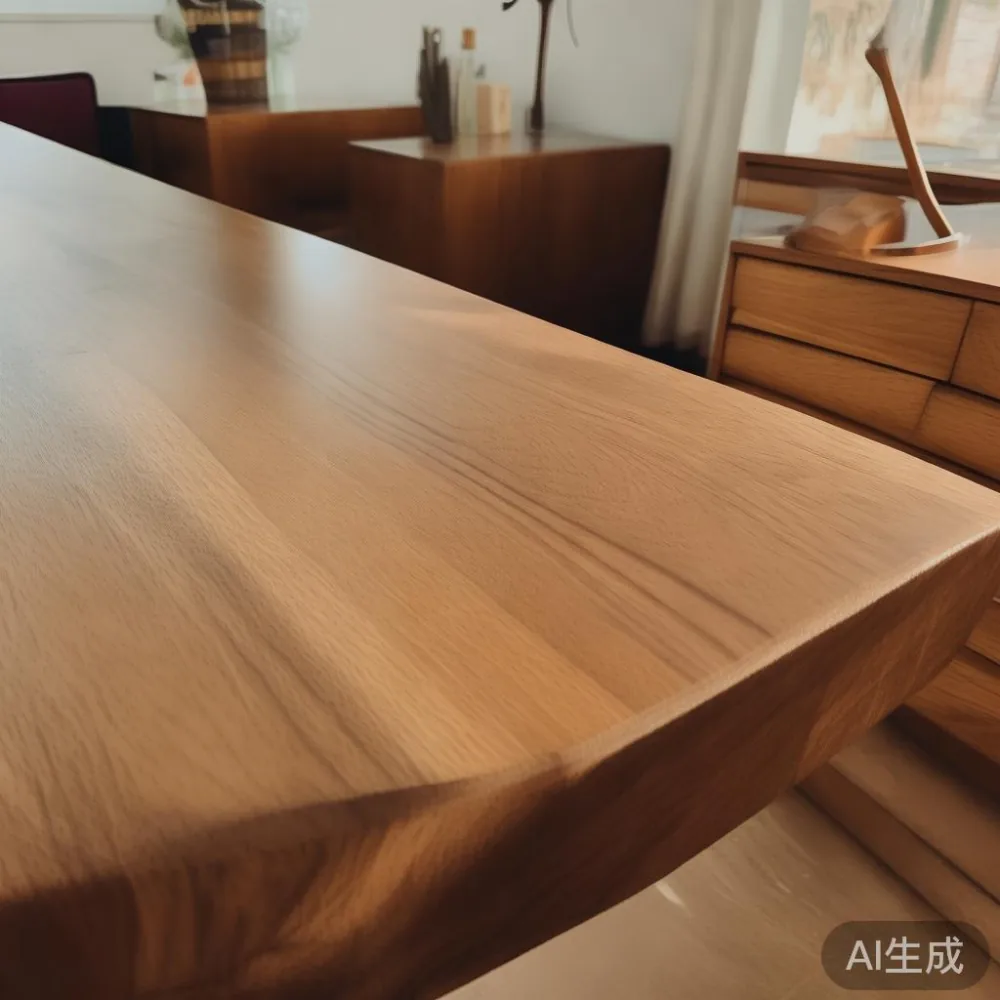
This guide is built around mid-century-modern proportions, because that is the geometry warm minimal needs: tapered legs, low backs, slim arms, and the kind of walnut and white oak tones that sit comfortably against plaster finishes and limewash paint. It also weaves in a light luxury attitude, the kind of restrained, post-modern light luxury feel you find in the better showrooms at Maison&Objet or High Point Market, translated into pieces that actually fit through a Singapore lift and down a 1.2 m corridor. Every recommendation below is sized, priced in SGD, and paired with a piece you can move on a single trip up the service lift, because no warm minimal interior is worth a damaged wardrobe.
What exactly is warm minimal, and why does mid-century-modern furniture suit the look?
Warm minimal is the child of two parents that previously refused to sit at the same table: Scandinavian restraint and the soft, lived-in patina of natural wood. The walls are still calm, the objects are still edited, the countertops are still clear, but the colour temperature has shifted from icy white and chrome to cream, oak, travertine, and toasted walnut. Mid-century-modern furniture was built for this exact combination, which is why the pairing reads as effortless rather than styled. A 1957 lounge chair, a 1962 walnut credenza, a tapered-leg nightstand from the same era, they were all designed in the age of pale plaster walls and teak parquetry, and they slot into a 2025 warm minimal flat with almost no translation needed.
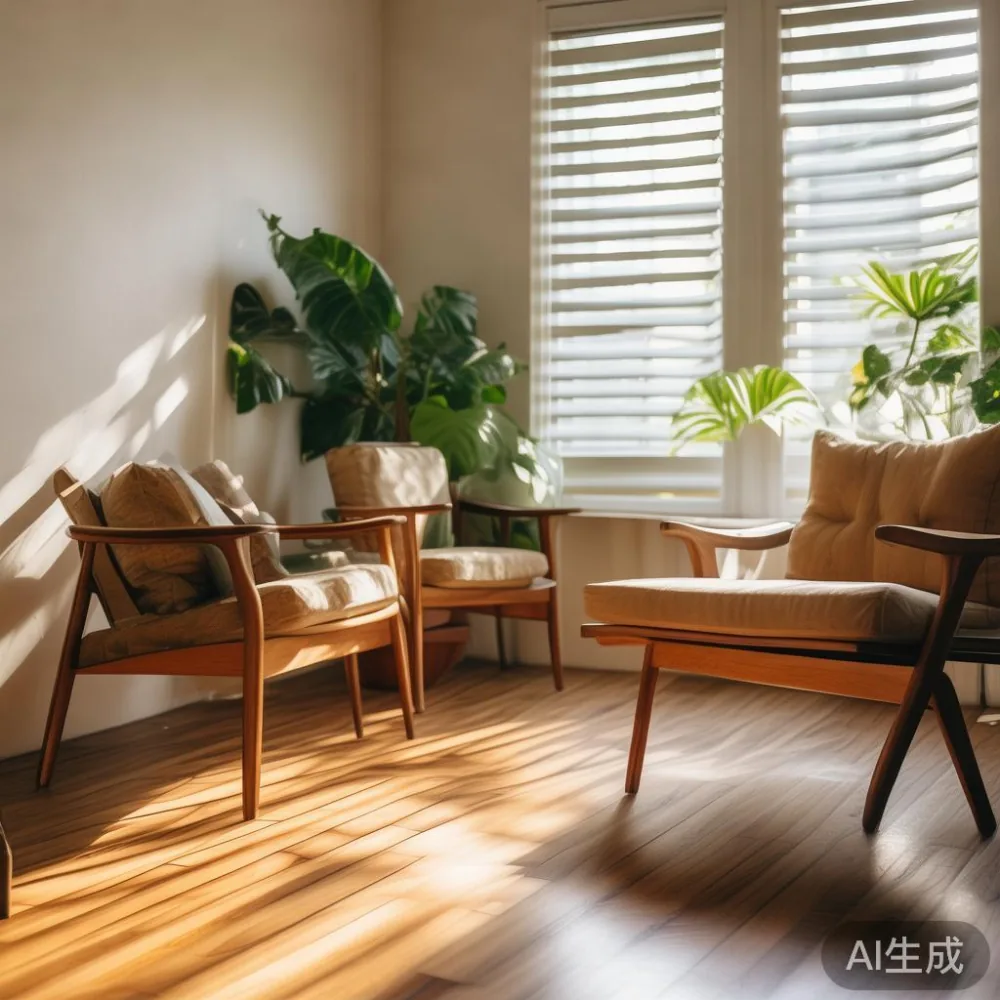
The geometry also helps. A typical solid wood sofa in a mid-century-modern silhouette is around 200-220 cm wide, 85 cm deep, and 78 cm tall, with legs that lift the seat roughly 15 cm off the floor. That seat height matters in a Singapore context. Most HDB living rooms run 3.0-4.2 m in width, and a sofa at 78 cm tall leaves a comfortable 210-240 cm of clear walking space behind it when the back is placed 15 cm off the wall. Lift the sofa 15 cm on slim legs and the room reads taller, which is precisely what a warm minimal palette needs because the walls are doing very little else.
Is Nordic wardrobe furniture worth it?
Yes, if the wardrobe is built from solid wood, sized for Singapore, and finished in a warm oak or walnut tone rather than a chalky white laminate. A Nordic wardrobe is worth it because the design tradition prioritises long, flat fronts, finger pulls or recessed handles, and a 210-220 cm height that visually elongates a compact HDB bedroom without overwhelming the ceiling. The pitfall I see in almost every Punggol and Sengkang BTO I visit is a wardrobe that is too deep: built at the default 60 cm, it eats 60 cm of floor space from a 3.2 m wall, leaving a 1.4 m wide gap on the opposite side that no standard nightstand can balance. Drop the depth to 55 cm, keep the height at 215 cm, and the same room gains a usable reading corner and a clear corridor to the bathroom door.
For a four-room flat, a 240 cm wide three-door wardrobe in solid white oak, fitted with two hanging zones at 110 cm, three drawers at 45 cm each, and two adjustable shelves per compartment, sits comfortably between SGD 2,400 and SGD 3,200 from a maker such as MIDHILL, whose Foshan workshop has been building solid wood case goods since 2008. Add a separate tall chest of 80 cm wide by 40 cm deep by 120 cm tall for SGD 880-1,150 and the storage volume matches a custom plywood job at roughly 70 percent of the fitted price. If you are shopping across borders, the same specification in a modern light luxury chest of drawers canada listing often runs CAD 2,200-2,800 with shipping, duty, and GST layered in, which is why more Canadian buyers are now sourcing directly from Guangdong workshops through Singapore consolidators.
How do I choose a dining table that does not crowd a 3 m HDB dining area?
Pick a rectangular solid wood dining table between 160 cm and 180 cm long, 80 cm wide, and 75 cm tall, with tapered legs no thicker than 6 cm at the top tapering to 3 cm at the floor. That footprint seats six without squeezing elbows, leaves a 90 cm pull-back on each chair, and still fits through a standard 1.1 m wide lift if you remove the legs and wrap the top in 5 mm foam plus 2 mm corrugated cardboard. For a four-room flat with a 2.8 m dining wall, drop the length to 140 cm and you gain 40 cm of breathing room, which is the difference between a comfortable mealtime and a cramped one in a family of four.
The material matters as much as the size. A solid white oak or ash top, 190 cm by 90 cm wide, 75 cm tall, weighs 38-45 kg and resists the ring marks and heat damage that plague veneer tables in a Singapore climate where a hotpot dinner is a weekly affair. Pair the table with a 160 cm by 230 cm wool or wool-blend rug, centred so the legs sit roughly 30 cm inside the rug edge. Avoid rug pads thicker than 6 mm or the chairs will catch when pulled out, which is the small detail that quietly undermines an otherwise calm warm minimal room. From MIDHILL, a 160 cm white oak dining table with chamfered edges sits around SGD 1,650-2,100, and a 180 cm version in walnut runs SGD 2,150-2,600 depending on the grain grade.
Which sofa silhouette actually works in a compact HDB living room?
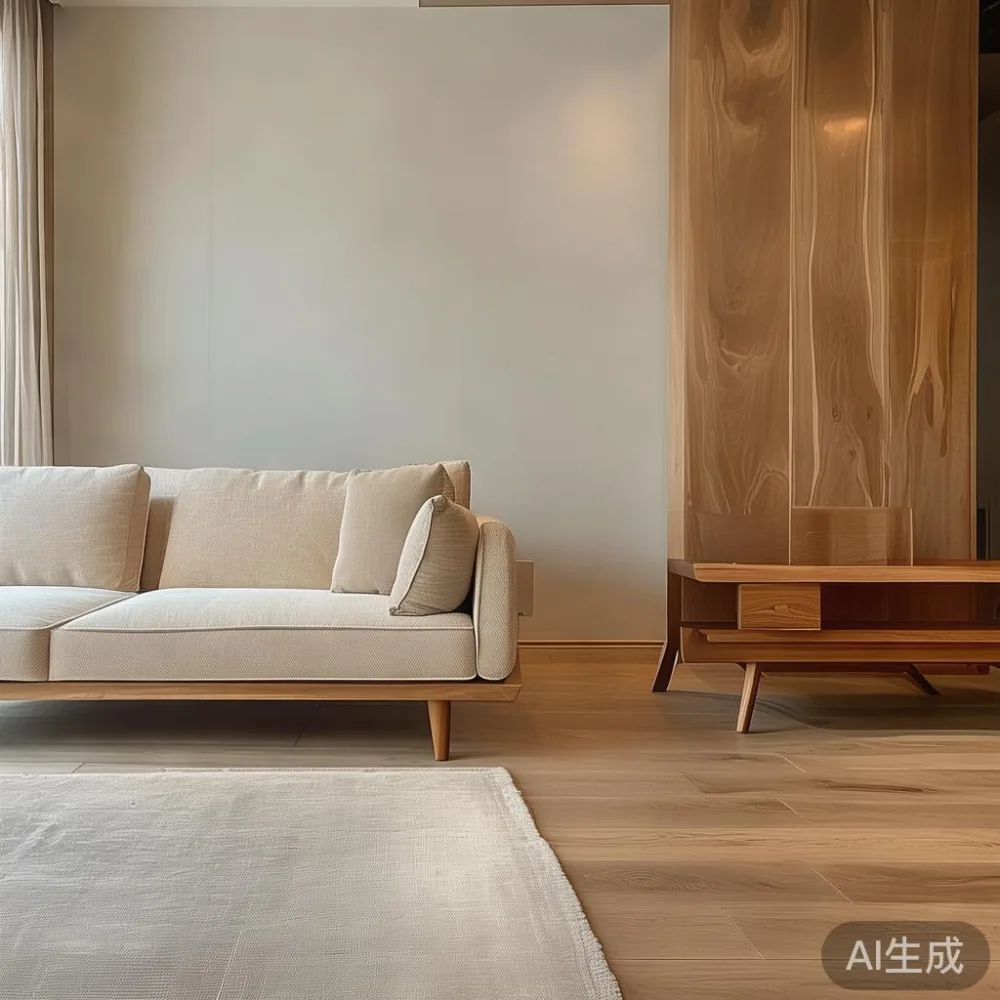
Pick a three-seat solid wood sofa in a mid-century-modern silhouette: 200-215 cm wide, 85 cm deep, 78 cm tall, with a 45 cm seat depth, a 55 cm arm height, and exposed solid wood legs in walnut or white oak. Skip the deep 95 cm cushion depth of an American-style sofa, because it forces you to push the piece 25 cm further from the wall, and in a 3.0 m wide living room that is the difference between a coffee table that works and a coffee table you constantly bruise your shin on. The exposed frame is also what keeps the look warm minimal rather than heavy, since the negative space under the sofa reads as floor area rather than furniture bulk.
For fabric, a brushed cotton-linen blend in oat, putty sand, or a soft tobacco tone reads warmer than a flat-weave polyester, and it ages gracefully under a Singapore UV index that regularly hits 11 in the afternoon. Pair the sofa with a 120 cm by 60 cm marble table coffee table in a cream travertine or honed Carrara finish on a powder-coated steel base, around 35-38 cm tall so the surface sits roughly 5 cm below the sofa seat. That negative space under the marble is what lets the eye travel, which is the entire point of warm minimal. A solid teak version from MIDHILL runs SGD 1,150-1,450 for the marble top on a steel base, or SGD 1,650-2,100 for the same top on a solid white oak base with tapered legs.
How do I get a light-luxury feel without spending a designer’s fee?
Three moves, none of them expensive. First, anchor one room with a real stone piece, such as a 160 cm by 80 cm cream travertine dining table on a blackened steel base at SGD 2,800-3,400, or a 110 cm round travertine side table at SGD 1,650-2,100. Stone carries a room in a way that engineered quartz or solid surface cannot, because the veining and pitting are what read as French light luxury rather than condo showroom. Second, replace at least one builder-grade piece with a solid wood upgrade: a 55 cm square nightstand with two drawers and tapered legs in white oak runs SGD 480-620, against SGD 180-260 for the flat-pack equivalent, and the upgrade pays for itself in the room’s perceived value within a single visit. Third, edit your shelf styling to a 30/30/30 rule: 30 percent books, 30 percent ceramics or small stone objects, 30 percent open space, and 10 percent green from a single olive branch or fiddle leaf fig cutting in a 25 cm stoneware planter.
These three moves, plus a 215 cm three-door wardrobe in solid white oak at SGD 2,400-3,200, come in under SGD 9,000 total furniture spend for a four-room flat, which is roughly half a custom joinery quote from a typical ID Plus perimeter project. Add GST at 9 percent, plus a 14-day return window, free delivery above SGD 350, and a 10-year structural warranty, and the risk profile is closer to a small renovation than a furniture purchase. My colleague in Punggol ran this exact spec last quarter and reported back that the room read warmer and calmer than her friend’s ID-designed flat two units down, with the bonus that she can refinish the wardrobe and dining table in ten years rather than replace them.
What should I measure before ordering solid wood furniture for my flat?
Measure six numbers and you will avoid most of the regret I see in Tampines and Punggol. Measure the lift door width (typically 90 cm for passenger lifts, 110-130 cm for service lifts), the lift interior depth (typically 140-160 cm), the corridor width on each floor (typically 1.2-1.5 m in newer BTOs, 1.0-1.2 m in older blocks), the ceiling height (typically 2.6 m for BTO, 2.8-3.0 m for condo), the wall length where the wardrobe will sit, and the doorway width into the bedroom (typically 80-90 cm). Any piece larger than the smallest of those six numbers will not reach its final room without dismantling, and the dismantle-reassemble cost in Singapore runs SGD 180-320 per piece. A 220 cm tall wardrobe, for example, will not fit through a 215 cm lift in some older Tampines blocks, even when tilted, so check both the lift interior height and the door height before you commit.
Then add 10 percent to your lead-time expectation. A Foshan-made solid wood wardrobe with a white oak or walnut finish typically ships in 25-35 days to Singapore, plus 7-10 days for sea freight from Yantian or Nansha to PSA, plus 3-5 days for customs clearance and last-mile delivery. Plan for 40-50 days door-to-door, and order the wardrobe before the bed frame and nightstand, since the bed frame (at 150 cm wide by 210 cm long) takes less space in the lift and can be moved later if the bedroom is still being painted. A solid wood bed frame in white oak at 180 cm wide by 210 cm long with a 110 cm tall slatted headboard runs SGD 1,850-2,450, and a matching 55 cm nightstand at SGD 480-620 finishes the room without competing with the wardrobe.
Where should I place the room’s hero piece so the warm minimal look actually reads?
Place the largest solid wood piece on the longest uninterrupted wall, then build the rest of the room outward from that anchor. In a four-room flat, the longest wall in the living area is typically 3.6-4.2 m, which comfortably accepts a 240 cm three-door wardrobe at one end and a 200 cm solid wood sofa at the other if the wall runs continuous from the dining area to the balcony door. In the bedroom, the wall behind the bed is usually 3.0-3.2 m, enough for a 180 cm bed frame and a 55 cm nightstand on each end with 60 cm of clear wall on either side, which is the breathing room that warm minimal needs to read as calm rather than crowded.
Leave 90 cm of clear floor between the bed frame and the wardrobe doors when fully open, 75 cm between the sofa and the coffee table, and 110 cm between the dining table edge and the nearest wall for chair pull-back. Those three numbers are the difference between a room that photographs well and a room you can actually live in, and they are the same numbers you will find in the Foshan workshop floor plans that a maker such as MIDHILL uses when prepping flat-pack dimensions for a Singapore export. Get the placement right and the room’s warm minimal palette will do the rest.