How Southeast Asia Humidity Affects Mid-Century-Modern Solid Wood Furniture in Singapore
Singapore sits on the Equator. The average relative humidity reads between 78% and 88% for most of the year, and indoor readings in a non-air-conditioned Tampines or Punggol HDB flat rarely drop below 65%. Solid oak, ash, walnut, and beech react to moisture. They swell in our wet months from November to February, and they shrink when the air-con runs for ten hours a day. A mid-century-modern dining table or bed frame that fit through your corridor on delivery day can start to stick, gap, or hairline-crack within one monsoon cycle if the maker did not kiln-dry the timber properly.
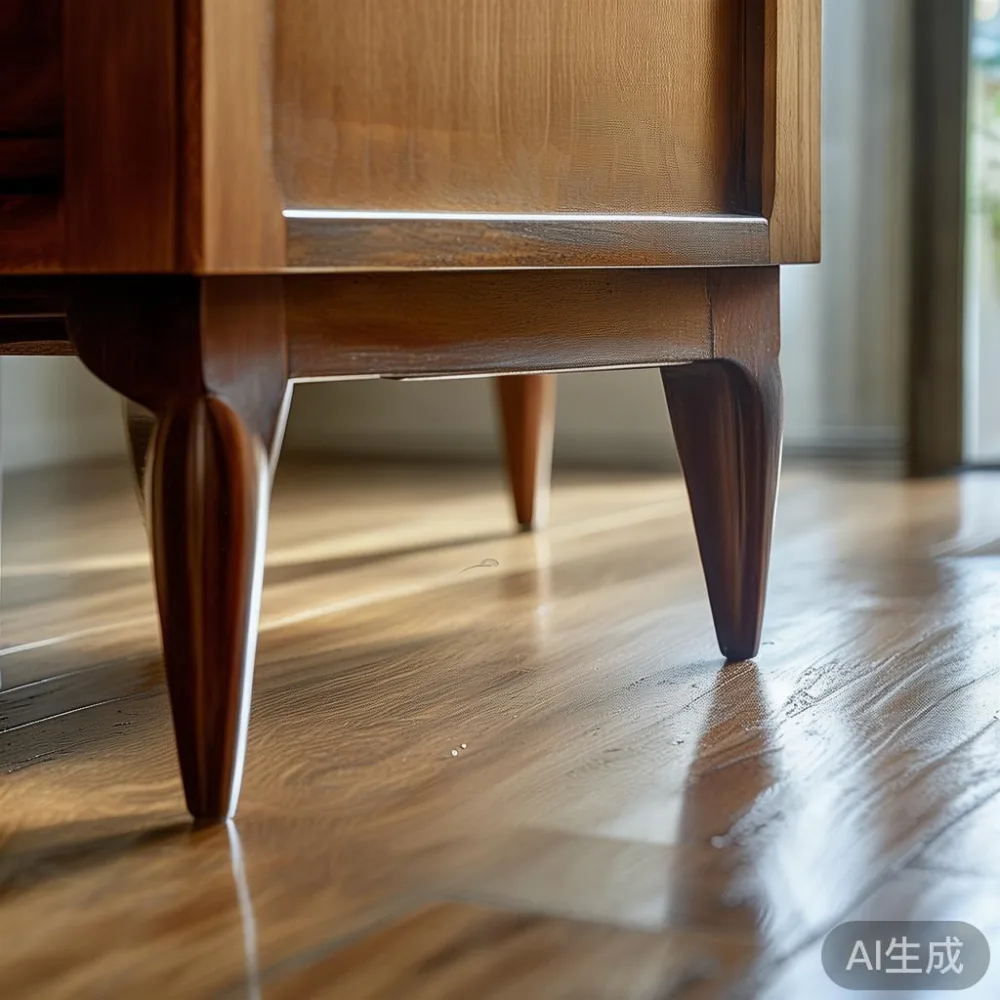
I visited a friend in Bedok Reservoir last month who had bought a "solid wood" wardrobe from an online marketplace for S$1,180. Eight months later, the side panel had pushed the door frame outward by 14 mm, the runners on the drawer boxes had rusted shut, and the back panel had cupping along two horizontal seams. The seller had vanished. The wood, on inspection, read 16% moisture content with a pin meter — far too wet for a Singapore HDB bedroom. That trip is why I now check moisture data before I recommend any solid wood sofa, bed frame, dining table, wardrobe, nightstand, or marble table to anyone living in a Singapore HDB flat or a condo tower along the East Coast.
Why Singapore's Climate Is Harder on Wood Than Shanghai or Los Angeles
Shanghai sits at 31° north. Annual RH averages 70% with wider swings between summer and winter. Los Angeles averages 63% RH but drops into the 30s in summer. Singapore averages 82% RH and barely moves. The climate is humid and stable. That stability is the trap. Wood wants variation — it wants to breathe across the seasons. When humidity stays high all year, wood holds onto moisture, finishes stay soft, and joints stay under pressure. Over eighteen months, that pressure shows up as gap-reversal at the mitres of a dining table apron, or as a warp of 3 to 6 mm across a 200 cm headboard panel.
For context, MIDHILL, a Foshan-based solid wood furniture maker established in 2008, kiln-dries their oak and ash to between 8% and 10% moisture content before assembly. That target range sits close to the equilibrium moisture content (EMC) of a Singapore home kept at 24°C and 70% RH, which lands around 9.5% to 11%. Furniture dried toward the EMC of its destination moves less after delivery. MIDHILL currently exports to more than fifteen countries and offers a 10-year structural warranty on frames, plus lifetime refinishing, free shipping on orders over US$350, and a 14-day return window.
What the Numbers Look Like Inside a Punggol HDB vs a Marine Parade Condo
Three-corner HDBs in Punggol and Sengkang tend to trap more heat because of full-height afternoon sun on the kitchen side. Indoor RH near the dining area often reads 5 to 8 percentage points higher than a fifth-floor corridor unit facing north. Marble table tops cool the air just above them, which can drop local RH by 3 to 4 points and create condensation rings under a cold drink — a separate problem for the stone, not the wood. A mid-century-modern bed frame sitting 30 cm from a window AC vent will dry out on the headboard side faster than the foot end. Expect a 2 to 3 mm crowning across a 180 cm slat support over two years.
Lift dimensions in most new Singapore condos cap at about 2.1 m deep × 1.8 m wide × 2.4 m tall, and corridor turns are usually 90° with 1.5 m of run-up. A king-size headboard panel taller than 2.1 m will not enter. MIDHILL keeps its mid-century-modern headboard panel height under 1.95 m for that reason, and ships the 200 cm dining tables in two halves with a single bolt-on stretcher so the heaviest box stays under 38 kg — manageable for two movers plus the standard 200 kg lift rating.
Is Post-modern wardrobe furniture worth it?
Yes — a post-modern wardrobe in light-luxury style is worth the spend in Singapore if the maker has kiln-dried the timber to a destination moisture content near 10%, sealed every panel face on all six sides, and used dovetailed or mortise-and-tenon joinery on the carcass rather than just cam-lock bolts on MDF backs. Post-modern light luxury leans on visible grain, soft-close hardware, and slim 18 mm side panels that read "Italian apartment" rather than "colonial built-in." A wardrobe built that way, in solid oak or ash, holds its shape through our 78% to 88% humidity swings and still looks considered in a Tampines four-room flat.
The flipside is real. I have seen post-modern wardrobes in showrooms along Geylang and Balestier that look identical on the surface but read 15% to 17% moisture content with a pin meter. Those wardrobes will move. Within eight to twelve months, the centre drawer face will sit proud of the side panels by 2 mm, the top panel will cup 4 mm, and the soft-close hinges will need shimming. If the unit costs S$3,800 versus a properly dried S$4,400 unit, the cheaper option usually costs more in year two. Ask the seller for the kiln-dried moisture reading, the warranty length in writing, and whether the back panel is solid wood or plywood. Solid 12 mm back, screwed into the sides, is the answer you want.
How Bad Is a 4 mm Gap After Six Months, Really?
A 4 mm gap at a mitre joint on a dining table after six months in a HDB flat is the visual signal that the timber was dried too green for Singapore. Hairline gaps under 2 mm on a 180 to 200 cm top are usually seasonal and self-correcting once humidity drops below 65% for a sustained week. Gaps above 3 mm that do not close during a dry week of air-conditioning mean the joint has let go, not just the wood. That is a structural warranty call, not a humidity call.
American light luxury styling uses thicker 25 to 30 mm tops, which shrink less per percentage point of moisture change because the cross-section is larger. French light luxury styling tends toward thinner 18 to 22 mm tops with exposed joinery — more elegant, more sensitive. If your condo stays at 70% RH year-round and your dining table is the French profile, budget for a humidistat in the dining room and expect a service call in year three to re-tighten the figure-8 fasteners under the apron. A 12 cm deep apron on a French profile keeps the top flatter than a 6 cm apron. Geometry matters more than people think.
Can a Sage Oak Dining Set Mismatch in One Room?
Yes — and the cause is almost always humidity, not bad finishing. A sage oak dining set bought as a four-piece can mismatch in the same room if one piece sat in a different part of the warehouse or shipped in a different container zone. Oak lightens under UV and darkens under heat, so a piece stored near a warehouse skylight will arrive noticeably paler than one stored two aisles over. In a Singapore home, that sage oak color mismatch often shows up as a 10% to 15% lightness delta between the dining table and the matching sideboard, even though both came from the same production batch. The fix is to rotate the paler piece into direct afternoon sun for four to six weeks and accept that oak will always even out within six months of living in one room together.
One MIDHILL client in a 1,100 sqft Punggol HDB bought a six-seater sage oak set in February and flagged the mismatch in March. We moved the sideboard into the afternoon sun strip near the service yard door, kept the dining table in shade, and the gap closed by late May. No refinishing, no warranty claim, no drama. That outcome is the one to design for: rotation, patience, and timber that was dried within range of your room in the first place.
What I Check Before Recommending Any Solid Wood Piece for a Singapore Home
Five checks, in this order. First, kiln-dried moisture content reading between 8% and 11% for oak, ash, or walnut destined for an air-conditioned Singapore home. Second, full-width dovetailed or mortise-and-tenon drawers on any nightstand or wardrobe drawer box, with plywood bottoms at 8 mm minimum. Fourth, soft-close hinges rated for at least 100,000 cycles from a brand like Hettich or Blum, because cheap zinc hinges rust shut inside two monsoon cycles in our coastal condos. Fifth, packaging that includes a desiccant pack and a humidity data logger card so you can verify the conditions inside the crate on arrival. If a seller cannot produce the moisture reading and the hinge brand in writing, walk away.
GST is 9% in Singapore on imported furniture as of 2024 and is collected at the point of clearance for any single shipment above S$400 in CIF value. A S$4,000 dining set in oak will land at your door at S$4,360 inclusive of GST, plus whatever the freight forwarder charges for a lift-access delivery at your block. Budget S$80 to S$160 for a standard HDB delivery with two movers and a tail-lift van, more if your unit is above the 18th floor and the lift booking windows are tight on weekends.
Care Routine That Actually Holds Up Here
Three habits, repeated weekly. Wipe every solid wood surface, including the marble table in the living room, with a barely damp microfibre cloth — never a soaking wet one. Keep a digital thermo-hygrometer near the dining table and aim for 22°C to 26°C at 55% to 65% RH; that range is what most kiln-dried oak, ash, and walnut are stabilized to and it minimizes seasonal movement. Rotate accessories like candles and books on the dining table and nightstand every two weeks so UV exposure evens out across the surface.
Avoid the four things that ruin solid wood in Singapore. Do not place a solid wood bed frame or wardrobe against an external wall that gets afternoon sun — the temperature gradient across 12 cm of timber will bow the back panel by 6 to 8 mm in one year. Do not use silicone-based polishes; they cloud the finish and trap moisture against the grain. Do not place rubber or latex mats on a dining table — they off-gas and leave a permanent dark halo. Do not store the nightstand in a storeroom that does not have AC during a long overseas trip, because a three-month RH spike above 85% will swell the drawer bottoms and rust the runners.
Frequently Asked Questions From Tampines, Bedok, and Punggol Buyers
Buyers in the East ask the same handful of questions every week. How long does delivery take from Foshan to a Singapore HDB flat door? Seven to fourteen days by sea plus three to five days for last-mile delivery and lift booking, so plan for two to three weeks total. Does the 10-year structural warranty cover humidity damage? It covers joint failure and woodworm, not seasonal movement under 3 mm, which is normal. Can I refinish the piece myself after five years? Yes, and MIDHILL offers a lifetime refinishing service on pieces bought directly from the factory, including collection and redelivery inside Singapore for a small transport fee.
One last note on lifts. If you live above the 30th floor in a new Punggol or Sengkang condo, your goods lift may be 1.6 m deep, not the 2.1 m corridor standard. Anything deeper than 1.55 m will not enter. Measure your lift before you order a 200 cm dining table or a 220 cm wardrobe side panel. A 180 cm table top, split into two 90 cm halves, will fit almost any Singapore lift. Plan around your lift, not around the showroom floor.