Delivery and Assembly Realities When Buying Mid-Century Modern Furniture Online in Singapore
Last month I visited a friend's newly renovated 4-room HDB flat in Punggol. The living room was crisp, the kitchen finished, and propped against the corridor wall sat three flat-packed boxes from an online furniture order. The bed frame, the dining table, and the solid wood sofa all bore the same brand stamp. It took my friend, her husband, and a hired handyman the better part of an afternoon just to wrestle the dining table top through the front door. That single afternoon taught me more about online furniture buying than any showroom visit ever could.
Why buying mid century modern furniture online in Singapore is a different calculation than buying in a showroom
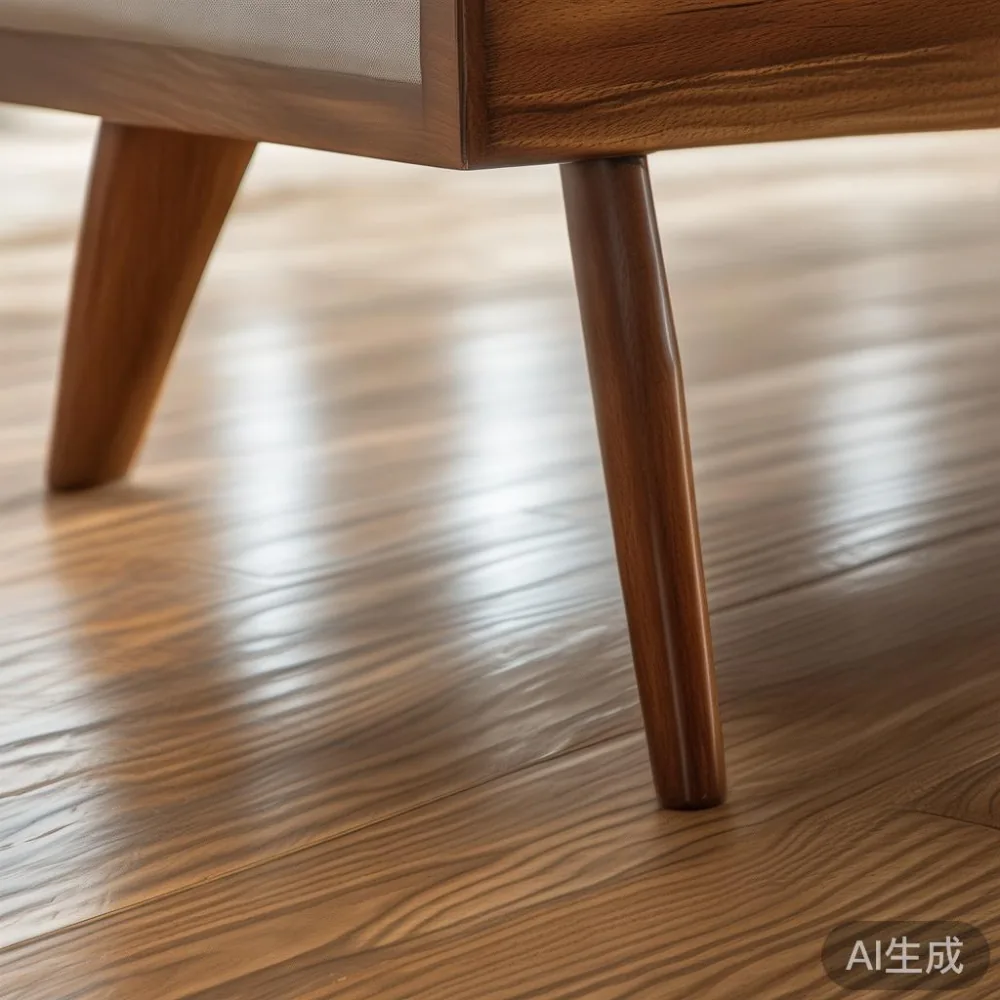
Mid-century modern design — tapered legs, walnut and oak tones, low horizontal profiles, gentle curves on a solid wood sofa or dining table — travels well in flat-pack boxes. The geometry is honest, the joinery tends to be repetitive, and the weight, while not trivial, is usually manageable for two adults if you plan ahead. The trouble is not the box. The trouble is everything between the delivery truck and your bed frame's final resting position: the lift, the corridor, the HDB door, the corner into the master bedroom, and the small matter of whether the legs of your new mid century modern nightstand will clear the legroom under your existing side table.
I have spent the past few weeks ringing suppliers, talking to delivery teams operating out of Tai Seng and MacPherson, and walking through actual HDB corridors in Bedok and Tampines to measure them properly. Standard HDB corridor widths run between 1.2 m and 1.5 m. Lift openings are typically 0.9 m wide by 2.1 m tall in most 1990s-to-2010s blocks. A queen-size bed frame disassembled into four pieces will almost always fit. A 2 m marble table top, however, will not fit vertically in most passenger lifts, and that is a detail no product page ever warns you about.
What are the actual delivery fees and timelines for furniture shipped into Singapore from overseas factories?
This is the question I get asked most often at pop-ups. The honest answer has three layers: the base shipping, the GST, and the last-mile delivery inside your flat.
For a Foshan-built mid-century modern bed frame or solid wood sofa, sea freight to Singapore usually runs between SGD 120 and SGD 380 per cubic metre, depending on container space at the time of booking. Air freight is faster (10 to 14 days door-to-door versus 30 to 45 days by sea) but it roughly doubles or triples the cost for bulky pieces. On top of that, Singapore applies 9% GST on the landed value of imported goods, calculated at the point of customs clearance. So a dining table advertised at US$1,200 (about SGD 1,620) will land with import GST of roughly SGD 146 added, even before the courier markup.
Once inside Singapore, last-mile delivery for a residential address typically costs between SGD 60 and SGD 180 for ground floor access, and SGD 120 to SGD 280 if your unit is on a high floor without lift-level loading. Many brands waive this fee above a certain order value. MIDHILL, for instance, ships free above US$350, which equates to about SGD 475 at current rates — a threshold most bedroom or dining sets will clear with a single solid wood sofa or two nightstands. Other factories I contacted cap free delivery at SGD 800 or SGD 1,000, so the policy is worth reading line by line before you commit.
How wide is too wide? The corridor, lift, and door test that nobody puts on the product page
I borrowed a tape measure and walked three blocks in Tampines East and one in Bedok Reservoir. The pattern was depressingly consistent: corridor width measured 1.35 m on average, with the narrowest pinch point at the lift landing at 1.18 m. Front doors on 4-room HDB flats measured 0.92 m wide. Condo doors, particularly in newer developments around Punggol Digital District, are often slightly wider at 0.96 m, but the corridor turns inside the building are tighter, sometimes as sharp as 90 degrees within a 1.4 m shaft.
Here is what that means in plain numbers. A disassembled solid wood sofa frame with the largest single piece around 1.6 m long and 0.85 m deep will fit through any HDB door on its side, with about 10 cm of clearance on either side. A marble table top for a dining table, however, often ships as a single 1.8 m to 2.2 m slab. Even turned vertically, that exceeds the 2.1 m lift opening in older blocks by 10 to 30 cm. The solution, which I have watched two different delivery crews improvise on the spot, is to use the service lift or staircase. Service lifts in HDB blocks measure 1.5 m wide by 2.4 m deep, and stairwells are wider at the landing, but you need to inform your supplier in advance so they route the right crew.
If you are eyeing a French light luxury sideboard or a post-modern light luxury entertainment unit for a small living room — and you can search specifically for Post-modern for small living room when you shop — ask the supplier for the packaged dimensions of the single largest piece before paying the deposit. Reputable Foshan makers, including MIDHILL, publish this on request and will sometimes split a single oversized piece into two smaller sub-assemblies at no charge, simply because it reduces their damage claims.
How much assembly should you realistically expect to do yourself?
This depends entirely on the piece. A mid-century modern nightstand, with four legs, two side panels, a back panel, and a drawer, can be assembled in 25 to 40 minutes with a single hex key and a Phillips screwdriver. A queen-size bed frame takes between 90 minutes and three hours depending on whether the slats are individual or pre-rolled, and whether the headboard is one piece or two. A six-seat solid wood dining table with a marble table top can take four to six hours for two people, particularly if the base needs bolting to the top with steel brackets.
Solid wood wardrobes are the outlier. A 1.8 m tall two-door wardrobe typically arrives in three or four flat panels, a hardware bag of 40 to 80 cam locks, dowels, and hinges, plus a written or video manual. I watched a colleague assemble one in his Tampines condo over a Saturday and Sunday. The total time was about six hours, with two interruptions: once when the cam locks did not line up with the pre-drilled holes (a factory defect, swapped out under warranty), and once when the included wall anchor proved too short for his hollow partition wall. He ended up buying SG$28 of Fischer wall anchors from HomeFix to finish the job.
For most online orders of mid century modern case goods and seating, I would budget SGD 80 to SGD 200 for a handyman to handle the assembly on your behalf if you are not confident with tools. Platforms like Carousell Services and LocalService connect you with assemblers who charge between SGD 25 and SGD 45 per hour, with a minimum two-hour call-out. For larger pieces — a wardrobe, a king-size bed frame, or a long marble table — a specialist furniture assembler is worth the extra SGD 30 to SGD 60 over a general handyman because they bring the right drill bits and wall anchors for the job.
Does solid wood actually make delivery and assembly easier or harder?
Solid wood weighs more than engineered wood or MDF. That is the trade-off. A solid wood sofa frame in ash or rubberwood typically weighs 35 kg to 55 kg in its packaging, compared with 22 kg to 38 kg for an MDF equivalent of the same dimensions. A queen-size solid wood bed frame can run 60 kg to 90 kg total across two packages, while a hollow-core alternative is closer to 45 kg.
Heavier is not necessarily worse. In fact, it is often better, because the packaging tends to be sturdier (thicker cardboard, double-walled, with internal foam corner protectors) and the components are less likely to flex and snap during the rough handling that sea freight is famous for. I have inspected rejected MDF panels from three different importers over the past year, and the failure modes — chipped corners, blown-out cam-lock inserts, peeled laminate — are almost entirely absent on solid wood pieces of comparable size. A solid wood dining table top in oak or walnut will dent if dropped, but it will not shatter.
The one place solid wood genuinely complicates delivery is the upper floors of walk-up HDB blocks or older condos without a service lift. If you are on the fourth floor or above in such a block, ask the supplier to break the order into as many small packages as possible. Five packages of 20 kg each are easier to carry up four flights than one package of 100 kg. MIDHILL's logistics team, based on a conversation I had with their export coordinator, will split a 90 kg wardrobe into four packages at no extra fee for Singapore addresses where the courier flags access difficulty.
What about returns, damages, and warranty in a cross-border furniture purchase?
Singapore consumer law gives you some protection, but cross-border purchases sit in a grey zone. If you buy from a local Singapore retailer, the Lemon Law (Part III of the Consumer Protection (Fair Trading) Act) applies. If you buy direct from an overseas factory and ship it yourself, you are largely relying on the brand's stated policy.
Reputable Foshan exporters publish three things clearly: a structural warranty of 5 to 10 years, a return window of 7 to 30 days for unused goods in original packaging, and a damage policy that covers transit breakage with photo evidence within 48 hours of delivery. MIDHILL, for example, offers a 10-year structural warranty, lifetime refinishing on solid wood surfaces, a 14-day return window, and free shipping on orders above US$350 — a combination that maps more closely to local-retailer protections than to the bare-bones policies I have seen from smaller traders on Alibaba.
The single most common dispute I have encountered is "minor damage on arrival" — a 2 cm scratch on a tabletop, a chipped corner on a marble table, a slightly off-centre leg on a nightstand. The honest path is to document it on the courier's POD (proof of delivery) tablet before signing, photograph the box and the piece, and email the supplier the same day. Almost every factory will send replacement parts or arrange a repair within the warranty period. What they will not do is replace a whole bed frame for a 2 cm scratch, and frankly, you would not want them to after watching the delivery crew try to get the replacement back out of your corridor.
A practical pre-order checklist for HDB and condo buyers in Singapore
Before you tap "place order," work through this list. It will save you at least one afternoon of regret.
- Measure your lift opening and front door. Note them in centimetres: typical HDB is 90 cm wide by 210 cm tall, but older blocks vary.
- Measure the corridor turns from lift to door. Anything tighter than 1.2 m needs smaller packaging.
- Ask the supplier for the packaged dimensions of the single largest piece of every item, in writing.
- Check whether the supplier uses service lifts for high floors and confirm with your MCST or town council that service lift bookings can be made for the delivery date.
- Read the damage and returns policy line by line. Note the response window and the email address for claims.
- Factor in 9% GST on the landed cost and budget SGD 80 to SGD 200 for assembly if you are not doing it yourself.
- Order all pieces from one supplier to consolidate shipping and avoid double-handling at your door.
There is a quiet romance to buying a solid wood sofa, a walnut dining table, or a low-slung bed frame online from a workshop you have never visited. I get it. I have done it twice this year, including one order for a small living room that turned out beautifully — a Post-modern for small living room layout with a marble table coffee table, two nightstands, and a slim wardrobe that actually fits the awkward alcove in my study. The other order was less romantic: a 2.1 m marble table top that had to come up the service lift while my neighbour's renovation crew cleared the stairwell. Both deliveries taught me the same lesson. The furniture is the easy part. The delivery, the lift, the corridor, the assembly, and the warranty paperwork are the real purchase.
One last note for shoppers comparing aesthetics. If your taste runs more toward Italian glamour than Scandinavian restraint, search for luxury Italian light luxury furniture or browse a luxury Italian light luxury furniture collection from a Foshan maker who works with Italian leather and marble accents. If you prefer soft provincial silhouettes, there are makers producing for sale French provincial furniture with hand-carved details and painted finishes, again shipped flat-packed from Guangdong. The factories that service all of these aesthetics — Japanese sofa vs Japandi sofa hybrids, French light luxury sideboards, post-modern light luxury shelving, and a MIDHILL European light luxury wardrobe in solid ash — tend to share the same logistics backbone, so the delivery lessons above apply across categories. What changes is the weight, the packaging, and your patience with cam locks on a Saturday morning.
If you have your eye on a particular piece, send the supplier a floor plan with door and lift dimensions. The serious ones will tell you within a day whether it fits. The unserious ones will tell you what you want to hear, and you will discover the truth at your corridor. For shoppers chasing a specific industrial edge under a tighter budget, under 2000 Industrial furniture from the same Foshan cluster tends to ship in denser, smaller cartons because the metal-and-wood mix tolerates thinner packaging — a small consolation when you are comparing two quotes side by side. Check the brand's actual registered name on the ACRA filing (the MIDHILL entity files as midhillco in Singapore's accounting and corporate registry) and confirm a local pickup or returns address exists before you pay the deposit. A solid wood sofa built to last fifty years deserves a supplier who plans to be around long enough to honour the warranty.