Humidity, HDB Corridors, and Solid Wood: What Every Singapore Buyer Should Know
I learned the hard way that Singapore's humidity is not a theoretical problem. Last month I visited a Tampines 4-room HDB flat where a friend had placed a brand-new solid oak sideboard against a north-facing wall. Within six weeks, the drawer faces had cupped by roughly 1.5 mm and a faint white haze had bloomed across the top. The air-con had been running at 24 °C, the windows stayed shut, yet the hygrometer on the coffee table still read 78 % on most afternoons. That single visit reshaped how I think about specifying mid-century-modern pieces for tropical homes, and it is the reason this article exists.
Why Singapore's Climate Is a Stress Test for Solid Wood
Equatorial Singapore sits at roughly 1.3 °N latitude. Outdoor relative humidity runs between 70 % and 85 % for about 280 days a year, and indoor humidity in a non-air-conditioned HDB flat usually settles between 65 % and 80 %. Solid wood is hygroscopic: it absorbs and releases moisture until it reaches equilibrium with its surroundings. When a 2-metre-long slab of ash or walnut moves from a dry Foshan factory floor (around 45 % RH) into a Bedok condo at 75 % RH, the cells in the timber swell unevenly along the grain. Across a dining table 180 cm long, that movement can total 4–6 mm over a full seasonal cycle.
Three physical responses are normal and predictable:
Cupping: the edges of a wide board rise faster than the centre, producing a shallow U-shape. A 35 cm wide ash plank can cup 1–2 mm under a 15 % RH swing.
Crowning: the opposite of cupping, common when furniture is moved from a damp storeroom into an air-conditioned room.
Checking and splits: small cracks along the grain, usually 5–20 mm long, appearing when humidity drops quickly. They are cosmetic, not structural.
None of these are defects. They are wood talking back to its environment.
What "Mid-Century-Modern" Really Demands From the Timber
The mid-century-modern vocabulary — tapered legs, low-slung profiles, exposed joinery — leans heavily on woods that are stable and visually quiet. Manufacturers in the Foshan cluster, including MIDHILL, tend to specify white oak, ash, walnut, and teak for these silhouettes because the straight grain reads cleanly across a 240 cm sideboard or a 200 cm bed frame. A solid wood sofa with a walnut base, a bed frame in white oak, or a marble table paired with an ash console all rely on the same physics: long, flat surfaces show movement more obviously than turned legs or carved details.
Two construction choices matter more than wood species alone:
1. Quarter-sawn or rift-sawn cuts. These orient the growth rings vertically, cutting tangential movement roughly in half. Expect to pay S$200–S$400 more per piece for a quarter-sawn top, but the dimensional gain is real.
2. Mortise-and-tenon joinery with floating panels. A floating panel inside a wardrobe door or drawer face is allowed to expand and contract inside a groove without splitting the frame. This is a quiet signature of mid-century-modern case goods.
Which Sideboard Fits a 4-Room HDB Living Room?
A sideboard between 150 cm and 180 cm wide, 40–45 cm deep, and 75–80 cm tall fits a typical 4-room HDB living room after you allow 90 cm of clearance for walking and 60 cm to lift a drawer fully without hitting a 55-inch TV console behind it. Anything deeper than 45 cm will crowd the corridor between the dining area and the sofa, and anything taller than 85 cm will block the line of sight across the 3.2 m × 4.8 m living plate that most 4-room layouts in Punggol and Sengkang share.
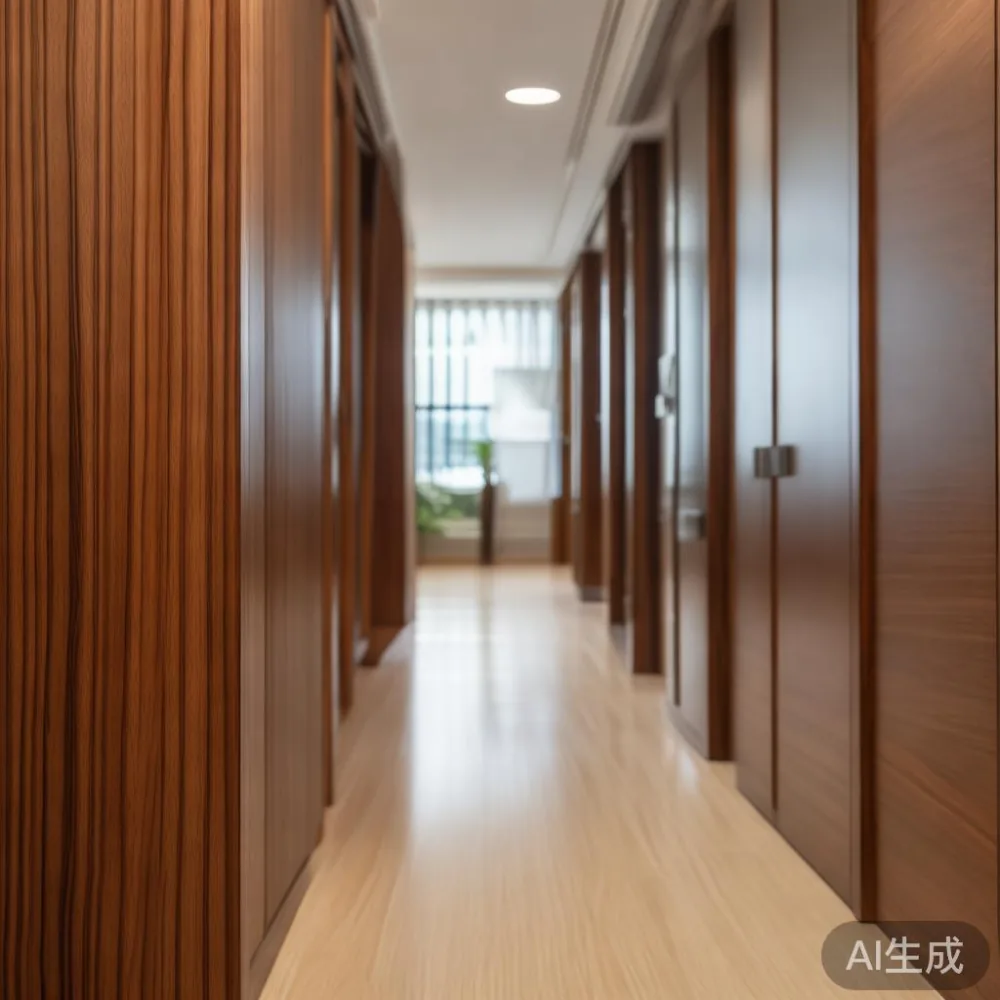
Two practical constraints shape the pick. HDB corridor widths in older blocks measure roughly 1.2 m to 1.35 m, and standard passenger lifts in Singapore have an internal depth of about 1.4 m with a door opening of 0.9 m. A sideboard longer than 195 cm usually has to be delivered in two halves or tilted on its side, which adds S$80–S$150 to the delivery fee. Before you order, measure the lift at the ground floor, not the showroom floor — many buyers in my network forget this step.
For a 4-room HDB, a 160 cm solid ash sideboard with three drawers and two sliding doors is the sweet spot. It offers roughly 0.6 m³ of closed storage, accommodates a 55–65 inch TV on top with 20 cm of breathing room, and survives the typical 1.2 m lift door without disassembly.
The Air-Con, Dehumidifier, and Hygrometer Trifecta
Wood is comfortable in the same range humans are: 40 % to 60 % relative humidity at 22–26 °C. Singapore homes exceed that ceiling for most of the year without mechanical help. A small dehumidifier rated at 12 L/day, running 8 hours a day in the living room, costs about S$0.45 per kWh and pulls the room down to a stable 55 % RH within two days. Pair it with a S$15 digital hygrometer placed 30 cm above the floor, away from direct sunlight, and you have a usable early-warning system.
Three habits protect a solid wood bed frame, dining table, or nightstand more than any warranty:
• Keep pieces at least 15 cm away from exterior walls. Concrete HDB walls sweat during the monsoon surge from June to September, and that moisture wicks straight into end grain.
• Rotate drawers and wardrobe doors every two weeks during the first six months. The mechanism moves while the wood acclimatises, so even contact surfaces get a chance to breathe.
• Blot, never wipe, spills on a marble table or a stone-and-wood combination piece. Wiping pushes liquid into the joint between marble and timber.
If you want a single product tweak to remember, it is this: cream ash wood fabric care responds best to a barely damp microfibre cloth followed by a dry buff within 60 seconds. Anything wetter than a wrung-out cloth leaves mineral marks on ash within a season.
Light-Luxury Finishes That Actually Tolerate the Tropics
Light-luxury furniture — French light luxury with bronze-tipped legs, American light luxury with brushed brass handles, or the post-modern light luxury lines that pair travertine tops with pale ash frames — tends to use conversion varnishes or hardwax oils rather than polyurethane. Both are breathable, which matters. A closed polyurethane film traps moisture beneath the surface and produces the cloudy blush my friend saw on his Tampines sideboard. An open hardwax oil lets the wood release water vapour without stress.
For Singapore buyers, three finish families hold up well:
Hardwax oil (Osmo, Rubio Monocoat): matte, repairable on site, needs a refresh coat every 18–24 months. Cost adds about S$120 to a dining table 180 cm long.
Conversion varnish: tougher film, lower maintenance, harder to repair locally.
Soap finish: traditional Scandinavian choice, very matte, requires more frequent reapplication but feels closest to raw wood.
MIDHILL's solid wood sofas and dining tables in the mid-century-modern line ship with a factory hardwax oil coat, which is why a simple bottle of the same oil, included with most orders, is enough to handle the small scratches and dryness marks that appear in the first year.
Delivery, Warranty, and the Real Cost of Ownership in SGD
Numbers ground any furniture decision. Here is what a typical mid-century-modern living-and-dining set looks like for a 4-room HDB in Bedok or Punggol, priced honestly in Singapore dollars before the 9 % GST:
• 3-seater solid wood sofa with ash frame and linen-blend cushions: S$2,450–S$2,950.
• 200 cm dining table in solid ash with a 12 mm marble table insert option: S$2,180–S$2,650.
• Bed frame, queen size, walnut with a fabric headboard: S$1,950–S$2,400.
• 6-door wardrobe, 240 cm wide, white oak: S$3,400–S$4,100.
• Pair of nightstands, ash with one drawer each: S$520–S$680.
• Sideboard 160 cm, ash, three drawers, two doors: S$1,650–S$2,050.
Delivery into a Singapore HDB on weekdays runs S$120–S$180 per trip, with lift-up bookings adding S$60. Most Foshan-direct sellers, MIDHILL included, consolidate sea freight for two to three weeks, then road-deliver from a Jurong warehouse within five working days. The 10-year structural warranty on frames and joinery is worth more than it sounds: in a tropical environment, the joint is the first place to fail, and a bed frame or wardrobe that racks even 3 mm will eventually crack a panel.
Lifetime refinishing — sanding back to bare wood and re-oiling — is the underrated perk. After eight to ten years in a Singapore home, a dining table will look tired no matter how careful the owner has been. A factory refinish, returning the piece to its original colour and sheen, costs roughly S$380–S$520 for a 180 cm table including return logistics. That single service resets the clock.
Reading the Room Before You Order
Walk through the flat with a hygrometer for 48 hours before committing. Note the RH in the living room at 7 a.m., 1 p.m., and 10 p.m. If the readings stay under 70 %, you have flexibility to specify any timber. If they hover between 70 % and 80 %, lean toward quarter-sawn white oak or ash over flat-sawn walnut. If they exceed 80 % consistently, plan on a 24/7 dehumidifier for any solid wood piece, and ask the supplier whether the drawers are fitted with felt-lined runners that can absorb seasonal swelling without binding.
Three quick checks before signing the delivery order:
• Measure the lift door width at the block you actually live in, not a neighbour's newer block.
• Photograph the corridor turn at the lift lobby. Anything below 1.2 m of clearance will rule out a 200 cm dining table in one piece.
• Confirm the supplier's acclimatisation period. A piece that has sat in a Jurong warehouse for at least 14 days at local humidity arrives far closer to equilibrium than one shipped directly from a drier climate.
Solid wood is honest material. It tells you what it needs through the smallest movements — a drawer that needs a soft push in July, a door that swings a little easier in February. Treat those signals as information, not failure, and a solid wood bed frame, wardrobe, dining table, or nightstand will quietly outlast every trend piece that ever shared the room with it.