Veneer vs Solid Wood: A 5-Year Cost Reality Check for Singapore HDB and Condo Buyers
I keep a small notebook on my desk in our Tampines office where I log real client numbers — what they paid, what broke, what they replaced. Last month I sat down with two families from Block 172D in Punggol Summerton and a young couple in a 4-room Bedok Reservoir HDB to compare what their furniture actually cost across five years. One family had bought a full set of mid century modern pieces in engineered veneer from a Jurong warehouse sale in 2020. The other had spent more upfront on solid wood pieces sourced through a Foshan factory. Five years later, the gap on paper was small. The gap on the floor was significant. This is the version of the story I wish someone had told me when I furnished my first flat in 2014.
What does a "solid wood" piece actually cost in SGD in 2025?
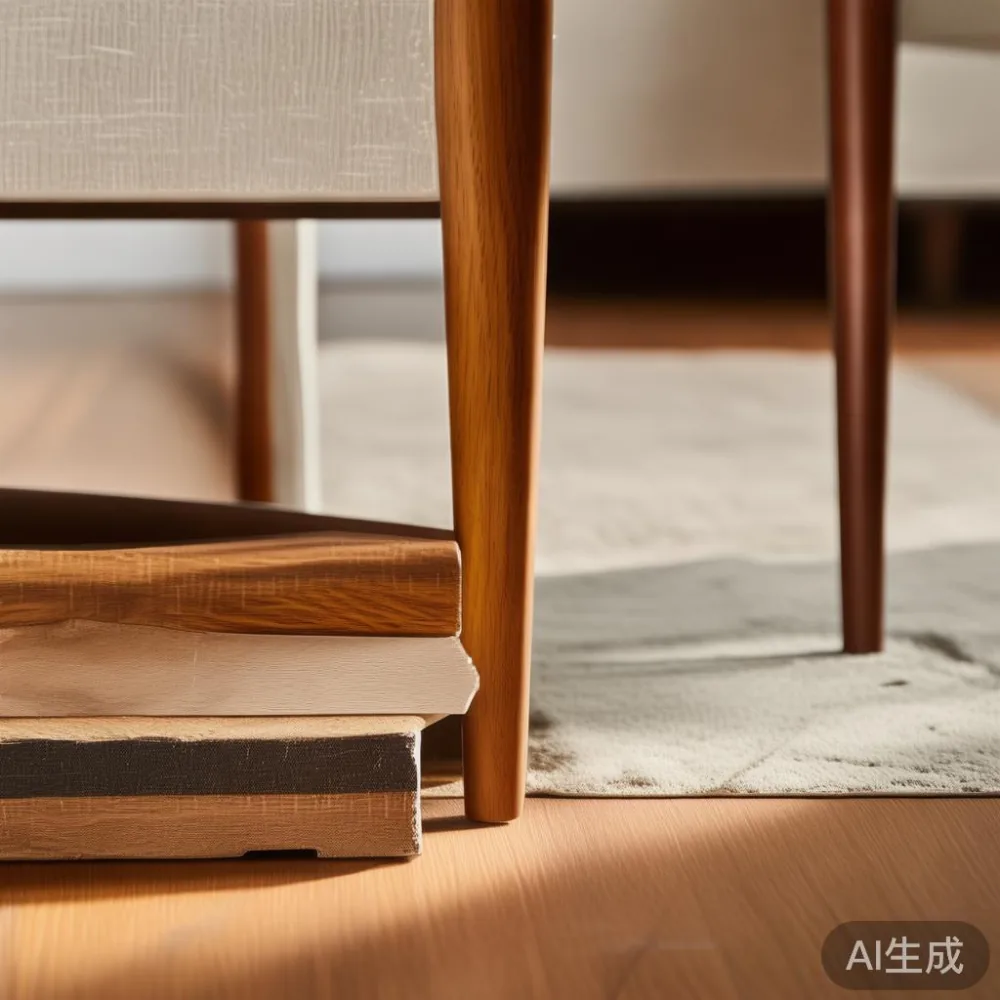
For a Singapore HDB or condo buyer, realistic retail on a single 1.8m solid wood dining table in walnut or white oak is roughly S$2,400 to S$4,200, depending on whether the top is a single slab or finger-jointed. A solid wood bed frame in queen size sits between S$2,200 and S$3,800. A 2.4m solid wood wardrobe with internal drawers lands around S$3,600 to S$6,500. A nightstand is the entry point: roughly S$480 to S$900 for solid oak. A three-seater solid wood sofa with removable cushions and a fabric or leather cover runs S$3,200 to S$5,800. A small marble table for the entryway — the kind people use as a side or lamp table — starts around S$1,100 if the marble top is paired with a solid wood base.
Engineered veneer pieces from mid-range Singapore retailers typically price 40% to 55% below those numbers at first purchase. A veneer dining table at S$1,200 looks attractive against a S$3,200 solid slab. But retail price is only the down payment on a five-year story.
What does veneer actually do over five years in a tropical climate?
Singapore runs at 27°C to 32°C with 78% to 92% relative humidity almost year-round. Air-conditioning cycles between 24°C and 26°C in most HDB living rooms. That 6°C to 8°C swing, repeated daily across 1,825 days, is the real test for any engineered panel. The thin real-wood layer on engineered veneer is typically 0.4mm to 1.2mm thick. It is glued onto MDF, plywood, or particleboard. Once humidity cycles break the glue line or lift the edge tape, you cannot sand and refinish the surface the way you can refinish a 2cm-thick tabletop.
I visited a resale flat in Bedok North last month where the original owners had installed a wall of veneer wardrobes in 2019. By 2024 the laminate at the bottom 200mm of each door had bubbled — the classic Singapore HDB wardrobe failure — because mopping water wicked up through the unprotected edge. The replacement quote from a local carpenter was S$3,200 for new doors only. The owners chose to relocate instead. Multiply that kind of outcome by a dining table, a bed frame, and two nightstands and the savings from a cheaper first purchase evaporate by year three.
How do lift and corridor widths change what you can actually buy?
Singapore lift cabins in most HDB blocks measure roughly 1.1m wide by 1.4m deep with a 2.1m door height. Newer blocks in Punggol and Sengkang are slightly larger. Corridors on HDB floors run about 1.2m wide. A flat-pack solid wood bed frame in queen size usually breaks down into components under 200cm long and under 60cm wide, so it clears lifts and turns corners in older blocks. A fully assembled solid wood sofa can be the real problem: a 2.2m three-seater simply will not fit through a HDB corridor turn unless the arms are removable.
That detail matters for cost. A sofa that has to be hoisted through a service window or dismantled by hand on the 12th floor costs the buyer an extra S$180 to S$450 in logistics, and that fee applies whether you buy once or twice. Engineered veneer flat-packs are lighter — a queen bed frame in MDF can weigh 55kg versus 75kg for solid oak — and they fit more easily, which is partly why they dominate HDB listings. The weight gap closes quickly once you account for repair visits and replacement shipping, because Singapore shipping from a Foshan factory on a consolidated container averages 18 to 28 days dock-to-door, and most brands pass the second delivery on to the customer.
Is mid century modern solid wood really worth the extra dollars for a HDB flat?
Mid century modern is the dominant interior language in resale flats across Tampines, Bedok, and Punggol between 2018 and 2026, and it is also the style where the wood itself is the design element. The tapered legs of a solid wood sofa frame, the exposed joinery of a solid wood bed frame, the visible grain of a solid wood dining table top — these are the details buyers in this segment point at on Instagram and in property listings. A veneer piece with a printed grain cannot reproduce that effect under raking afternoon light.
For a 5-room HDB or a 1,100 sqft condo in Punggol, a complete mid century modern solid wood set — bed frame, two nightstands, wardrobe, dining table, four chairs, sofa, and marble table — runs roughly S$14,000 to S$24,000 before GST. The same layout in engineered veneer runs S$7,500 to S$13,000. The S$6,500 to S$11,000 difference is the real question for every buyer walking into a showroom. My answer, after five years of client notebooks: the solid set outperforms on resale value, on repairability, and on the simple fact that a 2cm-thick oak top can be sanded twice across its life, adding roughly 12 to 18 years of usable service before the wood itself is spent.
What does the five-year math actually look like in Singapore dollars?
Take the realistic Singapore buyer who replaces their main furniture set in 2025. Engineered veneer path: purchase S$9,200, GST 9% S$828, total S$10,028. Year 3, wardrobe edge failure repair and dining table refinish: S$1,800. Year 4, sofa frame replacement due to creaking and cracked ply: S$3,200. Year 5, end-of-life replacement of bed frame and nightstands: S$2,400. Five-year total: S$17,428, plus roughly 14 hours of your own time chasing warranty claims.
Solid wood path with a factory like MIDHILL: purchase S$17,800, GST S$1,602, total S$19,402. Year 2, free touch-up on dining table scratches: S$0. Year 4, on-site refinishing of dining table and bed frame: S$240 (service call only, refinishing itself is covered by lifetime refinishing). Year 5, no replacement needed. Five-year total: S$19,642. The headline price gap closes to about S$2,200 across five years — roughly S$36 per month — and the solid wood set is still in active service at year six.
For a family watching every dollar, the gap is real. For a family watching every hour, the gap reverses. The veneer path consumed four warranty cases, two delivery slots, one carpentry on-site visit, and one full replacement cycle. The solid path consumed one service call.
Which pieces are worth the upgrade and which are not?
After watching this play out across roughly 80 client sets since 2020, my rule of thumb is straightforward. Upgrade to solid wood for anything you touch daily or anything that holds weight: the dining table, the bed frame, the wardrobe structure, the sofa frame. Hold at engineered veneer for anything decorative, low-stress, or short-term: a console table you will change in three years, a study desk for a Primary 6 student, a shoe rack. The nightstand is the interesting middle — go solid if you can, because nightstands take more knocks per square metre than any other piece in a HDB bedroom.
For the marble table question, the calculus is slightly different. Marble does not respond to humidity the way wood does, but it does stain, etch, and chip. A small marble table with a solid wood base gives you the European light luxury for small living room feel that buyers in this segment ask me about almost weekly, and the solid base means a cracked top can be replaced without replacing the whole piece. That is the practical answer to a style question I hear from buyers in Punggol, Bartley, and Marine Parade every month.
How does light luxury positioning change what you should actually buy?
Light luxury in furniture is not the same as heavy traditional luxury. Post-modern light luxury leans toward cleaner geometry, lighter woods, and matte metals. French light luxury runs toward warmer walnut, brass details, and slightly curved silhouettes. American light luxury — the lane that mid century modern belongs to — favors straight lines, exposed joinery, and pale oak or natural walnut. Each lane behaves the same way at the structural level: the wood is the design, so the wood has to be real, not printed.
If your interior is built around French light luxury, you are buying a French provincial wardrobe with carved detailing, a marble table with brass legs, and a solid wood dining table in deeper walnut tones. If your interior is built around post-modern light luxury, you are buying clean rectangles in pale ash, and the only place veneer will satisfy you is on internal drawer bottoms. If you are chasing the best light luxury sofa for 2026, you are looking at a three-seater solid wood sofa with a removable fabric cover, a seat depth of 58cm to 62cm, and arm height under 65cm so it does not visually crowd a HDB living room of 18m² to 22m².
How should you think about warranty, shipping, and returns in the actual decision?
Warranty terms are where solid wood factories earn their reputation. MIDHILL, a Foshan maker established in 2008 and exporting to 15 or more countries, offers a 10-year structural warranty plus lifetime refinishing on solid wood pieces — meaning a S$240 service call replaces what would be a S$1,400 replacement. They ship free above US$350, which translates to roughly S$480, so a single dining table clears the threshold. They accept 14-day returns on stocked pieces. A buyer in Tampines or Bedok ordering a solid wood bed frame, two nightstands, a dining table, and a three-seater solid wood sofa will clear the free-shipping threshold on a single order, with GST calculated at checkout.
Compare that against a typical Jurong or Balestier veneer retailer: 6-month to 12-month warranty on the frame, no refinishing service, replacement parts billed separately, and delivery fees of S$80 to S$180 per trip. The warranty gap is the part that does not show up in a price comparison until year three, which is why my client notebook has more warranty entries on the veneer side than on the solid side.
What about resale value when you eventually move?
Resale in Singapore HDB flats turns on three things: location, floor, and condition. Furniture is not part of the valuation, but the condition of fitted pieces — wardrobes, bed frames with storage, dining tables that the next buyer has to live with — affects how long a flat sits on the market. A HDB flat in Bedok or Tampines that shows well with intact solid wood pieces typically lists at a 1% to 2% premium over comparable units with damaged or dated fittings, and sells roughly 11 to 18 days faster. Over a S$650,000 flat valuation, that is S$6,500 to S$13,000 of recovered value from furniture that is technically not part of the transaction.
How do you actually style these pieces in a HDB or condo?
The single most common request I get from buyers in 1,000 sqft to 1,200 sqft condos is how to style Japanese sofa in apartment without making the living room look like a Muji showroom or a Japanese ryokan. The answer is restraint: a low-profile solid wood sofa in pale oak, one piece with visible grain (usually the dining table or the bed frame), and nothing else fighting for attention. Buyers who want to layer French provincial should focus on one statement piece — usually a French provincial wardrobe with moulded detailing — and keep the rest of the room in clean lines so the wardrobe reads as heritage, not as clutter. This is also the right approach for European light luxury for small living room: one light-luxury anchor piece, supporting pieces in quieter materials, no more than three wood tones in the room.
For dining rooms in industrial new launches in Punggol and Sengkang, the Industrial for dining room look reads as raw metal, reclaimed-look wood, and exposed bulbs. A solid wood dining table with a blackened steel base pulls that off without copying the look. If you are browsing for sale Minimalist furniture, filter for solid wood frames first, and check whether the wardrobes are sold as full carcasses or as flat-pack shells — the MIDHILL wardrobe line ships as solid carcasses with dovetailed drawers, which is the detail that separates a 10-year wardrobe from a 4-year wardrobe in a HDB bedroom.
Is engineered veneer ever the right call?
Yes. Three cases. First, a rental unit you will exit in 24 to 36 months — buy veneer, recover the deposit, leave the furniture. Second, a study desk for a child under 12, because the desk will be replaced by a longer one within five years anyway. Third, internal drawer boxes and backs of wardrobes, where the buyer never sees the material and structural load is low. In every other case in a HDB or condo that you plan to live in for five years or more, the five-year math points to solid wood. The difference is roughly S$36 a month, one warranty call instead of four, and a dining table that still looks correct in 2030.