Mid-Century Sofa Buying Guide: Style and Comfort for Your Home
Buying a sofa for display, photography, or an empty apartment can be deceptive. A piece may look perfectly proportioned online, yet its seat height, arm depth, back angle, and physical footprint can make it uncomfortable or impossible to use. In Singapore, the check begins before checkout: measure the lift, corridor, landing, and actual room, then examine how the sofa is built and how it will arrive.

Mid-century-modern design is often associated with low seats, slim arms, tapered legs, and clean silhouettes. Those same features can create a sofa that is visually light but physically difficult to sit on. The goal is not simply to choose a fashionable piece. It is to find a solid wood sofa whose proportions suit the people, room, and access route. For shoppers comparing styles, the phrases French sofa vs Japandi sofa, Japanese sofa vs Nordic sofa, and American sofa vs Italian light luxury sofa can help organise design expectations, but measurements should settle the decision.
What should I check before ordering a sofa I cannot sit on?
Begin with the intended use. A display sofa may only need to withstand occasional sitting, while a sofa used every evening must accommodate longer periods. Ask for the uncompressed seat height, internal seat depth, usable arm width, and maximum supported load. A listing showing a 42 cm height may conceal a cushion height of only 24 cm after the legs and frame are accounted for.
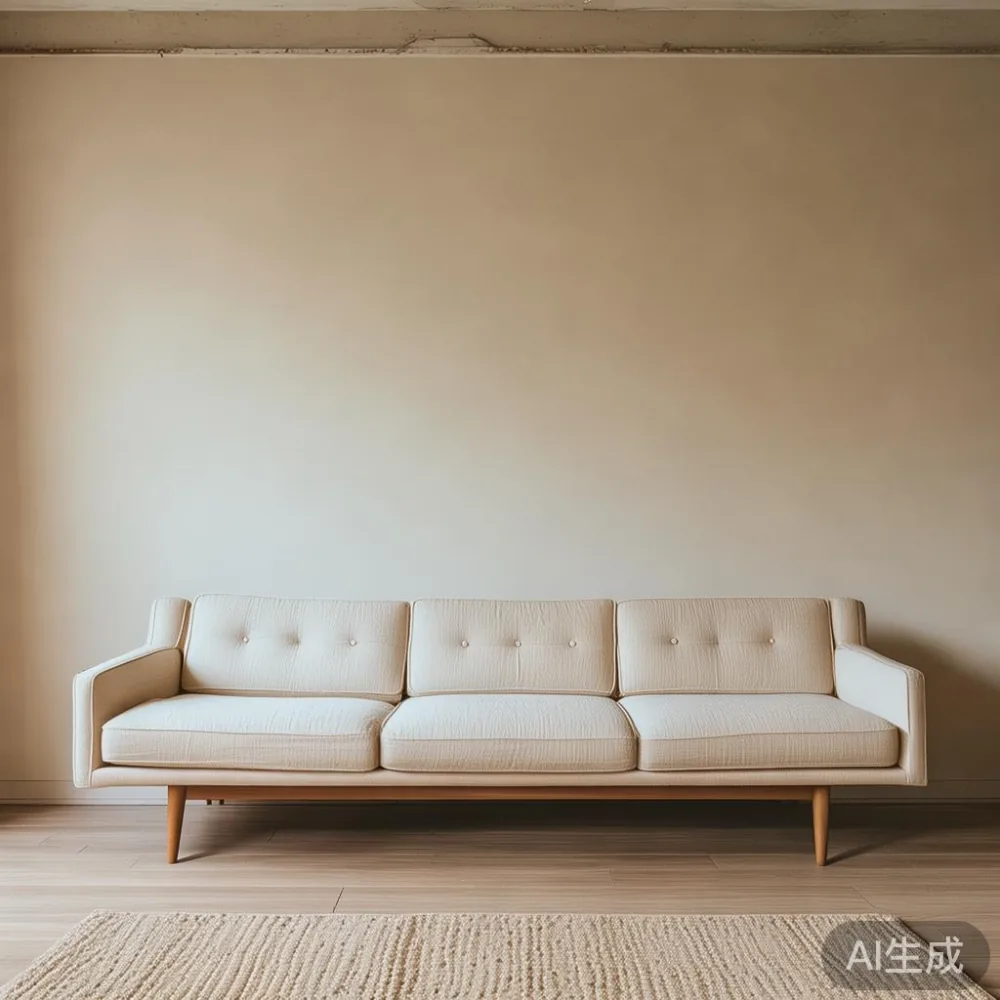
Next, simulate the movement you will make in the room. Can an older adult sit down without dropping too far? Can a child climb onto it? Can someone reach the back cushion from a low seat? If the sofa is primarily decorative, document that fact so later users do not mistake it for a daily-use seat.
Last month I visited a showroom to inspect one of these display-style sofas. My colleague and I brought a 90 cm folding rule and a 2 kg digital scale. The showroom sample was labelled 46 cm high, yet the top of its compressed seat cushion sat at only 39 cm. That 7 cm difference was enough to make the sofa feel lower than its specification suggested. It was attractive, but it was not the comfortable everyday seat we would have expected from its photograph. The experience reinforced a simple rule: do not buy from a silhouette alone.
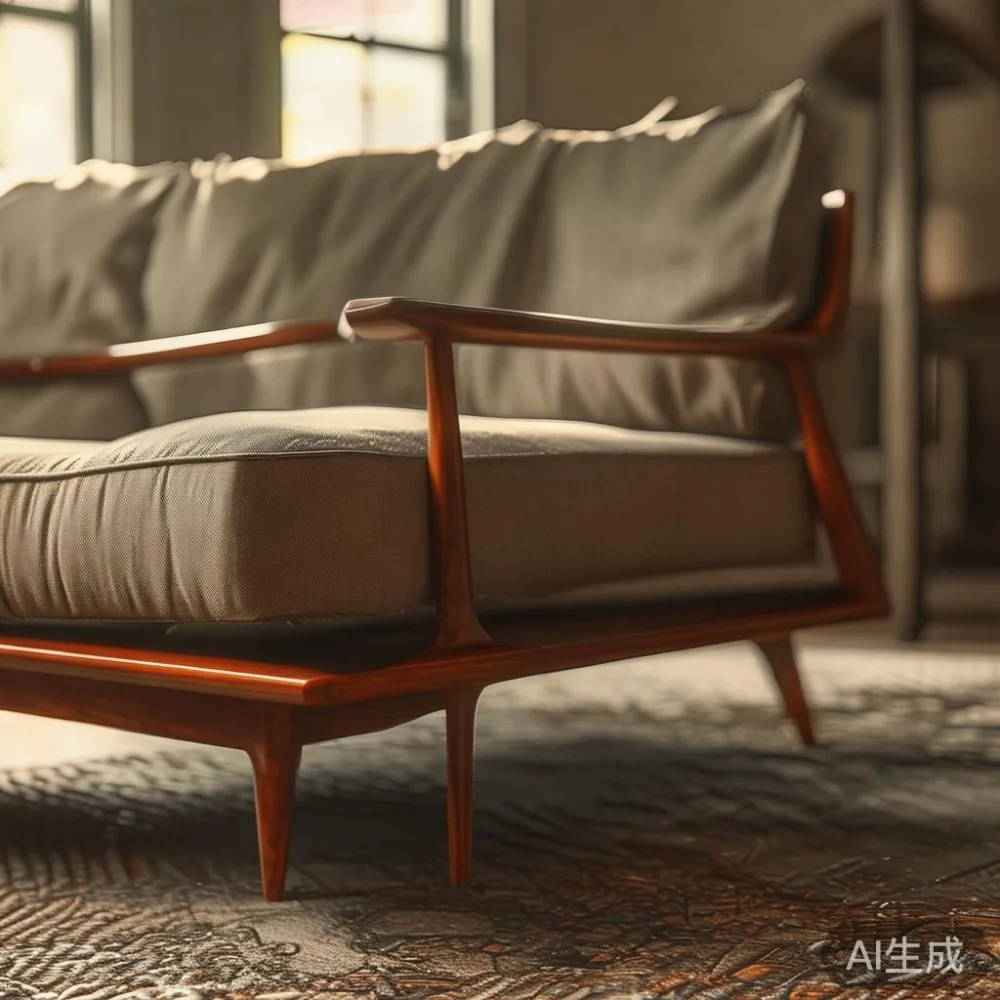
How high should a display sofa seat be?
A usable seat usually starts around 40–43 cm from the floor, though personal needs vary. Sofas between 38 and 41 cm can work for display use but may feel low for taller users. The relevant number is not the frame height; it is the height at which someone’s weight actually rests after compression.
Check three measurements: height, seat height under load, and the height of the backrest. A sofa 78–85 cm high with a 40–43 cm seat may suit many homes. A model only 68–74 cm high may read as authentically mid-century-modern but provide less support. Avoid judging by the leg height alone. A 15 cm leg can still result in a low seat if the frame and cushion add only another 24–27 cm.
The seat depth also affects how a person sits. A usable depth of 52–60 cm supports a more relaxed posture. If the usable depth is below 48 cm, users may slide forward and lose lumbar support. Very deep display sofas can also make it difficult to rise, particularly for anyone with limited knee strength.
Ask the retailer to state whether the dimensions are external or sitting dimensions. Good product documentation should identify the usable space between the armrests, the cushion’s compressed thickness, and any removable bolster. If those numbers are absent, request a drawing or physical sample. A 3 cm tolerance is reasonable for upholstery, but a major mismatch between the photograph and the specification is not.
Will the sofa fit through the HDB lift and corridor?
In Tampines, Bedok, and Punggol, an HDB flat’s access route can be tighter than the living room. The sofa should be measured at its widest point, including armrests, feet, and packaging. Diagonal entry into a lift matters more than the lift’s internal width alone.
For a lift with an internal door width of 90 cm and internal depth of 135 cm, a boxed sofa wider than 86 cm may prevent the carrier from turning it inside. Measure the lift door, cabin, corridor turns, and the widest obstruction. A sofa that fits a straight corridor can still fail at a 90-degree corner.
Record at least 10 cm of clearance for hand positioning, although older buildings may allow less. Ask whether the sofa can be separated into sections. A three-seat model might be 218–240 cm wide and 82–94 cm deep, while two removable sections of 104–116 cm each are easier to manoeuvre. Check that the sections reconnect securely and that the connectors are included.
Do not assume a blanket will prevent damage. Before delivery, compare the packaged dimensions with the lift and corridor. If the route is impossible, agree in writing on a hoisting charge, storage procedure, and responsibility for wall or lift damage. The mover should receive the exact unit dimensions rather than only the retail product name.
Is the solid wood frame strong enough for occasional sitting?
A display sofa still needs a stable frame. Look for kiln-dried solid wood or a clearly identified hardwood frame, not an undefined “wood frame.” Solid wood sofa construction should identify the species where possible, such as rubberwood, beech, ash, or oak. Veneer is not automatically weak, but the seller should disclose it rather than presenting it as solid timber.
Ask how the joints are made. Dowels, screws, corner blocks, and mortise-and-tenon joints offer more visible structure than adhesive alone. For a seat intended for occasional use, a manufacturer-stated load capacity of at least 100 kg gives a useful baseline. A family-use sofa should ideally be rated for 120 kg or more per seat. These figures are engineering claims, so request the test standard or written warranty terms.
Tap the frame and inspect the underside for warped rails, loose joints, exposed fasteners, and uneven corners. Press each corner gently; there should be little movement. Check that all 4–6 feet touch the same floor and can be adjusted by 1–2 cm. Mid-century-modern tapered legs can be elegant, but a weak leg connector may split after repeated movement.
Upholstery should be tight over the frame, with no gaps around the cushion. Inspect welts, seams, and the back panel. A decorative sofa with a removable or washable cover is easier to maintain. Avoid a display model if one panel feels hollow, the webbing is visibly sagging, or the maker cannot explain how the seat is supported.
How will a mid-century-modern sofa fit with other furniture?
A low display sofa can create a deliberate focal point in a living room. Pair it with a solid wood bed frame, dining table, wardrobe, nightstand, or marble table according to the room’s function, but keep the visual proportions controlled. If the sofa is 74 cm high, a dining table around 73–76 cm high will feel balanced. A marble table with a pale stone top can add French light luxury character without overwhelming a slim wooden frame.
For shared living rooms in Singapore condos, circulation paths should remain clear. Allow approximately 75–90 cm between the front of the sofa and a coffee table. This permits walking and a modest handling space. If the sofa has a low front edge, a glass-topped table can preserve visual openness, though it must have stable corner geometry.
Light-luxury positioning should come from material detail, proportion, and finish, not decorative excess. American light luxury often favours generous cushions and relaxed profiles, while post-modern light luxury can pair a sculptural sofa with simpler furniture. French light luxury may use refined timber, tactile upholstery, and curved or tailored lines. A warm walnut-toned solid wood frame can connect all 3 approaches.
When researching wider collections, under 2000 light luxury furniture is a useful budget category, while best European light luxury furniture is a search phrase that should lead to detailed specifications rather than vague prestige claims. Similarly, how to style European light luxury bed in room requires the same disciplined measuring process used for the sofa.
What should the delivery and warranty terms say?
Delivery is part of the purchase, not a minor service line. Obtain the lead time in writing. Singapore delivery commonly takes 7–14 days after the piece is ready, with stock or showroom pickup sometimes available sooner. A custom fabric or finish may require 21–35 days. Confirm whether the stated period starts after order confirmation or after the item leaves the factory.
The total charge should be shown in SGD, including GST, lift service, and any surcharge for carrying the sofa beyond the lift lobby. At the point of purchase, ask for the packaged dimensions and expected weight. A 3-seat sofa may weigh 45–75 kg; individual modules can be lighter, while a hardwood-heavy model may exceed 85 kg.
Check the return policy for a display sofa. A 14-day return period is useful, but the item must be clean, unused, and returned with all packaging. Customised dimensions or fabrics may be excluded. Confirm the restocking charge, the method for inspecting the piece, and who pays the return freight. For a non-seating display model, obtain written confirmation that returns remain available.
MIDHILL provides a 10-year structural warranty and lifetime refinishing for eligible products, which offers useful long-term protection for a solid wood frame. Ask how “structural” is defined and whether the warranty transfers if the home is sold. Confirm the scope for joints, frame rails, and finish defects.
At MIDHILL, Singapore orders over US$350 qualify for free shipping, although local delivery terms should still be confirmed in SGD before payment. A 5–10% refund or credit deposit may be taken for made-to-order furniture. The balance should be due only after production or dispatch according to the written quotation.
What should a final showroom checklist include?
Allow 15–20 minutes for a thorough final inspection. Bring a tape measure and compare the physical sample with the product sheet. Record the sofa’s external width, depth, height, compressed seat height, usable seat depth, arm clearance, and floor clearance. Check that each number is labelled, not inferred.
Sit on the display sofa briefly, even if its main purpose is decorative. The cushion should support the body without visibly bottoming out. A temporary indentation is normal, but a frame movement or crushed foam is not. Inspect under the sofa in good light and confirm that the dust cover, care instructions, spare cushions, and hardware are included.
Check the finish for a consistent colour and a dry surface. If the piece has a marble table nearby, do not let cleaning spray migrate to the sofa. Photograph the sofa, packaging, access route, lift plate, and delivery note. Keep these records for at least 30 days after delivery.
Then verify that the display function does not compromise safety. The seat should have no sharp protruding edges, unstable legs, pinched webbing, or small detachable parts within reach of children. If the sofa is for a child’s room, choose a firmer seat around 40–45 cm high and maintain clear floor space in front.
A sofa you cannot comfortably sit on can still be a thoughtful design choice when you measure, test, and disclose its purpose. The correct decision depends on access, construction, proportions, and written terms—not on a photograph or a style label. By treating the sofa as both furniture and a physical object, Singapore buyers can preserve its mid-century-modern character while avoiding an impractical purchase.