Humidity, HDB Corridors, and Honest Wood: Caring for Mid-Century Modern Pieces in Southeast Asia
I learned this the hard way last March, after delivering a 1.8 m walnut dining table to a 4-room HDB flat in Punggol. The lift opening at block 326A measured exactly 1.95 m wide and 2.8 m deep — plenty of room, except for the fact that the table had absorbed moisture during the sea-freight voyage from Foshan and measured 2 cm broader than the spec sheet. Two deliverymen, one tilted sofa cushion, and a lot of apologising later, the table was upstairs. The owner asked me a question I have heard a hundred times since: why does my furniture behave differently here than it did in the showroom? The answer is almost always the same — humidity, the invisible tenant of every Singapore home.
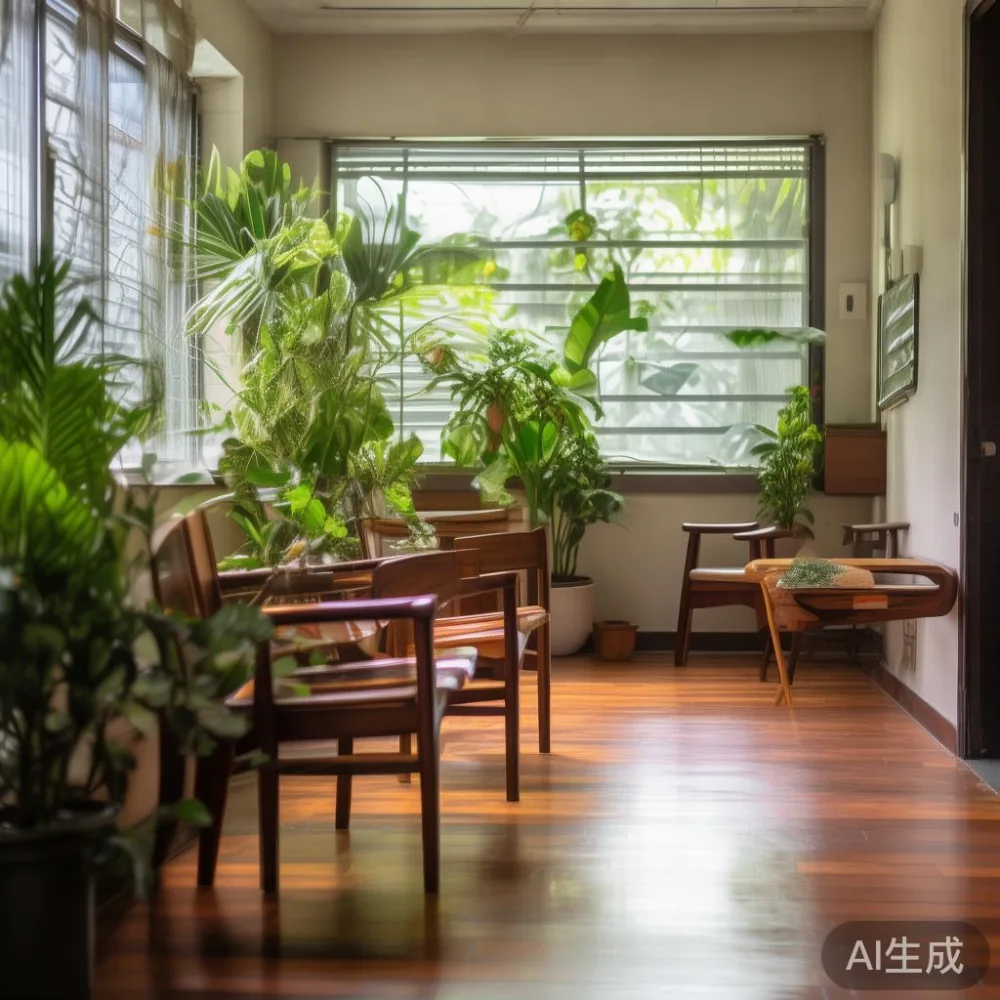
Singapore sits in a band of 75–95 % relative humidity for most of the calendar year. Indoor readings in Tampines and Punggol HDB flats, especially on the lower storeys, regularly sit between 70 % and 82 % even with the air-con running. That single number — 70–95 % — drives every wood-related surprise a homeowner meets: the hairline gap that opened between wardrobe doors in November, the sticking drawer in the bedside nightstand during the December rains, the dining table leaf that swells shut in February. None of these are defects. They are conversations between solid timber and tropical air.
What exactly is happening inside a solid wood sofa frame when humidity crosses 70 %?
Wood is hygroscopic. A 2 m slab of ash or oak used in a solid wood sofa frame absorbs and releases water vapour until it reaches equilibrium moisture content (EMC) with the surrounding air. In Foshan's climate-controlled factory — kept at roughly 55 % RH during assembly — the timber settles near 10 % internal moisture. Move it to a Singapore bedroom running at 78 % RH, and that same timber will climb toward 14–16 % EMC within six to eight weeks. The result is a 0.3–0.6 % dimensional change across the grain. On a 2 m frame, that is 6 to 12 mm of growth. Tiny in raw numbers; enormous when two panels meet at a corner.
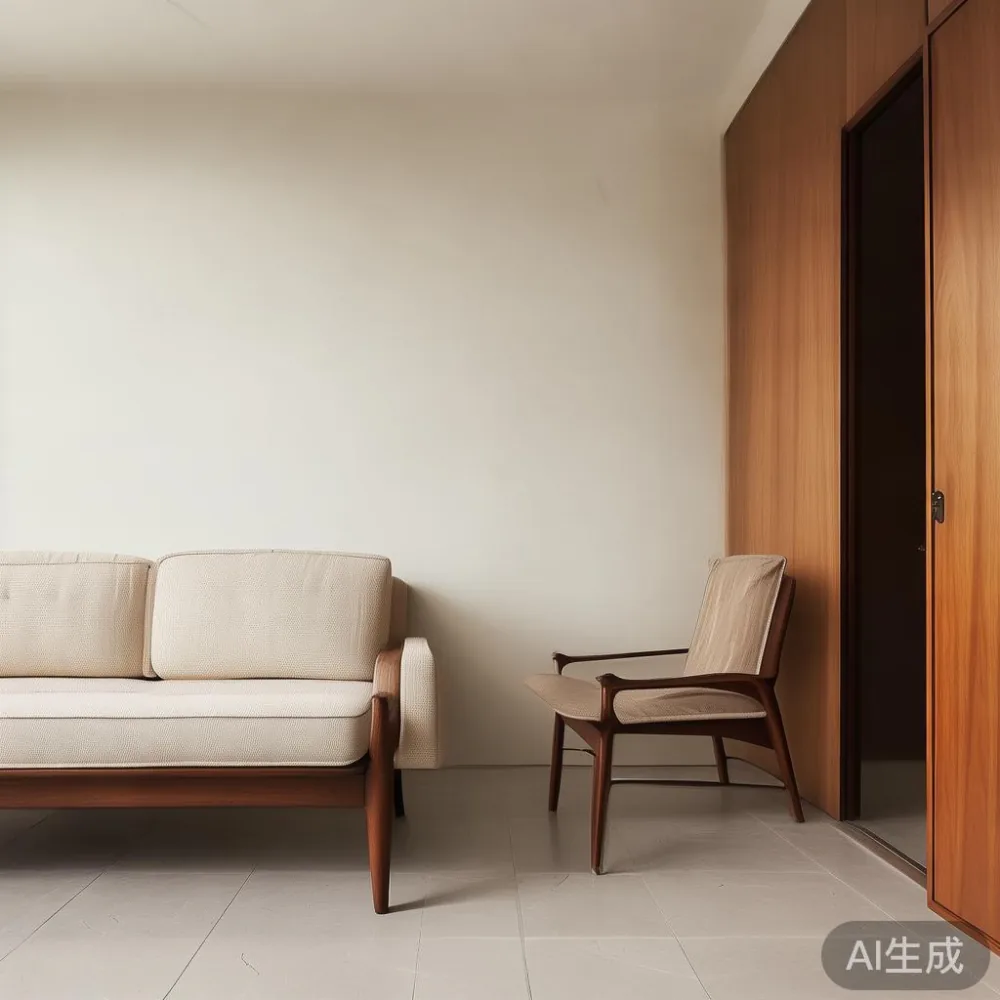
Because mid century modern design favours clean, exposed joinery and minimal overhang, those dimensional shifts are more visible than on a chunky, traditional farmhouse piece. A 1 mm gap between a walnut bed frame rail and headboard in March can become 3 mm by August, then close again by January. Engineers call this movement; homeowners call it a defect. Neither label is wrong — both are real — but the practical response is the same: leave the wood room to move.
Will my marble table door or crack and spread learn how to choose Japanese wardrobe?
That is the question a customer in Bedok asked me last month, and it is worth unpacking. The phrase sounds odd because marble is not wood, but in a Singapore home the stone top on a side table or a console behaves like a thermal sponge — drawing moisture out of the air on humid nights and releasing it on dry afternoons. A 60 cm round marble table top can grow 0.8 mm in diameter across a wet week, and that growth transfers stress to the wooden apron beneath it. The fix is not the marble: it is the apron. Choosing a kiln-dried hardwood apron with a moisture reading below 12 % at delivery reduces the differential.
The same logic drives the question of how to choose Japanese wardrobe cabinets for local use. Japanese joinery is famously restrained — slim frames, exposed tenons, no face frame — which is gorgeous but unforgiving in the tropics. A tansu-inspired wardrobe with 18 mm side panels will move; one with 25 mm quartersawn panels, sealed on all four edges, will move less. The lesson applies whether you are looking at a Japanese silhouette or a French light luxury armoire with rattan panels: thickness, sealing, and grain orientation matter more than the label on the catalogue.
Why does my wardrobe door drag after 8 p.m. during the wet season?
Singapore's humidity curve has a daily rhythm. RH peaks between 6 a.m. and 9 a.m., dips in the early afternoon, and rises again after sundown. A wardrobe door — typically 200 cm tall and 18–22 mm thick — responds to that rhythm with a 0.2–0.5 mm swelling by late evening. On a flat slab door with 2 mm of clearance, that single night-time spike can cause the door to rub the carcass.
Three practical fixes, all borrowed from cabinetmakers who have spent decades fitting rooms in Tampines, Toa Payoh, and Bukit Batok HDBs:
- Leave 3 mm of clearance top and bottom on every hinged door rather than 1.5 mm. The visible gap closes visually once the room is dressed with curtains, but the door will never bind.
- Run a 25-litre dehumidifier in the bedroom during the November–February wet phase. Keep it between 55 % and 60 % RH — not lower, because going below 50 % creates a different set of cracks and checks on the bed frame headboard.
- Seal the unfinished edges of any MDF back panel with a quality shellac or polyurethane. The edges drink moisture ten times faster than the faces, and that is where most warps start.
The same logic applies to a European light luxury TV console in the living room — the back panel of a 1.8 m console is the surface most exposed to the wall, where trapped air can sit at 85 % RH for hours after a thunderstorm. A 6 mm gap behind the unit, plus two wall spacers, lets the back breathe.
How humid is too humid for a MIDHILL TV console delivered to a 5th-storey walk-up?
Most HDB blocks in Singapore top out around the 12th to 14th storey. The higher you go, the drier the air — roughly 1 % RH drop per two floors during the wet season, because you are farther from ground-level moisture. A buyer on the 5th floor can expect about 73 % average indoor RH; one on the 12th floor about 69 %. That difference is the reason a MIDHILL TV console fitted on the 5th floor of a Punggol block tends to sit perfectly six months in, while the same unit on the 9th floor might show a 2 mm hairline at the mitred corner — not a fault, just a different starting moisture content.
Two pieces of guidance follow. First, request the factory moisture reading on your delivery note — responsible Foshan makers will record 10–13 % MC at the workshop and again at the container. Second, let the piece acclimatise. Open the carton, lift the unit onto its felt pads, and leave it in the room with the air-con at 26 °C for 48 hours before final placement. That window lets the timber equalise with your specific microclimate rather than the average climate.
A small honest disclaimer here: even with perfect acclimatisation, a 200 cm dining table made of solid ash can still move 4–6 mm seasonally. That is why experienced buyers in Singapore gravitate toward frames that allow the top to float on a wooden skirt — a detail common in both Scandinavian and mid century modern dining tables — rather than being glued at the corners.
What should a Singapore buyer budget for a delivery that actually fits through a HDB corridor?
Numbers worth memorising: a standard HDB corridor door measures about 90 cm wide and 200 cm tall. The service lift opening in most 1990s–2010s blocks is roughly 90 cm wide, 210 cm tall, and 140 cm deep. Newer BTOs at Punggol and Tengah often run 100 cm wide and 220 cm tall. A king-size bed frame at 198 cm long and 212 cm wide will not fit flat through either lift, so it must ship in two halves — something any reliable Foshan supplier should plan for at quotation.
For a realistic SGD budget on a quality solid wood package delivered to a 4-room HDB in Bedok with GST at 9 % included:
- 160 cm walnut dining table with four chairs — SGD 2,450–3,200.
- Queen-size oak bed frame with two nightstands — SGD 1,850–2,600.
- 180 cm three-door wardrobe with mid-century handles — SGD 2,200–2,950.
- Solid wood sofa in three seater configuration, washable covers — SGD 3,400–4,250.
- Marble table lamp-and-side set with brass stem — SGD 480–720 per piece.
Shipping from Foshan to Singapore typically takes 14 to 22 days by sea plus 3 to 5 days for last-mile delivery inside Singapore. Free shipping over US$350 translates to roughly SGD 480, so most single-piece orders clear that threshold easily. A 14-day return window plus a 10-year structural warranty on joinery removes most of the buyer's downside, especially when the supplier also offers lifetime refinishing — meaning the table you buy at 28 can be sanded and re-oiled at 48.
Will a solid wood wardrobe in a Punggol HDB ever stop moving?
No — and that is the part most catalogues leave out. Wood never stops moving; it only slows down. A 100-year-old teak wardrobe in a Conservation shophouse still responds to humidity, just more gently because the timber is fully seasoned and the surface is sealed with decades of patina. The goal is not to stop the movement but to manage it.
Three habits make the difference in day-to-day ownership:
- Wax the top of every dining table every four to six months with a beeswax-and-carnauba blend. A 250 g tin costs around SGD 22 and covers a 180 cm top twice.
- Keep all furniture 8–10 cm away from the air-con vent. Direct cold air on one side of a 200 cm side panel creates a 6 % RH differential across that panel and a guaranteed cup.
- Avoid placement directly under or against a north-facing wall in a non-aircon store room. North walls in Singapore never see direct sun, so they stay damp; a wardrobe against that wall will absorb moisture from the back face and bow outward at the front.
Whether the silhouette is mid century modern, American light luxury with brass-tipped legs, or post-modern light luxury with curved plywood edges, the underlying physics is identical. A well-built piece from a maker that kiln-dries to 10–12 % MC, ships in moisture-controlled containers, and finishes with at least three coats of sealer will outlast the apartment it sits in.
How to style American wardrobe in bedroom — without inviting a moisture trap?
Styling an American-style wardrobe in a Singapore bedroom comes down to airflow. Most American wardrobes are deeper than their Japanese counterparts — 60 cm rather than 45 cm — which means more internal volume and more trapped humidity. Leave at least 5 cm between the back of the wardrobe and the wall, install two felt-bottomed vents on the rear panel, and keep the interior lined with cedar blocks to buffer moisture swings. The same rule applies when you think about how to style American sofa in bedroom for the guest room: keep the sofa 30 cm off the wall, never against a curtain that touches the floor, and rotate the seat cushions weekly so the foam does not develop a permanent set.
For the dining room, the relevant phrase is Minimalist for dining room — and minimalism happens to be the best humidity strategy. Fewer pieces mean fewer surfaces collecting moisture, fewer crevices trapping dust that holds water, and clearer airflow around each item. A 160 cm solid wood table, four chairs, one sideboard, one pendant light. Nothing more. The room breathes, the wood moves within its tolerance, and the household enjoys the silhouette without the maintenance overhead.
Any quick checklist before I press buy on a Modern furniture piece?
Yes — keep it on your phone for the next showroom visit or web order:
- Ask for the kiln-dried moisture reading on the spec sheet. Anything between 10 % and 13 % is healthy for Singapore delivery.
- Confirm the delivery team measures your lift and corridor before shipping, not after. Most Foshan makers will send a checklist within 24 hours of order confirmation.
- Read the warranty in writing. A 10-year structural warranty on joinery and a lifetime refinishing option are the two numbers worth chasing; paper-thin one-year warranties are not.
- Budget for the GST-inclusive landed price, not the pre-tax sticker. At 9 %, a SGD 3,000 piece becomes SGD 3,270, and that last 270 is the difference between a comfortable buy and a stretched one.
- Plan for a 48-hour acclimatisation window inside the home before final placement.
Once the piece is in place and the air-con is set to 26 °C, run a small hygrometer near the wardrobe or bed frame for two weeks. If readings hold between 55 % and 65 %, the wood will settle into its environment and behave like the showroom sample. If the room runs higher, a 25-litre dehumidifier on a humidistat closes the gap without drying the wood below its comfort zone.
A last note from that Punggol delivery I mentioned at the start. The dining table is now 14 months in, has been through two monsoon cycles, and shows a steady 2 mm seasonal gap at the breadboard end — the floating tenon that lets the top expand freely. The owner has waxed it four times, keeps it 8 cm off the air-con vent, and treats the gap as a feature rather than a flaw. That is the right frame of mind for any mid century modern piece in Singapore: the wood is alive, the air is alive, and the home they share is healthier for the conversation.
If you are browsing for sale Modern furniture listings this weekend — whether a walnut bed frame, a marble table lamp, or a full bedroom set — bring this checklist, ask for the moisture data, and pick a maker that has spent at least a decade fitting Southeast Asian homes. The result is furniture that ages into your apartment instead of against it.