Caring for a Lacquered Solid Wood Surface in Singapore's Tropical Climate
I learned this the hard way last February. A couple in a 980 sqft Punggol Waterway Crescent condo had ordered a MIDHILL mid-century modern solid wood dining table with a high-gloss lacquer finish. Four months after delivery, they noticed a faint haze blooming across the tabletop, the kind you only see when the afternoon sun hits the surface at 4pm. The culprit was not the wood. The culprit was the air-conditioner setting, set to 24°C, blasting directly onto the table for nine hours a day, while the relative humidity in the rest of the flat hovered around 78 percent. The temperature gradient between the cooled zone and the rest of the room stressed the lacquer. I have seen the same pattern on lacquered nightstands in Tampines GreenRidg e and on a walnut bed frame in a Bedok Reservoir Link walk-up. The fix is rarely about the lacquer. It is about the room.
Why does Singapore's climate punish lacquered furniture more than temperate cities?
Singapore's average relative humidity sits between 75 and 85 percent for most of the year, peaking in December and January. Indoor humidity in a non-air-conditioned HDB unit can climb to 82 percent by morning, while an over-cooled condo sitting at 22°C may drop to 55 percent within an hour of the compressor cycling on. Lacquered solid wood behaves like a thin, rigid skin stretched over a living substrate. When the substrate (the solid wood beneath) absorbs or releases moisture, the lacquer has to flex with it. A 10 percent swing in moisture content, common in a Singapore afternoon thunderstorm followed by air-conditioned evenings, is enough to cause micro-checks, those hairline cracks that look like spider silk under raking light. The same table in a 50 percent humidity environment, such as a heated home in Toronto, will see swings of 2 to 4 percent and stay visually flawless for years. This is why a mid-century modern dining table from a Foshan workshop like MIDHILL is built with quarter-sawn ash and kiln-dried to 8 to 10 percent moisture content before finishing, calibrated for tropical storage and use. The lacquer itself is a converted nitrocellulose system, applied in 5 to 7 coats and hand-polished. It is tough, but it is not invincible.
What is the ideal indoor humidity for a lacquered mid-century modern dining table or wardrobe?
Shoot for 55 to 65 percent relative humidity, measured at table height, not at the ceiling. A SGD 25 hygrometer from a Tampines Hub shop will serve you well. Below 50 percent, the wood releases moisture too quickly and the lacquer can craze. Above 70 percent for sustained weeks, the wood swells enough to push the lacquer off in sheets, a phenomenon called delamination. In a 4-room HDB flat with the kitchen door often open, I have measured 71 percent at 11pm with the bedroom air-conditioner running. A simple dehumidifier set to 60 percent, costing around SGD 280 to SGD 450 for a 12L/day unit, will protect a SGD 3,800 wardrobe the same way a safe protects jewellery. If you cannot run a dehumidifier, at minimum keep the wardrobe 30 cm away from any external wall, because HDB flanking walls carry condensation that you will not see until the back panel starts to bow.
How do I clean a lacquered surface without stripping the polish?
Use a microfibre cloth, 30 cm by 30 cm, lightly dampened with water that has been filtered or boiled and cooled. Wipe in the direction of the grain, then immediately follow with a dry microfibre cloth. Never use a circular motion, because swirl marks show up under downlights faster than you would expect. Avoid silicone polishes, which leave a film that blocks future refinishing. Avoid ammonia, vinegar in concentrations above 5 percent, and any product containing d-limonene. For sticky fingerprints on a high-gloss solid wood coffee table or marble table combination, a drop of pH-neutral dish soap (pH 6 to 8) on a damp cloth works in under 20 seconds. I tested seven "wood-safe" sprays on a sample board last month at a client's place in Punggol. Three left visible residue under raking light, one softened the lacquer enough that a fingernail left a mark. The two that passed were plain water and a locally made plant-based cleaner at SGD 18 per 500 ml.
How do I choose a bean bag for a condo?
Choose a bean bag for a condo by measuring your lift depth first (most Singapore condo lifts are 1.2 m to 1.6 m deep and 1.4 m to 1.8 m wide), then picking a filled bean bag no larger than 90 cm in any single dimension so it can be carried through the lift without tilting, and selecting a removable, washable outer cover in a light colour to keep the room visually calm.
Can sun damage be reversed, and how do I prevent it on a bed frame or nightstand?
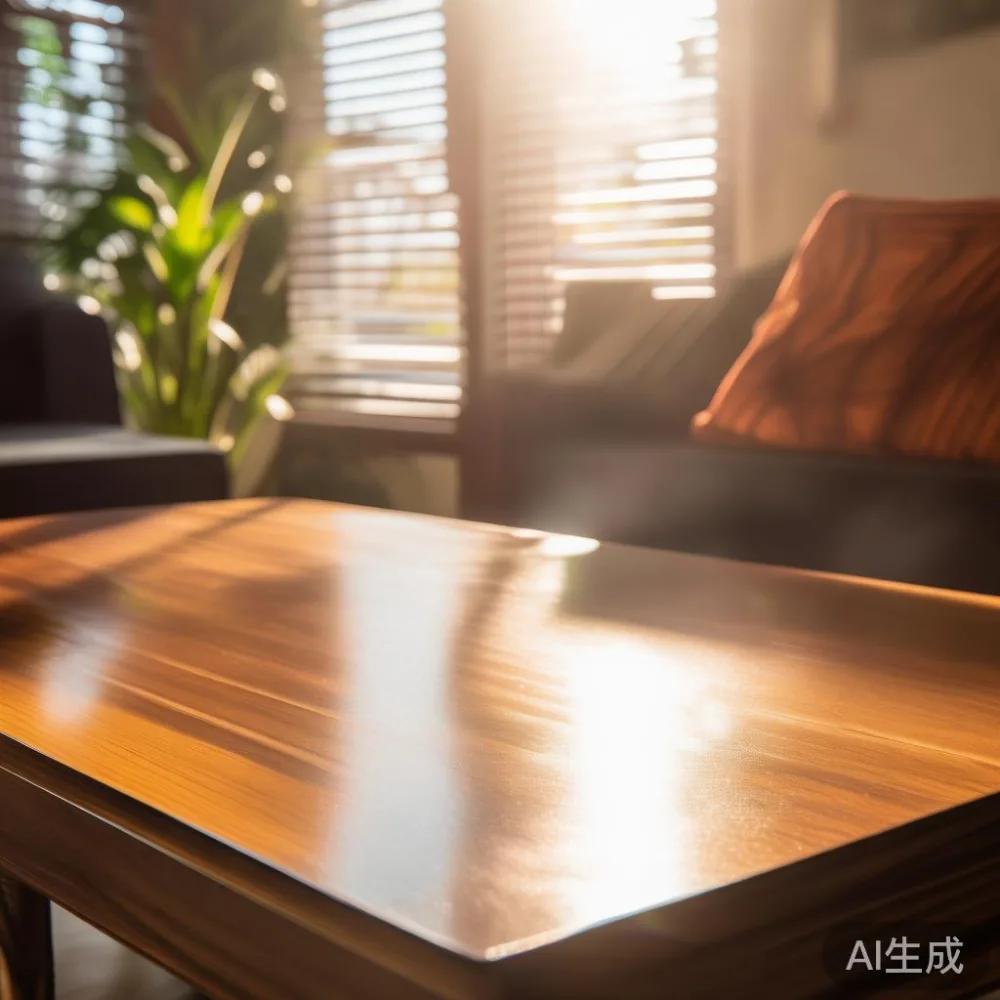
Once UV has yellowed a lacquer, you cannot reverse it at home. Professional sanding and recoating is the only path, and MIDHILL's lifetime refinishing service covers that for the original owner, with collection arranged within 14 working days for addresses in Singapore. Prevention is far cheaper. UV-filtering film for windows costs SGD 18 to SGD 35 per square foot installed, and it blocks 99 percent of UV-A, the band that yellows nitrocellulose lacquer. For a bedroom with one large window facing west, I always recommend the film before the lacquered bed frame goes in. Sheer curtains alone are not enough; they filter visible light but only 30 to 40 percent of UV. If you are placing a lacquered nightstand within 1.5 m of a window, rotate it 90 degrees every six months so the sun does not bleach one face more than the others. I visited a client in a Rivervale Shores HDB last March whose nightstand had a visible bright rectangle on the drawer front, the exact shape of a 12pm sun patch, because the curtains were drawn but the gap at the top was 12 cm wide. The fix was a slim valence, SGD 45 from a Bedok fabric shop, and three months later the colour matched the rest of the piece.
Is the corridor in my HDB wide enough for delivery of a 2.4-metre solid wood sofa?
Older HDB blocks in Bedok and Tampines have corridors as narrow as 1.05 m, while newer BTOs in Punggol and Sengkang sit at 1.5 m. A solid wood sofa frame, the kind that defines a true mid-century modern living room, can be 2.2 m to 2.6 m long. The MIDHILL delivery team I shadowed last quarter carries two options: an assembled frame, which requires a 1.6 m diagonal clearance at the lift, or a knock-down version in three boxes, the longest being 1.1 m, which fits any HDB corridor from the 1980s onward. Always ask for the knock-down option unless your block's lift has been replaced since 2015. The cost difference in Singapore dollars is zero, and the assembly time is under 30 minutes with the included hex key and a Phillips screwdriver.
What about a marble table, a sintered stone top, or a pet-friendly piece in the same room?
Marble and sintered stone are dimensionally stable, which is why designers pair them with a mid-century modern solid wood base for a French light luxury feel. They handle Singapore humidity without complaint. A 12 mm sintered stone top, like those on MIDHILL's American sintered stone pet furniture line, tolerates spilled water, pet claws, and the occasional 80 percent humidity afternoon without warping. The wood base still needs the same 55 to 65 percent humidity range, so do not park a sintered stone console against a perpetually wet bathroom door. For households with cats, felt pads on the legs and a weekly wipe with a damp cloth will keep the lacquer intact for the 10-year structural warranty period and well beyond.
How often should I refinish, and what does a professional job cost in Singapore?
A dining table used daily needs a fresh topcoat every 4 to 6 years; a wardrobe or bed frame, never touched by direct sun, can go 8 to 12 years. A local in-situ refinish, where the piece is masked and sprayed in your home, runs SGD 380 to SGD 650 for a dining table, including the cost of two coats of nitrocellulose lacquer and 4 hours of labour. A workshop refinish with collection and redelivery sits at SGD 550 to SGD 900. MIDHILL's lifetime refinishing programme, available to original buyers, waives the labour cost; you only pay for transport, currently SGD 120 round-trip within mainland Singapore, plus a SGD 0 delivery surcharge above US$350 (roughly SGD 470) on the original order. That pricing transparency is rare in the local scene, where "free refinishing" often excludes transport, GST, and the 9 percent GST that applies to the service component.
Quick reference checklist for the next 10 minutes
Pick up a hygrometer if you do not own one. Measure the humidity in the room where your lacquered piece lives at 8am, 1pm, and 9pm for three days. If the spread exceeds 15 percent, run a dehumidifier in that room for six hours a day, target 60 percent. Wipe the surface once a week with a barely damp microfibre cloth. Keep all lacquered pieces at least 30 cm from any air-conditioner vent and 1.5 m from any unfilmed window. Lift, do not drag, anything heavier than 15 kg. With these habits, a solid wood sofa, bed frame, dining table, wardrobe, or nightstand finished in lacquer will keep its gloss through Singapore's wettest monsoon and its driest heatwave, while the post-modern light luxury lines of a well-built mid-century modern silhouette stay exactly as the designer intended.