Mid Century Modern: Lacquered Surface Care in Singapore
If you live in a Tampines or Bedok HDB and you’ve just had a 1.8m solid wood dining table hoisted up the service lift on a Saturday morning, the next ten years of your furniture’s life depend almost entirely on one thing: how you treat the lacquer when the humidity sits at 82% and the afternoon thunderstorm rolls in over Punggol. I learned this the hard way last March, when a client’s bedroom wardrobe arrived with a showroom-perfect piano finish and, eight weeks later, started showing faint clouding along the edges. Nothing was wrong with the wood. The lacquer simply had no plan for the climate. So consider this a field guide, written from a workshop floor and a few too many site visits, on keeping a mid-century modern lacquered surface calm, clear, and structurally honest from year one through year ten.
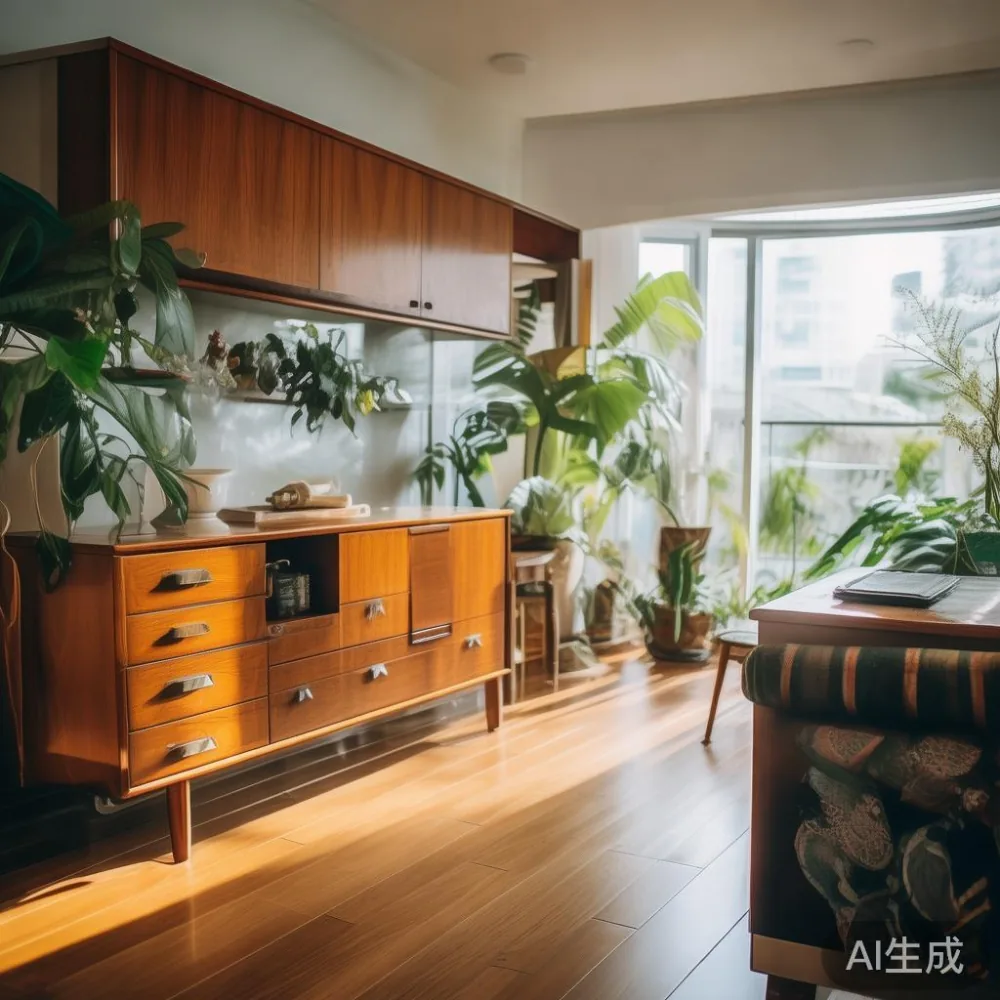
Why Singapore’s climate is unusually hostile to lacquer
Lacquer is a film. It looks like glass because, at a chemical level, it behaves a bit like one — rigid, sealed, and unforgiving of movement underneath. Singapore sits between 1° north of the equator, with relative humidity that swings from about 65% on a dry February afternoon to 95% during the December monsoon. The recommended indoor range for lacquered solid wood furniture is 45–55% relative humidity and 20–24°C. We are asking tropical wood to live in a Scottish greenhouse.
Solid wood itself is hygroscopic: it absorbs and releases moisture along the grain. A kiln-dried oak or ash plank for a mid century modern dining table is dried to roughly 8–10% moisture content at the factory. In a non-air-conditioned corridor in a Punggol condo, that same plank can climb to 14% within a fortnight. The lacquer doesn’t expand at the same rate as the timber, so micro-cracks (called checking) form in the film. That is what my client’s wardrobe showed: not damage, but stress.
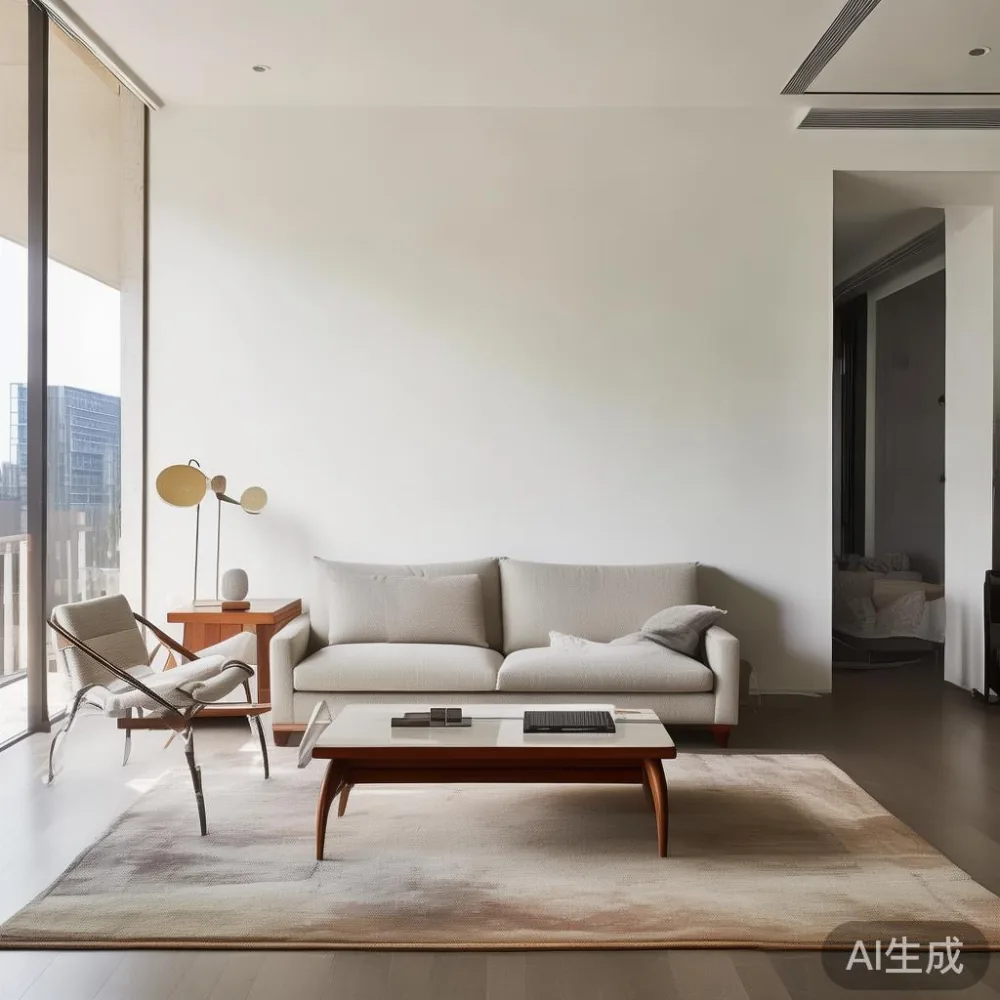
Two other local factors matter. The first is particulate humidity — that fine salty haze you can sometimes taste at East Coast. Salt accelerates lacquer breakdown, particularly on open-grain ash and walnut. The second is UV. A west-facing window in a HDB in Bedok Reservoir receives roughly four hours of direct afternoon sun during the equinox. UV oxidizes the resins in lacquer, causing yellowing on light finishes and dulling on dark. So before we even discuss cleaning cloths, the climate is the elephant in the room.
Do I really need a dehumidifier for my solid wood furniture?
Short answer: yes, if you want your lacquer to look the same in 2034 as it did in 2024. A 12L/day dehumidifier (S$189–S$269 for the MeacoDry Arete One or similar) running in the room containing your solid wood sofa frame, dining table, or sideboard will keep the relative humidity inside that 45–55% envelope. Position it about 1.5m away from the piece; you want ambient control, not a localized dry spot that can cause the wood to shrink unevenly on one side.
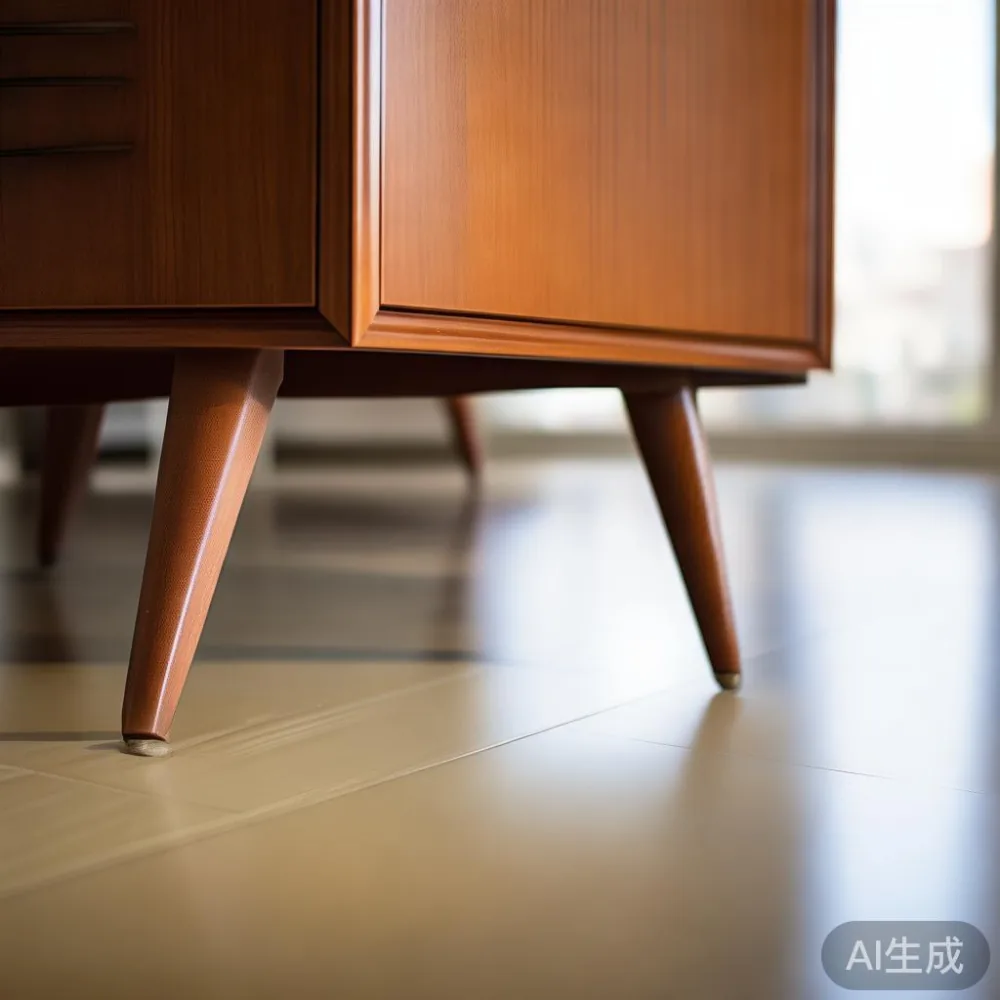
In HDB flats, you can run a dehumidifier for 6–8 hours a day during the wet season (November to February) and 2–3 hours during the dry season (typically June to September). Expect roughly S$15–S$25 added to your monthly electricity bill at current SP Group rates. For a three-bedroom condo, a second unit for the master bedroom costs another S$8–S$12. The arithmetic is unromantic, but it is cheaper than refinishing a 2.4m marble-and-walnut sideboard, which MIDHILL’s lifetime refinishing service quotes at roughly S$280–S$420 per panel depending on the square meterage and lacquer system.
If you do not want to run a machine, at minimum keep your air-conditioning set to 23–25°C with the dry/dehumidify mode on for 3 hours daily. The NEA-recommended indoor temperature is 25°C, which is the right ceiling for timber. Avoid the impulse to crank to 20°C — large temperature deltas between day and night are worse for lacquer than a steady warm room.
The weekly routine: what to actually wipe, with, and how often
Once your macroclimate is under control, the microclimate — the surface itself — becomes manageable with a 90-second weekly habit. The sequence below is what I now walk every client through after delivery.
- Step 1: Dust with a clean, dry microfiber cloth (16×16 cm, 220 gsm or higher). Move in the direction of the grain, not across it. A lambswool duster on an extension pole is acceptable for the tops of a 2.0m mid century modern wardrobe where you cannot comfortably reach.
- Step 2: Once a fortnight, slightly dampen a second microfiber cloth with distilled water (S$3.50 for 5L at any FairPrice). Wring it until no water drips. Wipe once, then immediately follow with a dry cloth to remove the moisture film.
- Step 3: Every 6 months, apply a sparing amount of paste wax — I prefer a neutral beeswax such as Briwax, S$28 for 200ml — using a soft cloth, leave 8 minutes, buff with a clean cloth. This is the single best protection against humid air reaching the lacquer.
Never use the following on a lacquered surface, no matter what the hardware shop recommends:
- Silicone-based polishes (Pledge, Mr Sheen). Silicone penetrates micro-cracks and ruins any future refinishing. A refinisher will charge an extra S$80 per square meter to strip silicone contamination.
- Household cleaners containing ammonia or bleach. Both cloud the lacquer film within a single application.
- Anything labeled “multi-surface” or “kitchen.” These are formulated for laminate and stainless steel, not cured resin.
- Magic erasers. The melamine foam is abrasive enough to dull a satin lacquer in three passes.
For ring marks — the white halos left by a cold glass of barley tea — try a paste of baking soda and a drop of water, applied with a fingertip in a small circular motion for no more than 10 seconds, then buff. If the mark persists beyond 30 seconds of gentle work, stop and call a refinisher. Aggressive rubbing will cut through the lacquer film and into the stain layer below.
How to choose Mid-century modern sofa proportions when your lift is only 2.1m wide
This is the question I get most often from buyers in Punggol and Sengkang, where service lift dimensions can be a real constraint. Most HDB service lifts in newer BTOs measure 2.1m wide × 2.4m deep × 2.4m tall, with a payload of around 1000 kg. A solid wood sofa with a kiln-dried ash frame, three seat cushions, and pocket-sprung suspension typically ships in two cartons weighing 78 kg and 62 kg. Add 15 kg for the cushion pack, and you are at 155 kg of incoming mass before any packaging. That is fine for the lift, but the disassembled dimensions are what actually decide whether the frame will fit.
When planning how to choose Mid-century modern sofa configurations for a Singapore home, work backward from the lift. Measure your service lift door opening — it is almost always narrower than the lift car itself, usually 1.8m or 2.1m. A three-seater frame in one piece will often exceed 2.2m. The honest answer is to specify a sofa that ships in two halves with a bolted joiner, which is exactly how MIDHILL’s solid wood sofa is engineered: two L/R modules, each under 1.5m long and 0.9m deep, joining in the room with a single 10 mm threaded dowel and a hex key. Two people can complete the assembly in 12 minutes.
If you are comparing a European bed vs Nordic bed for the same apartment, the same logic applies: shipping in flat-pack modules with a 38 mm-thunk solid beech slat system is usually easier to work through than a one-piece headboard, even if the one-piece version looks better in the catalogue. Lift capacity is the silent filter on every furniture decision in a high-rise flat.
Sun, salt, and the honest truth about air-conditioning placement
I visited a client last month in a corner unit along the Singapore River, where a 1.6m walnut credenza had developed a 30 cm pale strip across the front after eight months. The cause was the air-conditioning vent above the piece: cold dry air hitting one face of the wood while the opposite face sat in ambient humidity. The differential caused the dry side to shrink 0.8% more than the humid side, pulling the lacquer into a hairline fracture. We repositioned the credenza 80 cm sideways, and the next six months showed no progression.
The rule is: keep lacquered furniture at least 1m away from any active AC vent or fan, and 1.5m away from a window that receives direct afternoon sun. If you cannot avoid a sunlit wall, hang a sheer curtain (S$45–S$90 per panel at IKEA Tampines) that filters about 60% of UV. Sheers are not a perfect shield, but they cut the photodegradation rate by roughly half over a five-year span.
For homes near the coast — Sentosa Cove, Marine Parade, the East Coast stretch — wipe lacquered surfaces with a barely-damp distilled-water cloth once a week and follow with a dry buff. The salt content in the air is around 0.3–0.6 mg per cubic meter along the southern coast, which is enough to leave a barely-visible film that, over months, dulls the lacquer. Inland homes in Bukit Timah or Upper Thomson can reduce this to fortnightly.
When lacquer goes wrong: reading the warning signs early
Lacquer failure is not a binary event. It announces itself in stages, and a careful eye catches it early. The four stages I document during site visits:
- Clouding: A milky haze across the surface, visible when light hits at a low angle. Almost always reversible with a light polish and re-waxing.
- Checking: A network of hairline cracks, often only visible under raking light. Indicates the substrate has moved more than the film can follow. A refinisher can sand and re-coat without stripping the entire panel.
- Peeling: Lacquer lifts at the edges or corners. Caused by prolonged high humidity or water ingress. Requires a full strip and re-lacquer — typically S$120–S$180 per square meter.
- Yellowing: A warm amber tone creeping into a clear finish after 3–5 years in a sunlit room. Cosmetic, not structural. Buffed out or covered with a tinted maintenance coat.
If you spot stage 1 or 2 on your solid wood dining table or bedroom wardrobe, address it within 30 days. The longer the breach sits open, the more moisture gets under the film and the larger the eventual repair. MIDHILL’s warranty covers structural defects for 10 years and offers lifetime refinishing at cost-plus-material — which, for an honest reading, means a S$220–S$360 service call that buys you another decade of clear finish.
Buying lacquer that lasts: questions worth asking the showroom
Not all lacquer is equal. The four categories you will encounter:
- Nitrocellulose lacquer: Traditional, warm, repairable. Sensitive to heat and solvents. Most often used on mid-century reproductions.
- Acid-catalyzed (AC) lacquer: Harder and more chemically resistant. Harder to repair locally — usually requires a full panel refinish.
- Pre-catalyzed (pre-cat) lacquer: A middle ground. Reasonable hardness, good repairability, moderate cost. The default for most quality contract furniture.
- Conversion varnish: The hardest consumer-grade finish. Excellent humidity resistance. Difficult to spot-repair.
For a Singapore home, I lean toward pre-catalyzed lacquer on dining tables, wardrobes, and nightstands, and conversion varnish on heavily used horizontal surfaces like writing desks or marble-inlaid side tables. Ask the showroom for the technical data sheet. If they cannot produce one, walk away — every legitimate factory tracks this. A reputable maker will also tell you the number of coats (typically 3 sealer + 2 top), the film thickness in microns (target 85–110 µm), and the cure time (7 days for full cross-link).
Designer light luxury furniture in a 90 sqm HDB: restraint is the actual flex
There is a quiet trend across new launches in the OCR — Punggol, Tengah, Bukit Batok — where buyers are choosing one or two statement pieces rather than filling every corner. This is consistent with the French light luxury and American light luxury approach to post-modern interiors: a single sculptural solid wood bed frame in walnut, a 1.4m marble table as the dining surface, and a compact nightstand in the same timber to anchor the room. The eye reads the repetition of material as cohesion, not repetition of form as clutter.
For an honest take on whether is Japandi sofa worth it for a HDB living room, the answer depends on your lifestyle. If your household includes teenagers, a daily dog walk, or a habit of eating on the sofa, a Japandi-style slipcover in performance fabric is more forgiving than a tightly-upholstered American sofa vs Modern sofa with a high-pile bouclé. The latter looks better in a magazine; the former survives 2028. Both have a place. The mistake is choosing the magazine version and resenting the cleaning.
For buyers still weighing Japanese sofa vs Japandi sofa at the showroom, the practical split is this: a Japanese sofa tends toward low backs, firmer cushions, and straight arms, while Japandi softens the silhouette with slightly rounded corners and a lower seat depth. In a 2.8m-wide HDB living room, the lower profile reads as more spacious. In a 4m-wide condo living room, either works because the room itself absorbs the proportions.
A 12-month care calendar for Singapore owners
What follows is the exact schedule I write into the care folder that ships with each MIDHILL wardrobe and dining table.
- Daily: Nothing. Dust only when visibly needed.
- Weekly: Dry microfiber wipe, grain-direction. 60 seconds per piece.
- Fortnightly: Distilled-water wipe + dry buff. 90 seconds per piece.
- Monthly: Inspect under raking light (a torch held at 30°) for clouding or checking. Photograph any concern.
- Quarterly: Move lightweight pieces 2 cm off the wall to allow air circulation. Vacuum back panels with a brush attachment.
- Every 6 months: Beeswax application. 5 minutes for a nightstand, 20 minutes for a 2m sideboard.
- Annually: Check all wall-side ventilation. Re-tighten any hardware. Wipe down hardware (brass, steel) with a dry cloth — never spray polish.
- Every 3 years: Professional inspection, especially for pieces under direct sun or near the coast. Roughly S$80–S$120 for a half-hour visit.
What to do on delivery day: the first 14 days set the pattern
The first two weeks after a piece enters your home are when it adapts. Solid wood moves most aggressively in its first 30 days as it equilibrates to local humidity. Keep the room ventilated, run the dehumidifier for at least 4 hours a day, and avoid placing items on the lacquered surface during this period (no vases, no lamps, no laptops) so the finish can off-gas and cure evenly. Do not apply wax during the first 30 days — the factory coating is still hardening, and wax can trap solvents.
On delivery day itself, three quick checks before signing the POD: confirm the wood species and finish against the invoice, inspect all faces under a strong torch for micro-scratches or clouding, and verify that the humidity in the room reads between 50% and 60%. If you have a hygrometer (S$12 from any Challenger), check it before the team leaves. Anything above 65% means the piece is going into a stressful environment from minute one.
Once you’ve signed, keep the packaging foam in place for the first 48 hours if the air-conditioning has been off during your absence. The foam buffers the rapid humidity change. After 48 hours, remove foam, leave any protective film on horizontal surfaces for another 24 hours, then peel slowly at a 45° angle. Pulling protective film quickly can lift the lacquer edges on a fresh finish.
The cost of neglect, the cost of care
A mid-century modern solid wood dining table from a credible maker sits in the S$2,400–S$4,800 range in Singapore, with a 1.8m six-seater around S$3,200 including GST. A full strip-and-re-lacquer on a 1.8m table top runs roughly S$420–S$640 at a specialist workshop. The math is straightforward: 90 seconds a week and S$15 of distilled water and beeswax per year keeps you out of the refinisher’s queue. Ten years of that habit costs less than a single mid-range restaurant dinner per month, and it preserves a piece you will still be using in 2040.
Lacquer is not fragile; it is precise. It needs the right humidity, the right cloth, and a few seconds of attention. In return, it will hold the colour and clarity of the wood underneath for decades — which, in the end, is the entire point of choosing solid wood in the first place.