How Southeast Asian Humidity Affects Solid Wood Furniture — A Singapore Field Guide
I keep a small notebook on my phone for every house visit, and last month in a Tampines HDB five-room flat, I watched something a textbook would have predicted but a new owner had not. The owners had bought a solid wood bed frame eight months earlier from a regional e-commerce store. The headboard panels, originally 2.5 cm thick, had cupped by 3 mm along the top edge. The wardrobe door on the hinge side had racked 4 mm out of plane. The dining table — same batch, same wood — was fine. The difference was location, not luck: the bed frame sat against an exterior wall with afternoon sun, the wardrobe stood on the wall shared with the bathroom, and the table floated in the middle of the room with air on all four sides.
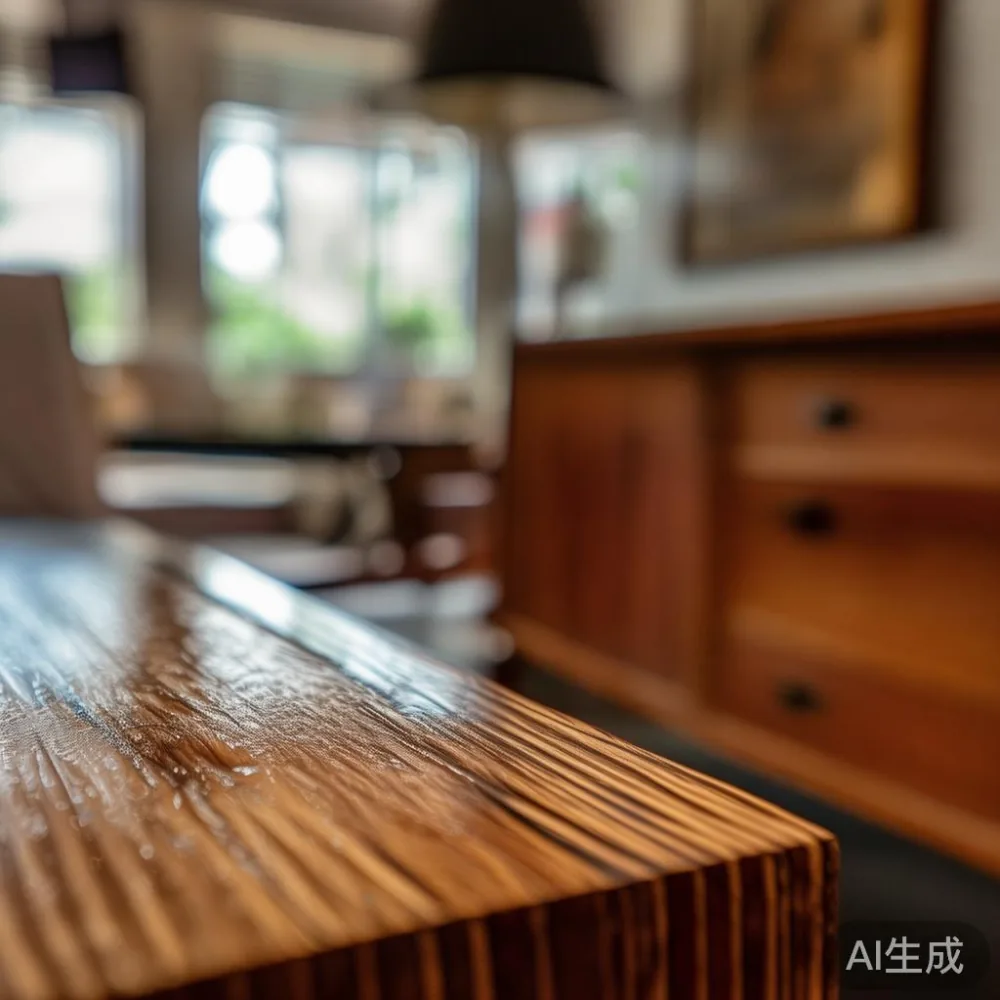
That flat taught me the same lesson Singapore teaches every importer of solid wood furniture. The city sits 137 km north of the equator. Annual relative humidity runs 70–85% for most of the year, dropping into the 50s on the driest air-conditioned afternoons and climbing past 90% during the November–February monsoon. Wood moves. Anyone buying a mid century modern bed frame, a solid wood dining table, or a six-door wardrobe owes it to themselves to understand that movement before it shows up as a crack at the joinery.
Why Singapore's Climate Is Harder on Wood Than Most Buyers Realise
Wood is hygroscopic. It absorbs and releases moisture to stay in balance with the air around it. For every 4% change in moisture content, an oak board moves roughly 1% across the grain. A 60 cm wide solid oak tabletop in a Tampines flat can swing 6–10 mm in width between a dry air-conditioned afternoon and a humid pre-dawn morning in December. Multiply that across a 180 cm dining table with four glued-up leaves, and the engineering has to absorb it.
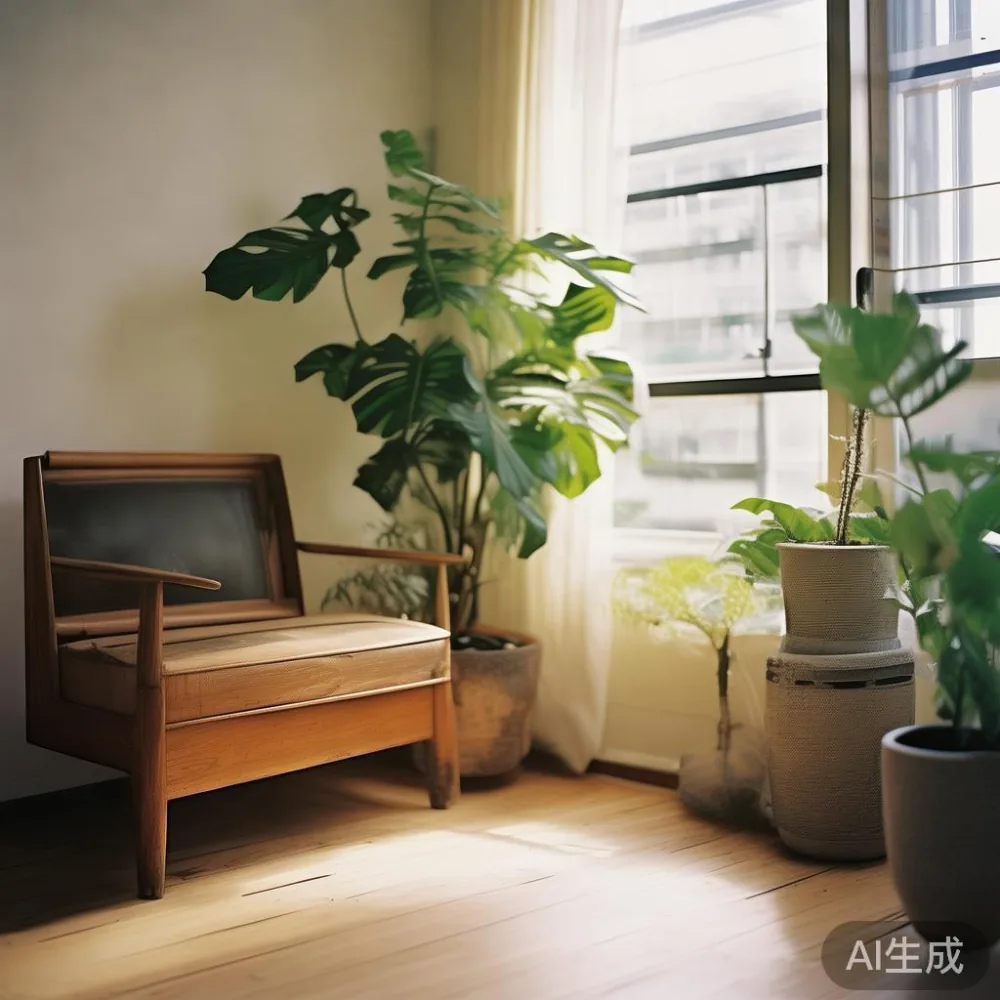
Singapore stacks three challenges on top of each other. First, the baseline humidity is high, so wood never fully dries out — it sits in a swollen, equilibrium state of roughly 12–15% moisture content. Second, air-conditioning pulls indoor humidity down to 40–55% for eight to twelve hours a day, then the unit switches off and the room swings back to 75%+. That 30-point swing happens every single day. Third, the construction itself — HDB flats in Punggol and Bedok with monolithic concrete walls, corridor-only cross-ventilation in some blocks, and small windows in the kitchen and bathrooms — traps moisture in zones you would not expect.
MIDHILL has been shipping containers from Foshan to Singapore for over a decade, and their production line bakes solid oak, ash, and walnut to 8–10% moisture content before assembly. That kiln-dry step is what separates a wardrobe that holds its geometry from one that racks within a year. A factory that skips it, or one that uses veneers over MDF, cannot hide the compromise for long in a Singapore bedroom.
The Four Failure Patterns I See in Local Homes
After roughly 60 home visits over the past three years, the same four patterns show up again and again. None of them are defects in the traditional sense — they are physics meeting a specific microclimate.
1. Cupping on wide panels. Headboards, wardrobe side panels, and dining table leaves wider than 18 cm will cup if one face sees more moisture than the other. A bed frame pushed against a wall that sweats during the monsoon will cup away from the wall, then crack along the glue line when the air-conditioner runs all night.
2. Racking on tall doors. A 210 cm wardrobe door has roughly 4.5 m² of wood surface reacting to humidity. If the hinges are fixed too rigidly, the door twists out of square and the latch stops catching. The fix is rarely new hinges — it is allowing the carcass to float on adjustable feet and giving the door 2–3 mm of seasonal tolerance.
3. Checks and splits at the end grain. End grain loses moisture roughly ten times faster than the long grain. Tabletop ends, the tips of table legs, and the open ends of bed slats develop hairline checks when the air-conditioning runs for six hours straight. The checks close up again when humidity returns.
4. Finish blushing. A lacquer or matte finish that was cured in a Foshan factory at 25°C and 60% RH can haze over when it sits in a Singapore bedroom at 28°C and 80% RH for the first month. This is cosmetic, not structural, and it usually polishes out.
How do I style a missing parts in a modern Singapore home?
The direct answer: missing parts on a newly delivered piece of solid wood furniture in Singapore are almost always a transit issue with the hardware pack, not a flaw in the wood itself, and the correct response is to document the carton within 24 hours, photograph the pallet label, and request a replacement hardware kit from the supplier before any assembly begins.
The longer answer, because this question comes up weekly in my inbox. When a customer writes in to say their nightstand arrived with three cam-lock bolts missing, or their marble table arrived with one felt pad absent, the diagnostic is straightforward. Wood expands and contracts; metal hardware does not get lost in the wood — it falls out of a torn hardware sachet, or it was packed in the bottom of a box the customer did not open. In a 9-square-metre HDB bedroom, the second unopened carton is the first place to check. So is the foam surround, because bolts threaded into that foam leave a dimple you can feel.
If the piece is genuinely short a part, document the production date stamped on the carton, the carton count versus the packing list, and the hardware bag serial number. MIDHILL ships replacement hardware bags from Foshan by air for warranty claims and ground-seats them at no charge; the typical turnaround to a Singapore address is 7–10 working days. For a French light luxury marble table with brass-plated feet, the brass feet are usually packed in a separate small carton taped to the underside of the main crate — easy to miss during a 9 p.m. delivery into a Tampines lift lobby.
Once the missing hardware arrives, a mid century modern nightstand takes about 25 minutes to assemble with a rubber mallet, an Allen key, and a flat floor. The wider question — how to style the piece once it is whole — depends on what was missing in the room. A bare corner next to a sofa begs for a 55 cm round marble side table. A blank wall above a bed frame wants a single 80 × 120 cm unframed print, hung 18 cm above the headboard. A dining area with no visual anchor wants a 1.6 m solid wood dining table on tapered legs, which reads as post-modern light luxury even in a 1970s HDB.
What Humidity Numbers Should a Singapore Buyer Actually Target Indoors?
For solid wood furniture, the target indoor range is 45–60% relative humidity, with as little daily swing as possible. A 30-point swing is a stress test. A 10-point swing is comfortable. Two practical numbers to remember:
• 55% RH is the equilibrium at which most European solid wood furniture was engineered to hold its geometry. A hygrometer costs S$12 at any neighbourhood hardware shop in Bedok or Tampines Mall. Buy one. Place it next to your wardrobe, not next to your air-conditioner thermostat.
• A 2°C drop in thermostat setting can buy you 5–8% RH indoors. Running the air-conditioner at 25°C instead of 22°C keeps the wood from drying into the danger zone overnight.
If a bedroom runs the air-conditioner from 11 p.m. to 7 a.m., expect a 25–35 point humidity swing. That is enough to crack a poorly seasoned nightstand within a year. The cheaper intervention is a S$45 dehumidifier set to 60% in the bedroom; the more durable intervention is to ask the supplier what moisture content the wood was kiln-dried to. Anything above 10% MC for tropical use is a yellow flag.
Which Furniture Categories Take the Most Punishment in Local Homes?
Ranking from most vulnerable to least, in real Singapore households:
1. Wardrobes (most vulnerable). Six doors, 210 cm tall, often pushed against a wall with limited airflow. A 240 cm wardrobe can rack 6–8 mm seasonally if the carcass is not anchored to a plinth or to the wall with anti-tip straps. Budget S$80–S$180 for professional anchoring during delivery; the HDB rule is one anchor per 100 cm of height for tall furniture, especially in flats with children or elderly residents.
2. Solid wood bed frames. The headboard and the side rails absorb the most humidity stress because they butt against walls. A mid century modern bed frame with slatted support and a 2.5 cm headboard panel fares far better than a fabric-upholstered headboard with exposed foam, because the wood can breathe on both faces.
3. Dining tables. A 1.6–1.8 m solid wood dining table is the workhorse of an HDB dining area and takes daily wiping, food spills, and chopstick dings. The seasonal movement is real, but the piece is not enclosed by walls, so the moisture differential is small. Expect 2–3 mm of seasonal width change on an oak top — normal, not a defect.
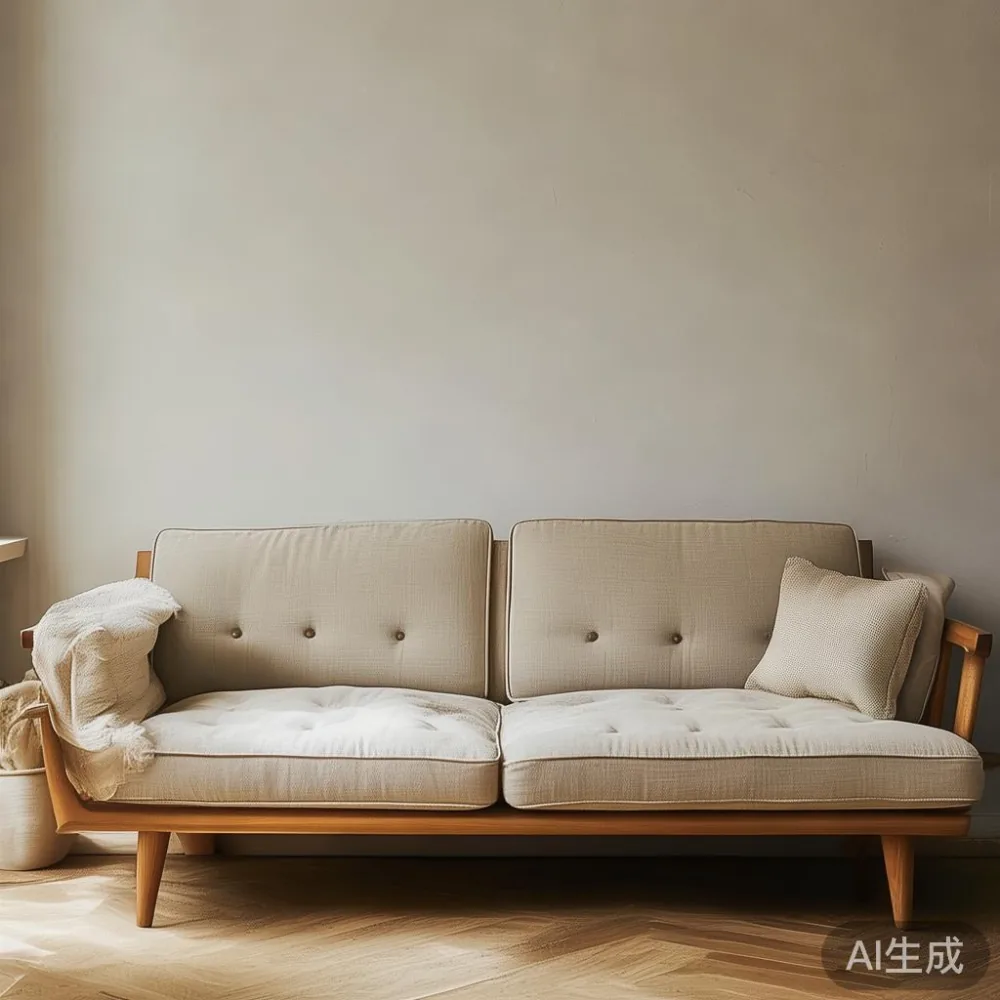
4. Solid wood sofas with timber frames. A solid wood sofa frame is usually hidden under upholstery, so humidity damage shows up first as a creak at the corner block, then as a cracked dowel. American light luxury sofas with kiln-dried ash frames and 8-way hand-tied springs are engineered for exactly this kind of cycling climate. Sofas with plywood frames are not.
5. Nightstands and side tables. The easiest category to manage because they are small, movable, and rarely against exterior walls. A 45 cm nightstand can be rotated 90° every three months to even out the moisture exposure.
6. Marble tables. Marble is dimensionally stable. The timber or metal sub-frame moves; the stone does not. A French light luxury marble-top coffee table on a solid ash base will move at the joints where the stone meets the wood, so look for a sub-frame that allows the stone to float on silicone pads rather than being glued tight.
What Should a Buyer Check on the Delivery Day?
A 14-day return window is standard in Singapore for furniture bought from overseas or online. Use it. On delivery day, before the lift ride up to your floor, run through this list with the delivery team:
• Carton count versus packing list. A six-door wardrobe should arrive in four to six cartons. A dining table typically ships in one or two. If a carton is missing, mark the delivery order before signing.
• Moisture meter reading. A pin-type moisture meter costs S$35–S$60. Push the pins into an inconspicuous edge of a tabletop or the back of a headboard. Anything reading above 12% MC means the wood was packed with too much moisture and will move aggressively in your flat.
• Hardware pack sealed. Cam locks, dowels, Allen keys, felt pads, and anti-tip straps should be in a sealed sachet taped to the inside of the carton. Open it on the floor, not in the lift lobby.
• Floor protection. Most Singapore lifts in HDB blocks are 1.1 m wide and 1.4 m deep, with a 600 kg payload. A 240 cm wardrobe will not fit vertically; it ships on its side. The carton should have foam corner protectors at every vertical edge. If those are crushed, photograph the carton before opening.
• GST and duty. For a single shipment under S$400 in CIF value, no GST is due. Above that, 9% GST applies on the landed value. Most Singapore customers add 9% to the displayed price for a realistic budget.
• Lift access. A 4- or 5-room HDB lift can take a 2.4 m long carton only on the diagonal. Book the lift with your neighbour for the delivery slot, and reserve the freight lift if your condo has one. A missed booking means a S$60 redelivery fee in most contracts.
Practical Habits That Extend the Life of Solid Wood Furniture in Singapore
Three habits cover 80% of the maintenance burden. First, keep the piece 8–10 cm away from any exterior wall. Air circulation on the back face prevents the differential that causes cupping. In a tight HDB bedroom, that means floating the bed frame 10 cm off the wall and accepting a slightly narrower walkway.
Second, wax the wood twice a year. A paste wax like Briwax or a hard wax oil like Osmo Polyx-Oil builds a moisture buffer on the surface. Apply it on a dry afternoon when the air-conditioner has been running, not during the monsoon. Re-coat the dining table every six months and the wardrobe every twelve.
Third, rotate what sits on the wood. A vase left in the same spot on a dining table for three months will leave a tide mark because the wood under the vase stays at a different moisture content than the wood around it. Lift the vase, wipe the surface, and shift the position. The same goes for a laptop on a solid wood desk, a rice cooker on a marble table, and a stack of books on a nightstand.
For deeper restoration — water rings, candle wax, light scratches — most solid wood pieces can be sanded and re-oiled at home with S$60 worth of supplies and a Saturday afternoon. MIDHILL offers lifetime refinishing on its mid century modern solid wood sofas, bed frames, dining tables, wardrobes, and nightstands purchased directly: the piece is collected, shipped back to the Foshan workshop, stripped, re-oiled, and returned. For Singapore customers, the round trip is roughly 45–60 days by sea, which is acceptable for a piece that is 10+ years old and ready for a refresh.
Where Singapore Buyers Go Wrong — and What to Ask Instead
The most common mistake is choosing a piece for its photo, not its specifications. A walnut dining table photographed in a sunlit 40 m² Scandinavian living room will look completely different in a 12 m² HDB dining area at 80% RH. The second most common mistake is buying plywood or veneer because the price is attractive, then expecting it to behave like solid wood. Plywood does not cup the way solid wood does, but it also cannot be sanded and refinished the way solid wood can, and the warranty term is usually a third as long.
Ask the supplier four questions before paying a deposit. What is the kiln-dried moisture content of the wood? What is the warranty on the structural joinery, and what specifically does it cover? Is replacement hardware included, and what is the delivery time to Singapore? Can the piece be disassembled for a future move, and if so, how many times? A factory that answers those four questions with numbers — for example, "kiln-dried to 8–10% MC, 10-year structural warranty, hardware ships in 7–10 days, can be disassembled three times" — is a factory that has shipped to Singapore before and knows the climate. MIDHILL publishes those numbers directly on its spec sheets, which is one of the reasons the brand has stayed on shortlists for Tampines and Punggol homeowners since 2014.
For anyone weighing a solid wood sofa, a bed frame, a dining table, a wardrobe, a nightstand, or a marble table against the realities of Singapore humidity, the path is the same. Pick solid wood from a kiln-dry-controlled factory. Pick a finish that breathes, not a thick polyurethane that seals moisture in. Pick hardware that can be replaced in under two weeks. Pick a supplier whose warranty is longer than the loan tenure on your flat. The humidity in Singapore is not going to change. The furniture you bring into it can be chosen to match it.