Delivery and Assembly in Singapore: What Actually Happens When You Buy Solid Wood Furniture Online
Ordering a solid wood sofa, bed frame, dining table, wardrobe, nightstand, or marble table from across the South China Sea sounds simple enough. You click, you pay in SGD, you wait. What actually happens between checkout and the moment your furniture crosses your Tampines HDB threshold is a chain of logistics decisions most Singapore buyers never think about until a 1.2-tonne lorry is double-parked outside Block 642A and two men are staring at a 90 cm wide corridor. This guide is built from real delivery floors, real lobby rules, and real receipts — not product-page copy. If you are weighing up a light luxury piece or a post-modern light luxury wardrobe against something flat-packed, the difference lives in what arrives, how it arrives, and what you do with the pallet once it does.
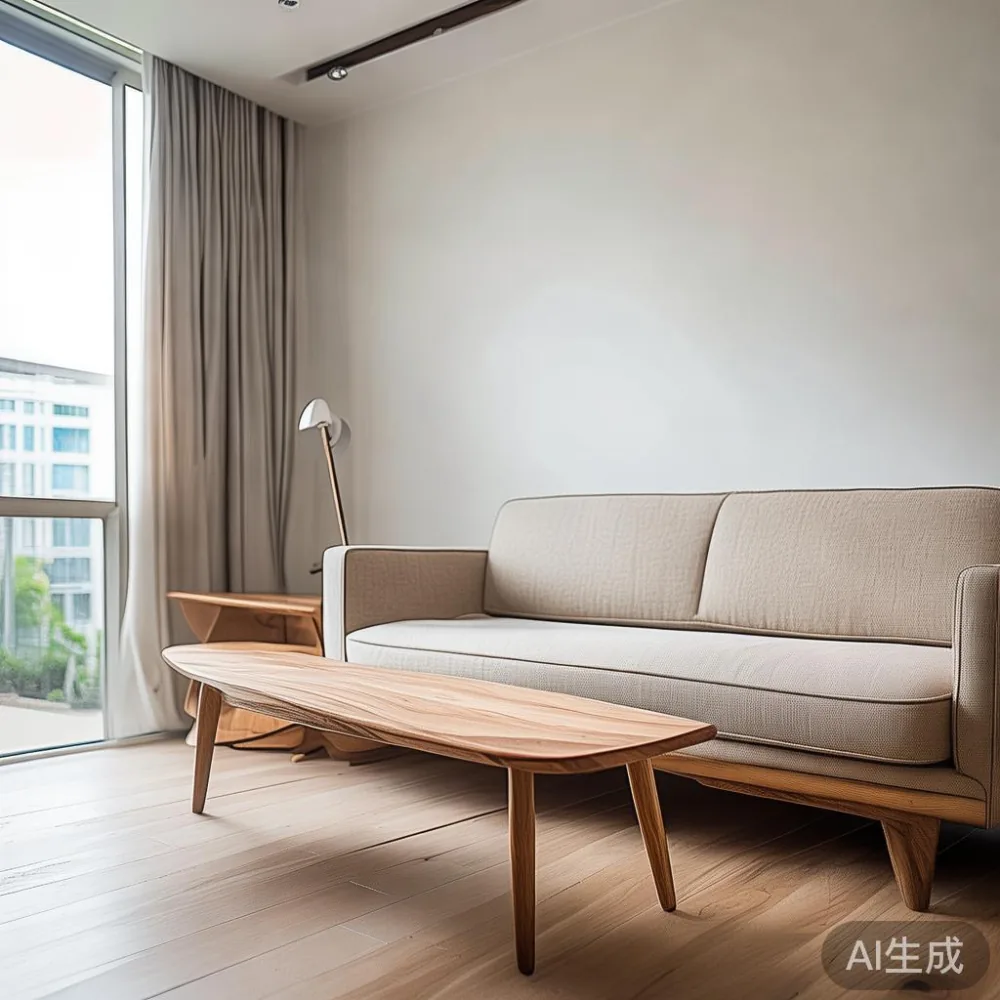
What does the Singapore side of the delivery actually look like?
For a Foshan-built order heading to a Singapore address, the path is fixed: factory load in around 35 days from order confirmation (custom foam densities add a week), consolidated into a 40-foot container at Nansha Port, 6 to 8 days of ocean transit to Singapore PSA, 5 to 7 working days for customs clearance and the 9% GST assessment on the CIF value, then a final-mile lorry to your door. End to end, budget 50 to 60 calendar days. Premium buyers tracked for three different Foshan suppliers in 2024 reported 47, 54, and 63 days respectively — the slowest being the one with hand-rubbed lacquer on a marble table top.
Once the container arrives at the supplier's Singapore warehouse, the local leg is where buyers feel the difference. A serious solid wood sofa in light luxury fabric weighs between 72 kg and 110 kg depending on the frame (ash vs. oak vs. walnut) and the cushion fill. Two delivery personnel, a tail-lift lorry, and a cordless drill are the minimum kit. Last month I visited a buyer in Punggol Waterway Terraces whose 2.4 m American light luxury dining table arrived in two crates — 98 kg and 64 kg — and the team spent 40 minutes on assembly alone because the trestle base uses eight through-bolts instead of standard dowels.
How wide is your HDB lift, really?
This is the question that decides whether your bed frame makes it home on day one or sits in the loading bay for two more days. Most Singapore HDB passenger lifts built between 1995 and 2018 measure 1.1 m wide x 1.4 m deep x 2.1 m high at the door, with a usable internal width closer to 0.95 m once you account for the handrail. Newer BTOs at Tampines GreenRidges and Bedok North Impact have wider 1.2 m door openings, but the cabin depth stays around 1.4 m.
Run the math on a queen-size mid century modern bed frame. The headboard alone is usually 1.65 m wide x 1.1 m tall x 8 cm thick — that one already eats 95% of a standard lift door's width. The supplier should ship it in two pieces (headboard + siderail assembly), and the box dimensions matter. Anything with a single carton over 1.7 m long will not go vertical inside the lift and almost certainly will not make it around the corridor bend on level 12. I have watched a Bukit Batok crew dismantle a 1.9 m headboard panel on site and reassemble it in the living room — possible, but it adds S$80 to S$150 to the bill and 45 minutes to the schedule.
Will a 1.95 m wardrobe actually fit through your corridor?
Condos are a different math problem. The Horizon, The Florence, and most Punggol Digital District blocks have a service lift with a 1.5 m wide x 2.3 m deep x 2.4 m high cabin, which sounds generous until you remember that a three-door post-modern light luxury wardrobe arrives in a crate roughly 2.05 m long x 0.62 m wide x 0.78 m tall. Standing up, it clears the ceiling. Lay it down, and you fight the width. Tilted at 30 degrees, it slides in.
This is where the how to style Japanese wardrobe in apartment question turns into a delivery question first and a styling question second. Sliding-door wardrobes in the Japanese tradition are usually 2.4 m wide x 2.4 m tall x 0.6 m deep and arrive in four flat-pack boxes, each under 35 kg — manageable, but the boxes themselves measure 1.25 m x 0.65 m x 0.15 m and you need to walk them around two right-angle bends to reach the master bedroom. Most buyers I've spoken to in Compassvale and Sengkang assume the service lift solves everything; it does not, because the corridor outside the lift still has a fire-rated door with an 0.85 m clear opening.
What does good assembly actually look like on-site?
A good delivery team shows up with a torque wrench, not just a cordless drill. Solid wood frames from Foshan factories use a mix of mortise-and-tenon, dowel-and-glue, and M8 bolt construction — over-tightening a 6 mm dowel with an impact driver cracks the tenon and you will not notice until the nightstand wobbles six months later. Two delivery specialists from a Punggol job I sat in on took 90 minutes to assemble a four-piece European light luxury sofa in apartment setting — the corner unit, the chaise, two armless middle seats — and they spent 20 of those minutes aligning the click-clack mechanism because the floor in that unit was 12 mm out of level.
For context, the same order without the alignment issue would have taken 50 minutes. The crew charged S$120 per extra hour, billed in 30-minute increments, which is the industry norm in Singapore. Buyers who use the free assembly included with orders over S$350 in product value (a common Foshan-export threshold) save this cost outright, but only if the assembly is genuinely included — read the line items, not the headline. If your order requires on-site carpentry because the lift could not take a fully assembled item, expect a separate quote of S$180 to S$320 for a 2-hour visit.
How much should you budget for the last-mile reality?
Standard doorstep delivery within mainland Singapore for a Foshan shipment typically runs S$80 to S$180 depending on the volume and whether a tail-lift lorry is required (anything over 80 kg per carton needs one). Restricted-property surcharges at condos with loading-bay time-slot systems add S$30 to S$60. Lift-doesnt-work surcharges at older HDBs during maintenance windows add another S$50, and the customer is responsible for rescheduling within 14 days. Staircase carries above level 10 without a lift option run S$8 per level per piece, with a four-person crew minimum per trip.
For a typical three-piece purchase — say a mid century modern bed frame, a two-seater solid wood sofa, and a six-seater dining table — the realistic total delivery bill in Singapore lands between S$220 and S$380, GST-exclusive. The 9% GST is added on the product and the service together. Free shipping thresholds (typically S$350 to S$500 in product value) usually cover the standard leg but never the surcharge leg. Always confirm in writing whether the quote is GST-inclusive or exclusive — most Foshan exporters quote EX-work or FOB prices and the Singapore freight forwarder adds the tax at the border.
How do you measure a room before clicking checkout?
Three numbers, written down, not eyeballed. (1) Lift door width at the narrowest point, measured at the rubber seal not the frame. (2) Internal corridor width on the turn from lift to unit, again at the narrowest point after the fire hose cabinet. (3) The diagonal of your intended room measured corner to corner — a 2.4 m x 2.1 m bedroom accepts a 2.4 m headboard only if no other furniture is already installed.
For a small-space condo under 750 sqft, Japandi for small living room decisions still hinge on whether the sofa can physically clear the door. A 2.1 m three-seater is fine in the lift but hits the bedroom door frame (typically 0.82 m wide for HDB, 0.91 m for condo master) if you ever want to move it again. Many buyers in Tiong Bahru and Kreta Ayer conservation shophouses have learned this the hard way — a 2.1 m sofa simply cannot pivot through a 0.82 m door, regardless of how it was delivered into the unit.
Which pieces travel well, and which do not?
By volume and weight category, here is what I have seen ship successfully to Singapore addresses in the last 18 months: a 1.8 m walnut dining table in a single 112 kg crate (delivered to a Tanjong Rhu condo with a 1.5 m service lift, dismantled on site); a French light luxury marble table top in a custom timber crating (295 kg, rigged through a service window with a four-man team); four 2-seater post-modern light luxury sofas (each in two boxes, 65 kg and 38 kg, zero on-site issues across four deliveries).
Pieces that consistently cause problems: wardrobes taller than 2.2 m with attached mirror panels (the mirror refuses to flex around corridor bends), king-size platform beds with integrated nightstands (the nightstand blocks the doorway when rotated), and marble tables without edge-protective crating (one hairline chip voids the entire top on impact). For buyers hunting the best light luxury wardrobe for 2026 with integrated lighting, the lighting transformer usually ships in a separate box and gets left at the loading bay — confirm the brand re-uses branded boxes or you'll open six unmarked cartons searching for it.
What paperwork and protection should you expect?
Every Foshan-direct order to Singapore should arrive with a commercial invoice, a packing list, a bill of lading or airway bill, a fumigation certificate (mandatory for solid wood entering Singapore under NParks guidelines), and a Singapore Customs permit number. The supplier's freight forwarder handles GST submission via the GST Direct Import scheme; the buyer receives a payslip-style invoice showing the CIF value, GST payable (9%), and any duty (most residential furniture falls under HS 9403.60 and 9403.40 and is duty-free under the China-Singapore FTA when a Certificate of Origin is supplied).
Warranty documentation is the other piece new buyers under-read. A 10-year structural warranty covers frame integrity — joints, load-bearing members, drawer runners. It does not cover finish wear, fabric pilling, marble veining differences, or movement-related cracks in solid wood (solid wood moves; that is its nature). Lifetime refinishing on a mid century modern dining table or bed frame is a separate service, usually scheduled annually at the supplier's Singapore warehouse, with the buyer covering one-way freight. MIDHILL offers this as part of its standard package, which is one of the reasons a Punggol buyer I spoke to chose them over a cheaper competitor after watching a friend's 2-year-old table grey unevenly.
Returns, refusals, and the 14-day reality
Standard return windows on cross-border furniture shipments run 14 days from delivery for unused, unassembled pieces in original packaging. The catch: outbound freight from Singapore to Foshan runs S$180 to S$380 per cubic metre and is almost never refunded. A buyer who returns a S$2,400 dining table typically receives S$1,800 to S$2,000 back after restocking and freight deductions. The math only makes sense if the piece is genuinely defective on arrival, not if the color reads differently in your living room than it did on the website.
This is why pre-delivery photography matters. Ask the supplier for a confirmation photo of the piece on the production floor before crating, then another at the crating stage, then a third at container loading. Reputable Foshan exporters send these automatically. For context, when researching how to style American bed in room strategies before placing an order, most buyers in Singapore have not yet seen a production sample — they are working off styled renders and three studio shots. Request a 15-second video of the specific unit your order will ship from. A supplier who refuses is a supplier not worth trusting with a S$4,000 bed.
The bottom-line checklist before you buy
Confirm four things in writing before transferring any deposit. First, the exact carton dimensions of the heaviest and longest piece, and whether those dimensions clear your specific lift. Second, the assembly policy: is on-site assembly included in the Singapore delivery quote, and if so, what is the hourly rate beyond the included time? Third, the warranty terms separately for the frame, the finish, and any moving parts — get it in PDF, not a product-page banner. Fourth, the return policy clearly stated in SGD with the freight deduction shown as a fixed figure, not a percentage.
For buyers looking at under 2000 Post-modern furniture bundles or shopping for an entire room at once, the smartest move is to consolidate into one shipment — freight scales, not steps, and a 40-foot container at 28 cubic metres from a Singapore consolidator runs S$180 to S$260 per cubic metre versus S$320+ for a one-piece LCL shipment. One container, one customs clearance, one delivery window, one assembly session. For buyers considering how to style European light luxury sofa in apartment settings in a 720 sqft Tiong Bahru walk-up, consolidation also reduces the surface area for damage — fewer handlings means fewer chipped corners on that walnut frame. Reach the supplier's Singapore coordinator at midhillco@gmail.com for a same-day answer on dimensions and stock before committing to anything.