Protecting Solid Wood Furniture in Singapore’s Humidity
Singapore’s tropical climate can move quickly from 74% relative humidity at night to 88% after a heavy afternoon shower. In an HDB flat in Tampines, that moisture can swell the drawer rails of a solid wood nightstand, soften a dining table’s finish, and make a bed frame feel sticky along its joints. Condos in Bedok and Punggol may have better-controlled interiors, but corridor air, lift lobbies, and air-conditioning transitions still expose furniture to changing moisture levels.
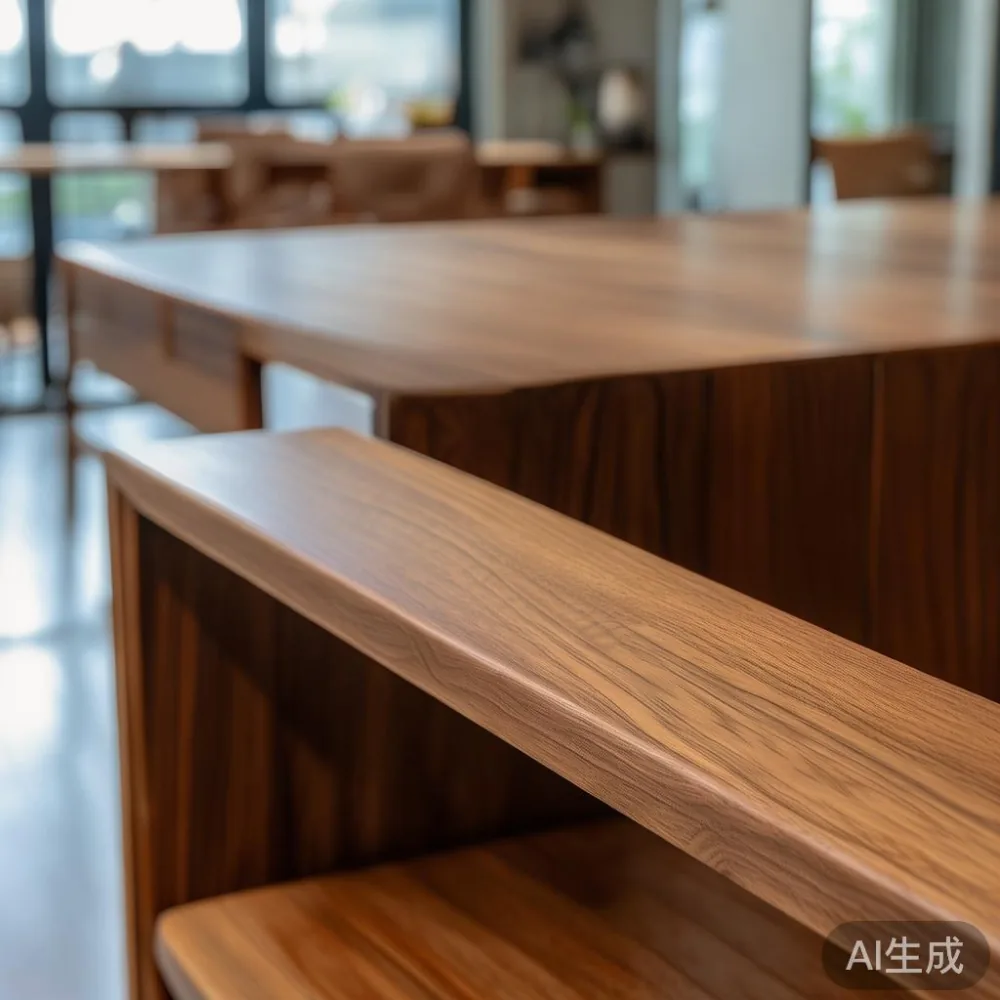
For a mid century modern interior, humidity is not only a maintenance issue. It affects the visual rhythm of tapered legs, warm timber tones, clean joinery, and carefully spaced storage. MIDHILL designs and manufactures solid wood furniture in Foshan, where humidity-testing practices are especially relevant to buyers across Southeast Asia. The company has exported to more than 15 countries since 2008 and provides a 10-year structural warranty alongside lifetime refinishing services.
This guide explains how moisture affects wood furniture in Singapore, what to look for during delivery, and how to protect a solid wood sofa, bed frame, dining table, wardrobe, nightstand, or marble table without turning the home into a laboratory.
Why does humidity make solid wood furniture move?
Wood is hygroscopic: it naturally absorbs or releases moisture as the surrounding air changes. A dining table may gain less than 1% in moisture content during ordinary seasonal movement, but that small shift can create visible effects. The top can bow by 2–4 mm over a 180 cm span, drawer fronts can open by 1–3 mm, and a wardrobe door may sit less tightly against its carcass.
Most movement happens across the grain rather than lengthwise. Solid oak, teak, ash, and walnut each behave differently, but unfinished timber generally responds more than a well-sealed surface. A factory-applied coating slows moisture exchange; it does not make wood inert.
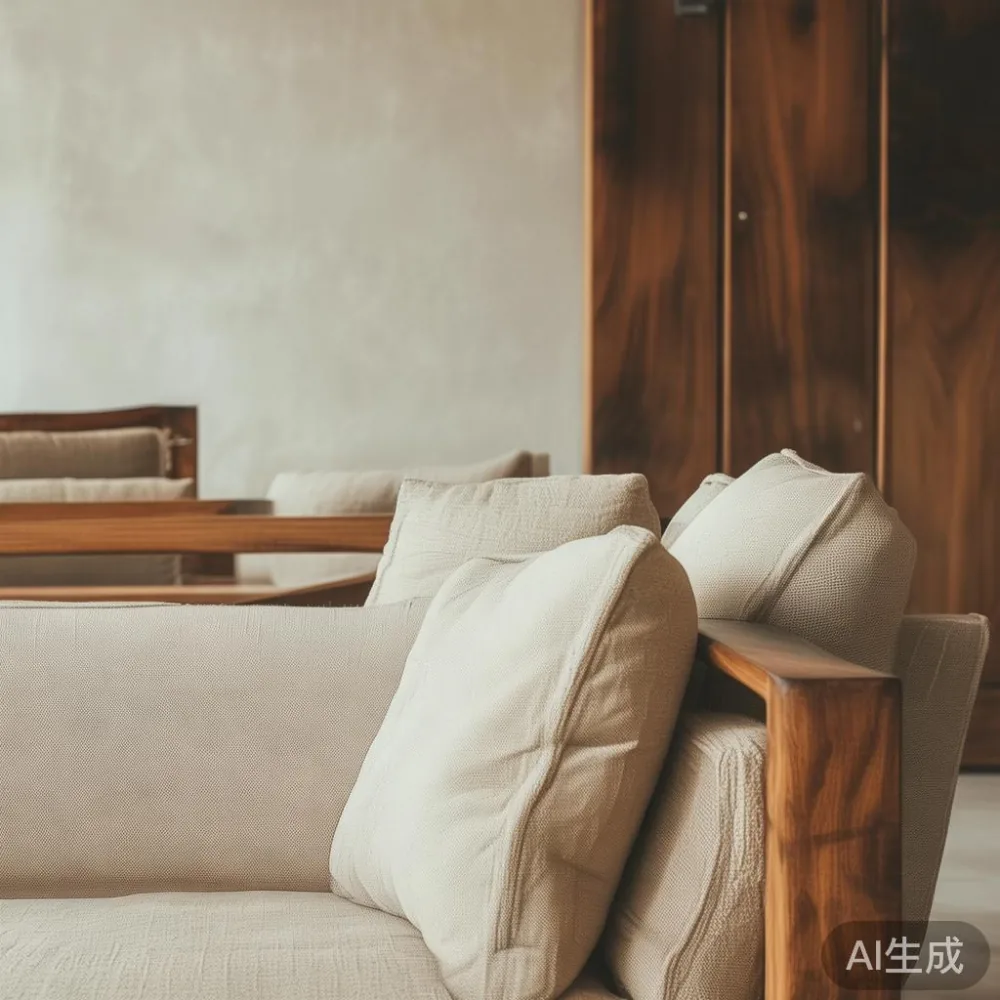
Singapore’s relative humidity commonly sits between 70% and 90% for much of the year. Short, intense storms and overnight humidity are normal conditions, not exceptional events. Air-conditioning can then lower a bedroom to 22–26°C and around 45–60% relative humidity, creating repeated expansion and contraction inside the same apartment.
The aim is not to prevent movement. It is to keep movement slow, even, and manageable. For mid century modern furniture, that protects the crisp geometry that gives the style its character: angled chair backs, slender tapered supports, integrated storage, and flush drawer faces.
How much humidity should Singapore homes maintain?
A practical indoor target is 45–65% relative humidity, with a room temperature range of about 21–27°C. Readings above 70% for long periods deserve attention, particularly beside windows, near bathrooms, or in rooms with weak air circulation. Readings below 40% can also trouble timber because the wood may lose too much moisture and develop fine checks in its finish.
Place a digital hygrometer where furniture will be used, not immediately outside an air-conditioning vent. A bedside table near a return grille may read 40%, while a wardrobe near an exterior wall may read 76%. Check both locations at 8 a.m. and 8 p.m. for 7 days. The daily swing matters more than one isolated number.
Air-conditioning is helpful when it runs consistently, but blasting a cold stream directly onto a bed frame or wardrobe is less useful. Set the room around 24–25°C where possible and aim the louvre away from wood surfaces. Dehumidifiers can protect a tightly packed walk-in wardrobe, though their capacity should match the space. A 12–20 litre model is generally more practical than a small 5-litre unit for a 10–15 m² bedroom.
Outside the home, Singapore’s weather creates another challenge. Allow new solid wood furniture to acclimatise for 24–72 hours before installation, depending on the item and how much it has already been conditioned. Keep packaging closed during heavy rain. If a dining table arrives damp, do not wipe every surface aggressively; let the moisture equalise in a ventilated room.
Can humidity damage a solid wood dining table?
Yes, especially if the timber is left in a humid corridor or under a laundry ledge. The greatest risks are trapped moisture beneath a table runner, water rings from wet glasses, and direct contact with wet cleaning cloths. Use coasters, trivets, and felt pads rather than decorative fabric runners that hold spills against the wood.
For a 200 cm solid wood dining table, inspect the tabletop before accepting delivery. Look for raised grain, cloudiness in the coating, and drawer or leaf gaps wider than 3 mm. A cloth tape test can reveal dampness: tape a 10 cm square to the underside for 12 hours. If it feels cold, damp, or leaves a water mark, ask the supplier to dry and recheck the piece before installation.
At the table, wipe spills within 10 minutes and dry the surface with a clean cloth. Use a pH-neutral wood cleaner diluted according to its instructions; avoid ammonia, bleach, silicone sprays, and household degreasers. Refinishing every 2–4 years may be appropriate in a humid home, although furniture with minimal sun exposure may need less frequent attention.
A phrase that appears in many design searches is Boho for dining room. For this style, pair a simple timber table with rattan or woven seating and leave the surface mostly clear. Natural materials should not be left damp together, because a rattan mat can transfer moisture into an unsealed edge.
What should I check when a wardrobe is delivered?
A wardrobe is one of the most moisture-sensitive large furniture pieces because it has broad panels, enclosed cavities, and doors that need to close accurately. HDB corridors may be narrower than 90 cm, while condo service corridors and lifts can restrict packaging to around 100–110 cm on the longest side. Measure the lift car, lift door, turning space, hallway, and bedroom doorway before delivery day.
For a 180 cm tall wardrobe weighing 85–140 kg, confirm whether the unit is delivered assembled or in modules. A knock-down carcass may fit through a 78–82 cm door more easily and may also be easier to carry upstairs. Check that the back panels can be fixed to the wall, which reduces movement around the tall carcass.
Give wooden shelves and hanging rails 5–7 cm of clearance from external walls where practical. Leave enough space for air to move around the back panel, and avoid placing the wardrobe directly against a bathroom wall. If the unit must sit against an exterior wall, use a moisture barrier and check it every 3 months during the wetter months.
Singapore homeowners researching how to style Japanese wardrobe in apartment layouts often favour pale timber, clean storage, and restrained hardware. The same principle supports good moisture care: include ventilation gaps, remove unnecessary stacked textiles, and keep doors operating freely. Do not tightly pack wool or cotton into a closed wardrobe if dampness has been noticed; dry items completely before storage.
How do bed frames and nightstands react to damp air?
A slatted solid wood bed frame generally tolerates humidity better than a fully enclosed platform because air can move through the deck. However, a mattress held against a solid base can trap moisture, while fabric or leather upholstery can absorb it. Check under the bed every 2 months, particularly in Punggol rooms facing the corridor or exterior wall.
For a queen bed frame, inspect the center rail, slat supports, and joints. A 2 mm gap at a joint may be normal manufacturing tolerance, but a 5 mm separation or a visibly twisted rail needs investigation. Use a moisture meter with a wood pin and take readings in several locations. An approximate reading of 8–18% is commonly used as a reference, but local species, coatings, and service conditions affect interpretation.
A solid wood nightstand is easier to maintain. Keep it 15–30 cm from an exterior wall where space allows, and do not set a damp air freshener or closed wash cup on top. Clean the top with a lightly damp cloth, then dry it immediately. Leg levelers should be checked every 6 months because uneven floors can place continuous stress on joints.
Guest-room planning brings another search term, Modern for guest room. A modest daybed, slim nightstand, and compact wardrobe can create a calm space without crowding the room. For a 9–12 m² guest room in a Singapore condo, leave at least 60 cm along the wardrobe side and around 75 cm at the foot of the bed where possible. This supports both circulation and humidity checks.
Does humidity affect a marble table?
Marble is less vulnerable to dimensional movement than solid wood, but moisture can still affect adjacent materials, sealants, and metal fittings. Natural stone may contain microscopic pores, and acidic liquids can etch the surface even when it appears sealed. Wipe spilled wine, vinegar, or citrus juice within 5 minutes.
Keep a marble table away from persistent dampness and do not cover it with a cloth for hours after cleaning. Use a neutral stone cleaner and a soft microfibre cloth. If the marble top sits on a solid wood base, monitor the timber joint rather than assuming the stone protects it.
For buyers comparing under 2000 French provincial furniture options in SGD, material details deserve close attention. A lower-priced statement should still disclose timber species, veneer versus solid wood, joinery, coating type, and warranty terms. French provincial styling may include curved edges and carved details, but those forms need stable construction to remain aligned in humid conditions.
Light-luxury design has a similar requirement. Whether the reference is French light luxury, American light luxury, or post-modern light luxury, accurate materials and controlled construction matter more than decorative excess. A marble table or solid wood dining table should feel refined because its surfaces, joints, and proportions remain coherent after years of use.
How should I care for a solid wood sofa and upholstered pieces?
A solid wood sofa frame can remain stable if the timber is dry and the upholstery is breathable. Foam and tightly woven fabrics may absorb humidity, increasing the risk of mould at the frame, cushion seams, or under the armrests. Lift cushions every 2–3 weeks and inspect beneath them in a humid room. Keep upholstered furniture at least 30 cm from an exterior wall and 20 cm from a persistent cold-air vent.
Vacuum with a soft brush once a week and clean spills promptly. Avoid steam cleaning unless the upholstery manufacturer permits it, because steam drives moisture deeper into foam and timber. If mustiness appears, remove the cushion covers if they are removable and dry every component fully in shade with good airflow. Do not place a damp sofa back into a sealed HDB living room merely because the room looks dry.
Upholstery can also restrict visual airflow under a platform bed or sofa. A gap of 5–8 cm between furniture and the wall is useful, but never sacrifice safety or obstruct a lift or corridor. This is where light restraint suits the brief for top 10 light luxury furniture lists: tactile comfort, slender timber lines, and measured proportions are more suitable for humid apartments than heavy forms with little ventilation.
What delivery and warranty details should Singapore buyers confirm?
Confirm the total price in SGD, including GST and delivery, before placing an order. A standard Singapore delivery may take 7–14 business days after production, while made-to-order pieces can require 4–8 weeks. Lift and corridor access should be checked by the supplier, especially for a dining table longer than 200 cm or a wardrobe higher than 210 cm.
Ask whether the fee includes carrying the item to the door, unpacking, assembly, and removal of packaging. For a 75–120 kg bed frame, carrying it to a HDB flat’s front door may cost less than carrying it to a unit on the 12th floor. Confirm stair-carry charges, lift reservation requirements, and any obstruction fee in writing.
Check the finish, moisture protection, structural warranty, and returns policy before delivery. MIDHILL provides a 10-year structural warranty and lifetime refinishing, while qualifying orders over US$350 qualify for free shipping; payment in Singapore would still be converted to the applicable SGD amount at the stated exchange rate. Singapore buyers should request a local quotation for an exact SGD total rather than infer the final charge.
Returns are generally accepted within 14 days under the stated policy, subject to item condition and eligibility. Photograph the furniture on arrival. Record the box, corners, doors, rails, tabletop, and underside. If moisture damage is visible, report it within 48 hours with the timestamped photographs.
For practical comparison, a solid wood dining table in SGD 1,800–4,500 may vary by timber, dimensions, and joinery; a queen bed frame may fall around SGD 1,200–3,800; and a solid wood wardrobe may range from SGD 1,600–4,200. These are reference ranges, not fixed quotations.
How can I make mid century modern furniture last in a humid climate?
Begin with stable construction. Look for solid timber in the stated load-bearing parts, sound joinery, even gaps, and a finish that has been applied across exposed edges. Confirm that back panels, drawer bottoms, and internal wardrobe shelves are finished as well. A piece assembled with hidden screws and traditional joinery should tolerate seasonal movement better than one relying only on short screws in end-grain timber.
Next, control the environment. Maintain 45–65% relative humidity where feasible, inspect for leaks, and provide 5–10 cm of clearance around large pieces. Use the air conditioner regularly but avoid abrupt temperature swings. Open windows and use fans after rain, and wipe any condensation from nearby surfaces promptly.
Create a simple maintenance rhythm. Check humidity readings monthly, inspect moving parts every 3–6 months, and clean surfaces every 1–2 weeks. Dry the home before closing it for a weekend, and avoid leaving wet towels against a wardrobe or bed frame.
For compact urban rooms, Scandinavian for guest room planning can support light visual weight through pale timber, simple legs, and modest storage. Meanwhile, practical Modern for guest room layouts should leave enough room to wipe floors and reach the wardrobe. Searching for top 10 light luxury furniture inspiration is more useful when paired with measurements, timber information, and service terms rather than appearance alone.
My own test was in a Bedok condo last month, where I placed one oak dining table beside a west-facing glass door. Its digital meter moved from 58% near the dining area to 83% beside the balcony after a 35-minute storm. I left coasters on one half, wiped the surface with a damp cloth, and kept a small tray on the other half. The protected area dried in 18 minutes; moisture lingered around the uncoated underside for nearly 2 hours. That observation reinforced why the finish, edges, and underside all matter.
Humidity will always be part of life in Singapore. It does not make solid wood furniture unusable; it makes thoughtful selection and regular care important. A carefully conditioned mid century modern piece, protected by sensible indoor humidity and delivered through a properly checked access route, can remain strong, aligned, and visually warm for decades.
For quotations or design questions, contact midhillco@gmail.com and request the item dimensions, timber specification, finish details, delivery lead time, GST-inclusive SGD price, and Singapore access requirements.