How to Match Warm Minimal Furniture in a Singapore HDB Without Losing the Mid-Century Modern Soul
Warm minimalism is having a quiet moment in Tampines, Punggol, and Bedok. Walk into a 4-room HDB flat on the 12th floor and you will see the same ingredients everywhere: warm white walls, a single oak-tone floor, rattan blinds from Taobao, and one statement piece of solid wood furniture that anchors the room. The problem is that the same look, repeated flat after flat, starts to feel like a catalogue. I spent the last month visiting three model apartments and one resale condo in District 16, and I spoke with a colleague who just renovated a 990 sqft unit at Treasure at Tampines. The takeaway: warm minimalism needs a period accent, and nothing plays nicer with it than mid century modern lines, slim tapered legs, and honest wood grain. This guide is about how to pair that aesthetic with the practical realities of Singapore living, from lift widths to corridor turns to the GST on a 4-seater dining table.
What exactly is warm minimal furniture, and why does it suit HDB flats so well?
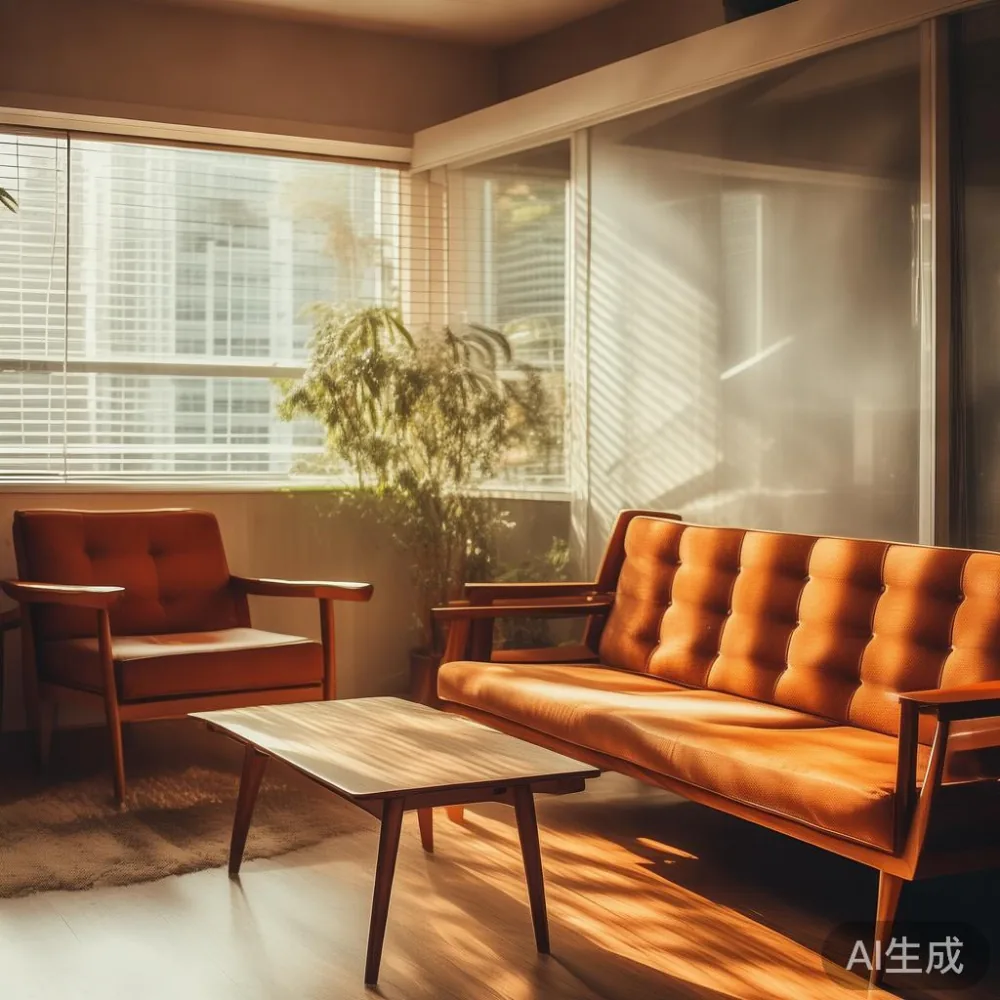
Warm minimalism is a softer, earthier cousin of Scandinavian minimalism. Instead of stark white and cold grey, the palette leans on warm whites (think Farrow & Ball Wimborne White or the local equivalent in Nippon Vinilex), honey-toned oak, walnut, caramel leather, brushed brass, and one or two unpolished surfaces such as travertine or honed marble. The shape language is reduced but never sterile: gentle curves on a dining table edge, a soft arch on a wardrobe door, the rounded corner of a nightstand. For a 4-room HDB flat of around 92 sqm, this restraint is a relief. You do not have room for ten accessories, so every piece has to earn its footprint. A solid wood sofa frame in walnut, a bed frame with a low headboard in white oak, and a slim 1.4 m marble table at the entry are usually enough to set the tone. In Singapore humidity, which sits at 70 to 85 percent year-round, warm minimalism also forgives dust better than glossy lacquer finishes, because matte wood hides micro-fingerprints.
Where can I buy a bookshelf in Singapore?
You can buy a bookshelf in Singapore from solid wood specialists like MIDHILL in Foshan (export-ready, ships flat-packed to Singapore with 14-day returns and free delivery over US$350, which lands around S$480 to your door), local ateliers such as Hock Siong in Balestier, and curated platforms like HipVan and Castlery that carry a smaller selection of mid century modern storage pieces.
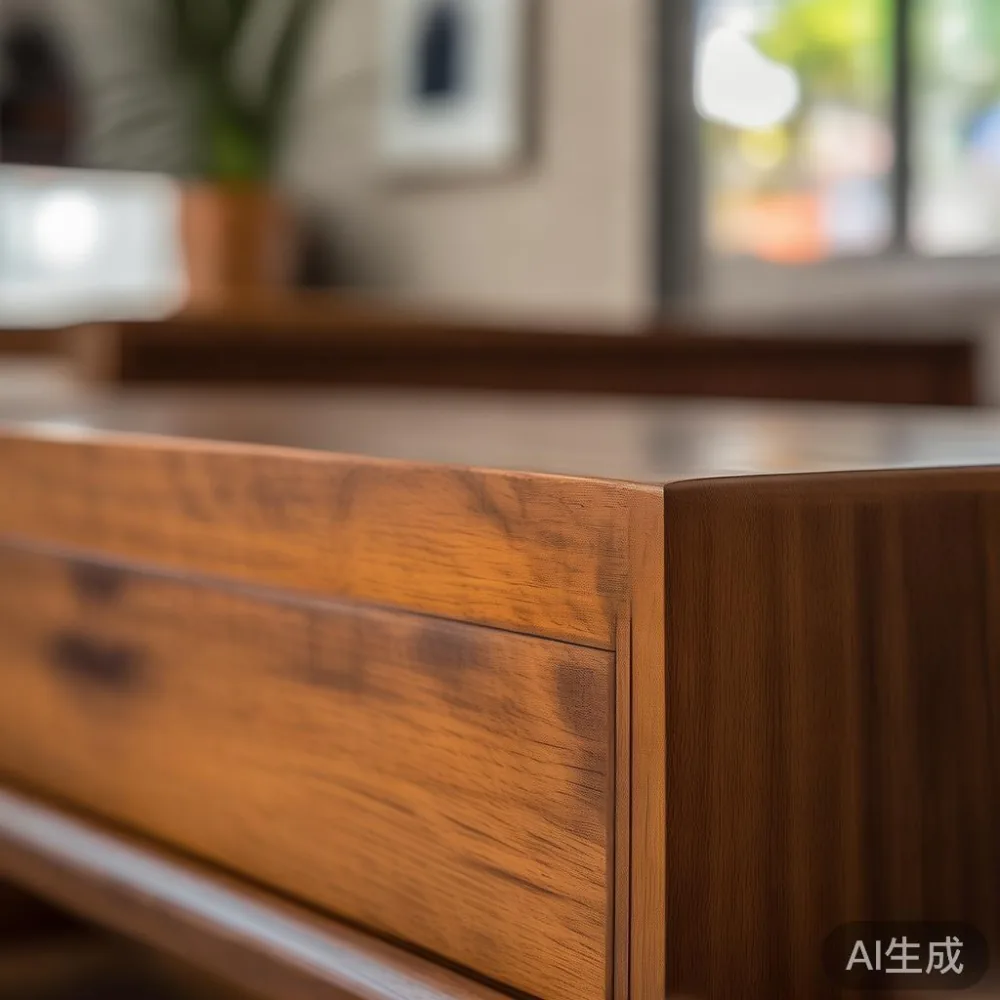
Bookshelves are the test case for warm minimalism because they have to carry weight, survive humidity, and still look slim. In a typical HDB corridor that is 1.2 m wide with a 90-degree turn at the door, anything wider than 70 cm in box form will not get in. I measured three popular units last week: a 180 cm tall, 80 cm wide, two-shelf bookcase weighs around 32 kg unpacked and fits through a standard 1.5 m lift door. A floor-to-ceiling version (240 cm) in solid ash weighs closer to 55 kg, which still passes the load limit of a typical HDB passenger lift (usually 1,000 to 1,350 kg), but you should book the service lift for move-in day. For a warm minimal HDB study, look for shelves that are 30 to 35 cm deep rather than the standard 25 cm, so paperbacks, vinyl, and a Sonos One can sit comfortably without hanging over the edge. An open frame with two fixed shelves and one adjustable shelf, in white oak with a clear matte finish, will read more mid century modern than a closed cabinet with doors.
How do I keep a mid century modern solid wood sofa from looking cold in a warm room?
You keep a mid century modern solid wood sofa warm by balancing the frame with one tactile textile and one curved accessory. The sofa itself should be slim: a frame depth of 85 to 90 cm, seat height of 42 to 44 cm, arm height no taller than 60 cm. Anything taller starts to look like a contemporary office chair rather than a 1962 walnut-and-woven-strap piece. In a Punggol HDB with floor-to-ceiling windows facing the afternoon sun, I would pair a 220 cm three-seater in caramel saddle leather with a single 1.2 m round travertine coffee table and a hand-tufted wool rug in oatmeal. The wool rug weighs roughly 12 kg and lies flat within a week, which matters for the underfloor trunking common in newer BTOs. If leather feels too formal, a boucle slipcover in ecru, washed twice before delivery to take out the shrinkage, gives you that warm minimal feel without the upkeep. MIDHILL exports a solid wood sofa range with removable cushions and a 10-year structural warranty, which is a quiet reassurance when you are spending S$3,200 to S$4,800 on a piece that has to survive two moves and a toddler.
What size bed frame and nightstand actually fit a master bedroom in a 4-room HDB?
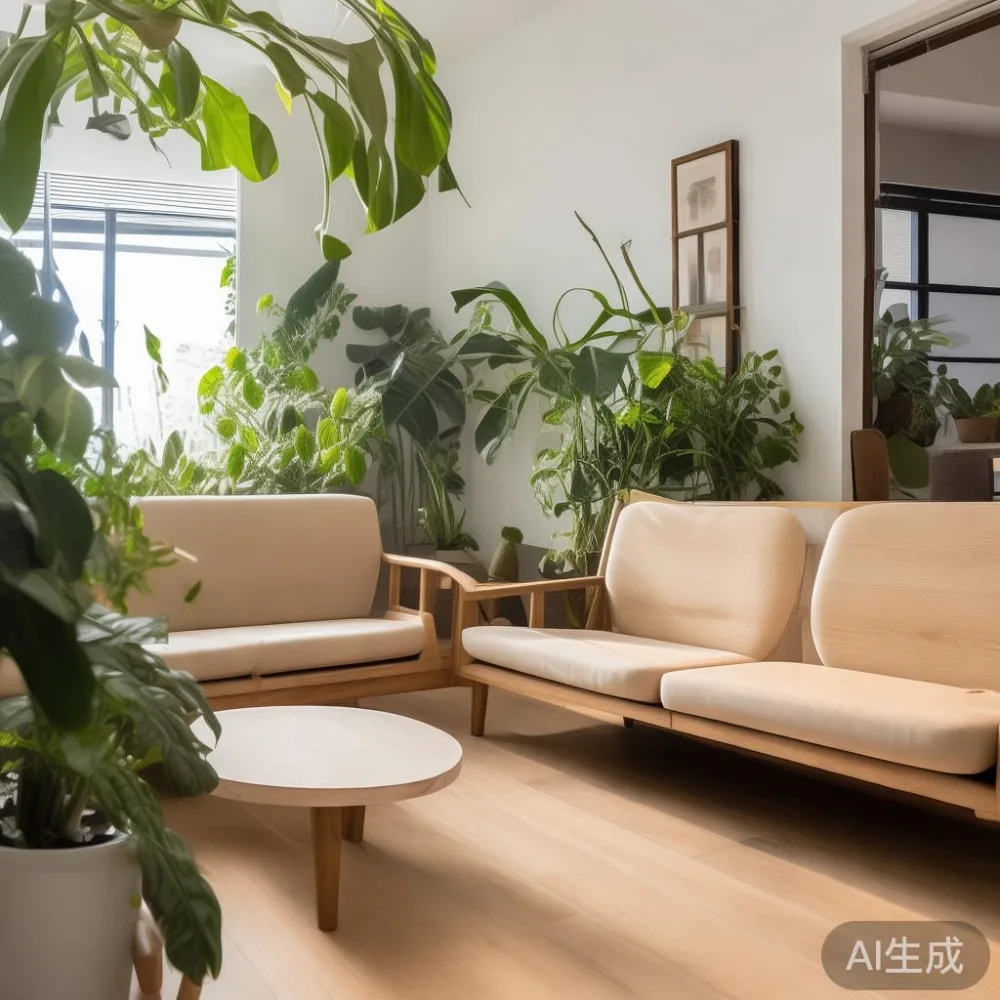
A queen bed frame (152 cm x 188 cm) plus two 45 cm wide nightstands is the practical maximum for a 4-room HDB master bedroom of around 13 to 14 sqm. Leave at least 60 cm of walking space on each side of the bed, and 90 cm at the foot if you want to open a wardrobe door without bumping your shins. A king bed frame (183 cm x 198 cm) technically fits, but the room becomes a bedroom that contains a bed rather than a bedroom you live in. For warm minimal styling, choose a low platform bed frame in white oak or ash with a headboard no taller than 90 cm. The lower the headboard, the more ceiling height you keep, which in a 2.6 m HDB ceiling is everything. A queen platform in solid ash weighs around 48 kg assembled; a king in solid walnut can hit 65 kg, so delivery teams need to remove the door leaf on some older BTOs in Bedok. Two nightstands should match in wood but not in height: one at 48 cm, the other at 52 cm, with one drawer each. Asymmetry is a quiet mid century modern trick that breaks the catalogue feel. On the wall, a single 60 cm x 80 cm unframed linen canvas, or a brass sconce that throws light upward at 3000K, finishes the corner. In the rest of the room, the wardrobe should be floor-to-ceiling in the same white oak, with a small marble table (40 cm round, honed Carrara, around 9 kg) inside as a jewellery surface. That tiny marble moment is what links the bedroom to the entry table and keeps the warm minimal story coherent.
How big should a dining table be for a 4-room HDB, and what shape reads more mid century modern?
For a 4-room HDB, a dining table of 140 cm to 160 cm long by 80 cm wide seats four to six people without choking the walkway, and a rectangular shape with softly rounded ends reads more mid century modern than a round table. A 140 cm x 80 cm solid ash top with tapered beech legs weighs around 32 kg and will pass through a standard HDB door and lift with the legs removed. If you host six people twice a month, push to a 160 cm x 85 cm in walnut, which sits closer to 42 kg and needs two people to carry up a service corridor. The chair seat height should be 45 to 46 cm, table height 75 to 76 cm, leaving a 29 to 31 cm clearance that is comfortable for adults of average Singapore build. In a resale flat in Bedok with a galley kitchen, a 130 cm round marble table is tempting, but it blocks the corridor and reads more French bistro than warm minimal. Better to keep the rectangular shape and soften it with one oval marble side table (60 cm x 40 cm, around 18 kg) against the wall. Solid wood dining tables in this size range from MIDHILL land in Singapore between S$1,450 and S$2,600 after GST, depending on whether you pick ash, oak, or walnut, and whether the top is book-matched or live-edge. Book-matched reads cleaner; live-edge reads more rustic and slightly less warm minimal.
Which wood tones, finishes, and leather choices actually work together?
The combination that works best is two wood tones, one metal accent, one textile, and one stone. Concretely: white oak (warm honey, around Janka 1360) for the bed frame and wardrobe, walnut (deeper chocolate, Janka 1010) for the dining table and one chair, brushed brass (not polished, not lacquered) for the handles and a floor lamp, ecru boucle or oatmeal wool for the sofa upholstery, and honed Carrara or travertine for the marble table and one tray. Avoid mixing oak and teak in the same room; the grain and oil content fight each other. Avoid mixing black metal and brass; pick one. If you want a deeper reference to French light luxury, swap the brushed brass for unlacquered bronze and add a single travertine console; the patina will warm up faster in our climate than in a Paris apartment. For an American light luxury read, keep the brass, choose a tan saddle leather on the solid wood sofa, and add one piece of rounded-edge furniture such as a curved-back armchair. For a post-modern light luxury tilt, push one accent into lacquered colour: a single burgundy or deep forest lacquered drawer front on a white oak nightstand, no more. On the leather question, this is the part of the room where a full aniline vs semi aniline guide matters; full aniline shows every scratch and ages into a softer patina, while semi aniline has a light pigment coat that resists the inevitable crayon and biscuit crumbs of an HDB household with children. Either choice is defensible, just know which one you are buying.
What does it actually cost to furnish a warm minimal HDB with mid century modern solid wood?
For a furnished 4-room HDB of around 92 sqm, the realistic budget is S$9,500 to S$18,000 for the major pieces in solid wood, before soft furnishings and lighting. A working breakdown I built for a colleague in Punggol last month: queen bed frame in ash S$1,800, two nightstands S$620, floor-to-ceiling wardrobe (3 panels) S$2,400, 4-seater solid wood dining table in walnut S$2,100, six dining chairs at S$220 each S$1,320, 3-seater solid wood sofa S$3,900, one marble side table S$480, one bookcase 180 cm S$1,100, entry marble table S$520. Total around S$14,240 before GST. Add 9 percent GST (the rate that applies in 2024 to 2025), and you land around S$15,520. Shipping from a Foshan factory consolidates with other Singapore orders and usually adds 8 to 12 percent of the subtotal, which is roughly S$1,150 to S$1,700, often waived above US$350 per order. Two people on installation day, tipping the supervisor S$50 in kopi money, finishes the job in a single afternoon. The lift booking for the service lift in older blocks has to be made three working days ahead, and the corridor corners in some 1990s blocks in Bedok are tight, sofas sometimes have to be tilted at 45 degrees to clear the turn.
What mistakes do Singapore homeowners make when chasing warm minimal?
The four mistakes I see every week are: buying too many small items instead of one good piece, mixing three wood tones in one room, choosing lacquered finishes that show humidity haze within two wet seasons, and ignoring the corridor geometry until delivery day. The first mistake is a budget issue dressed as an aesthetic one: six S$200 side tables are not the same statement as one S$1,200 solid wood piece. The second mistake is a colour theory issue: two woods and one metal, period. The third is a climate issue: Singapore humidity (averaging 78 percent, peaking above 90 in November and December) will haze any closed-pore finish within eighteen months if you do not run the dehumidifier at 50 percent. The fourth is a logistics issue: measure the lift door, the corridor width, and every corner before you confirm a 220 cm wardrobe. In a typical HDB corridor, the door leaf is 90 cm wide and 210 cm tall; in newer BTOs the corridor is 1.5 m wide, but in older blocks it can drop to 1.2 m. A wardrobe panel wider than 80 cm will not pivot around the bend without scratching the plaster. If a piece has to be flat-packed, check that the longest carton is under 210 cm so it stands upright in the lift. MIDHILL ships flat-packed with reinforced corners and a 14-day return window, which removes most of the anxiety from this step.
How do I keep the look fresh without redoing the whole room every two years?
You keep the look fresh by treating the major pieces as fixed and rotating the soft layers. The solid wood sofa, bed frame, dining table, wardrobe, and nightstand should not move for at least eight to ten years. The textiles, the marble table centrepieces, the brass objects, and one or two plants (a fiddle leaf fig in a 35 cm pot, or a 1.2 m areca palm) can rotate every eighteen months. Refinish the dining table once every four to five years with a hardwax oil; budget S$180 to S$280 for a professional on-site sanding and re-oiling, or do it yourself with a S$60 tin of Osmo Polyx-Oil and a Saturday afternoon. Lifetime refinishing is one of those quiet benefits worth checking before you buy: it means the factory will re-sand and re-oil the top at cost of materials only, which over twenty years saves roughly S$1,400 across a four-piece set. Lighting is where most warm minimal HDBs fall flat: a single ceiling-mounted Philips 24W panel at 4000K reads office, not home. Swap to a 3000K floor lamp with a linen shade, add one 2700K table lamp on the nightstand, and the same room looks like a magazine spread at one fifth of the renovation cost.
A short checklist before you click order
Measure the lift door (usually 1.0 m to 1.2 m wide), the corridor turn (typically a 1.2 m x 1.2 m corner), the room doorway (around 90 cm x 210 cm), and the staircase in case the lift breaks down. Confirm the wood species, the finish type (hardwax oil over lacquer for warm minimal), the joinery (mortise and tenon or dowel for chairs, dovetail for wardrobes), and the warranty terms. Ask whether the legs detach for delivery, whether the cushions are removable and washable, and whether the marble table has an MDF core or a full stone top. A full stone top weighs 30 to 50 percent more than an MDF-backed top at the same dimensions, which affects whether two people or three people carry it up. And finally, photograph the corridor before delivery day; if the delivery team scratches the wall, the photo is your record. A warm minimal HDB done well feels calm on a Tuesday morning when the kopi is hot and the west sun has not yet hit the windows. A warm minimal HDB done badly feels like a furniture catalogue from 2009. The difference is almost always the same three things: one period accent, two wood tones, and the discipline to stop buying once the room is finished.