Mid Century Modern Furniture and Southeast Asian Humidity: A Practical Guide for Singapore Homes
I keep a small hygrometer on my desk at the MIDHILL showroom in Foshan, and during the long Foshan summers it routinely reads 82 to 88 percent relative humidity. When I travel to meet clients in Singapore, the reading does not drop much. Tampines, Bedok, and Punggol are warm, coastal, and damp for most of the year, and that single fact decides whether a piece of solid wood furniture will look beautiful at month six or quietly start to misbehave. If you are shopping for a solid wood sofa frame, a bed frame, a dining table, a wardrobe, or a nightstand in mid century modern proportions, humidity is the variable you have to plan around, not the upholstery or the colour.
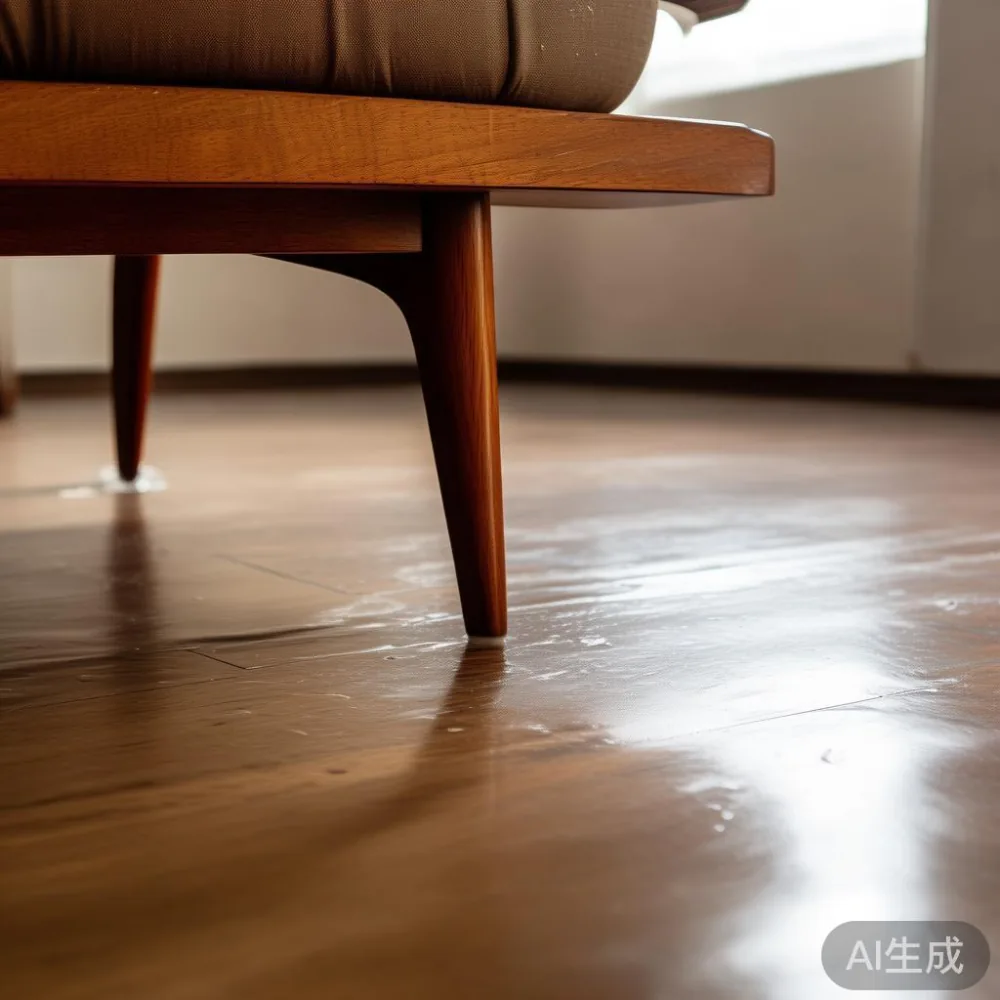
Across the Central Business District, Bukit Timah, and the East, the annual mean relative humidity in Singapore sits between 78 and 82 percent, with night-time peaks during the December to February monsoon and the June to September inter-monsoon. Indoor humidity in a typical HDB flat at 12 PM is notoriously accurate if the air-conditioner runs and 70 to 80 percent when it is off. Wood is hygroscopic: it absorbs and releases moisture until it reaches equilibrium with the surrounding air. A solid oak dining table that left a climate-controlled factory at 9 percent moisture content will, after a few weeks in a Tampines condo without dehumidification, drift to 14 to 16 percent. That 5 to 7 percent swing is what causes the cupping, gaps, and cracked panels that Singapore homeowners blame on bad craftsmanship, when in fact the wood is doing exactly what wood does.
Why does wood move, and how much movement should I expect in Singapore?
Wood moves along the grain, not across it. A 180 cm walnut dining top, for example, can change width by 6 to 9 mm across a humid season, and a 200 cm slab can move 9 to 12 mm. That is not a defect; it is physics. Seasonally, you may see 1 to 3 mm gaps appear between boards in December, then close up again by March. Cabinet doors on a wardrobe may swell 1 to 2 mm at the stile and refuse to latch. Drawer fronts on a nightstand may rub. The trick is to design for movement, not to fight it.
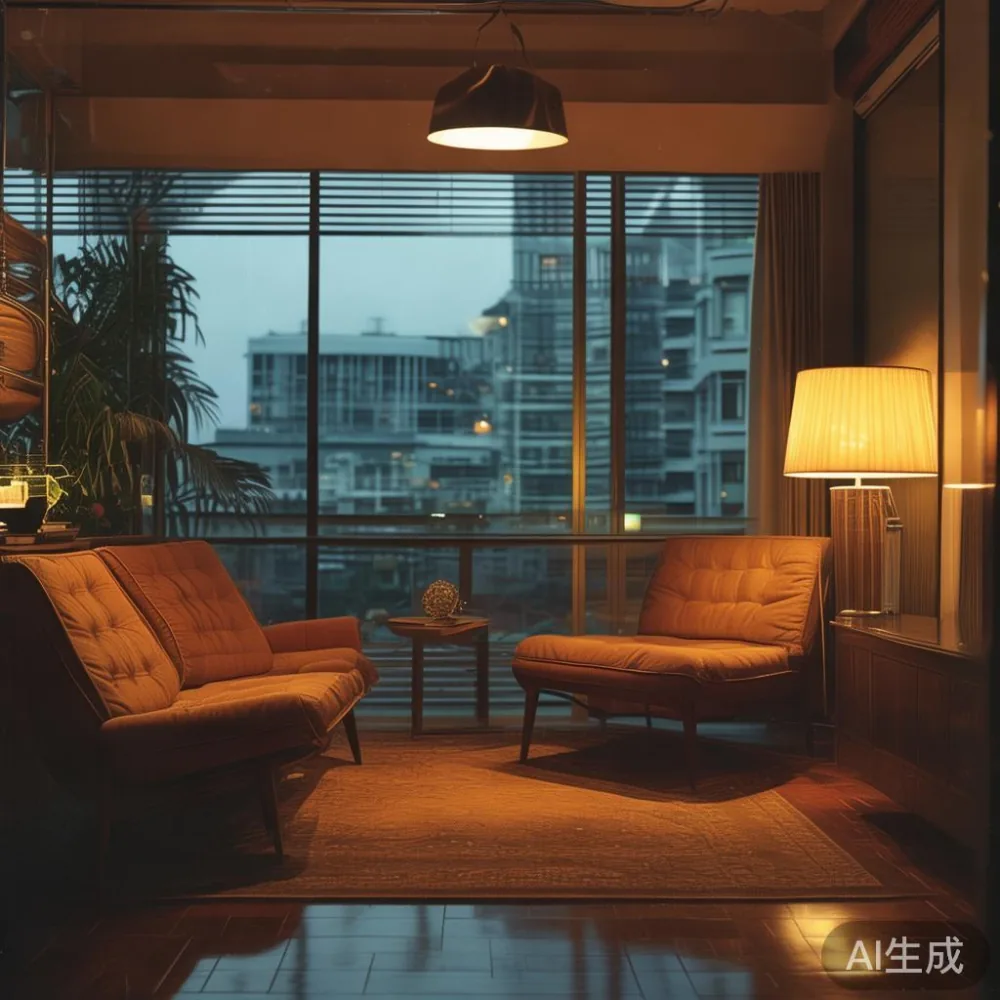
Three numbers to remember: aim for 8 to 12 percent equilibrium moisture content (EMC) in your home, which roughly translates to 45 to 60 percent indoor relative humidity at 26 to 28 degrees Celsius. Anything between 40 and 65 percent RH is a safe zone for solid hardwood furniture. Below 35 percent you risk shrinkage and splits; above 70 percent you risk mould, joint failure, and musty smells inside upholstered frames.
Which mid century modern construction details actually survive the tropics?
Mid century modern design is honest about wood: tapered legs, exposed joinery, flat panels, and warm walnut, teak, or oak tones. In a humid climate, that honesty becomes a checklist. Floating solid panels, for example, a 150 by 40 cm wardrobe door, must sit in a frame with 8 to 12 mm of expansion clearance on each side, with the finish applied to all four edges so moisture exchange is even. Mortise-and-tenon joints should be draw-bored or pinned, because a glued-only tenon in 80 percent RH will eventually shear. Dowels should be hardwood, not softwood, and the glue line should be a marine-grade PVA or a cross-linking EVA that tolerates humidity swings.
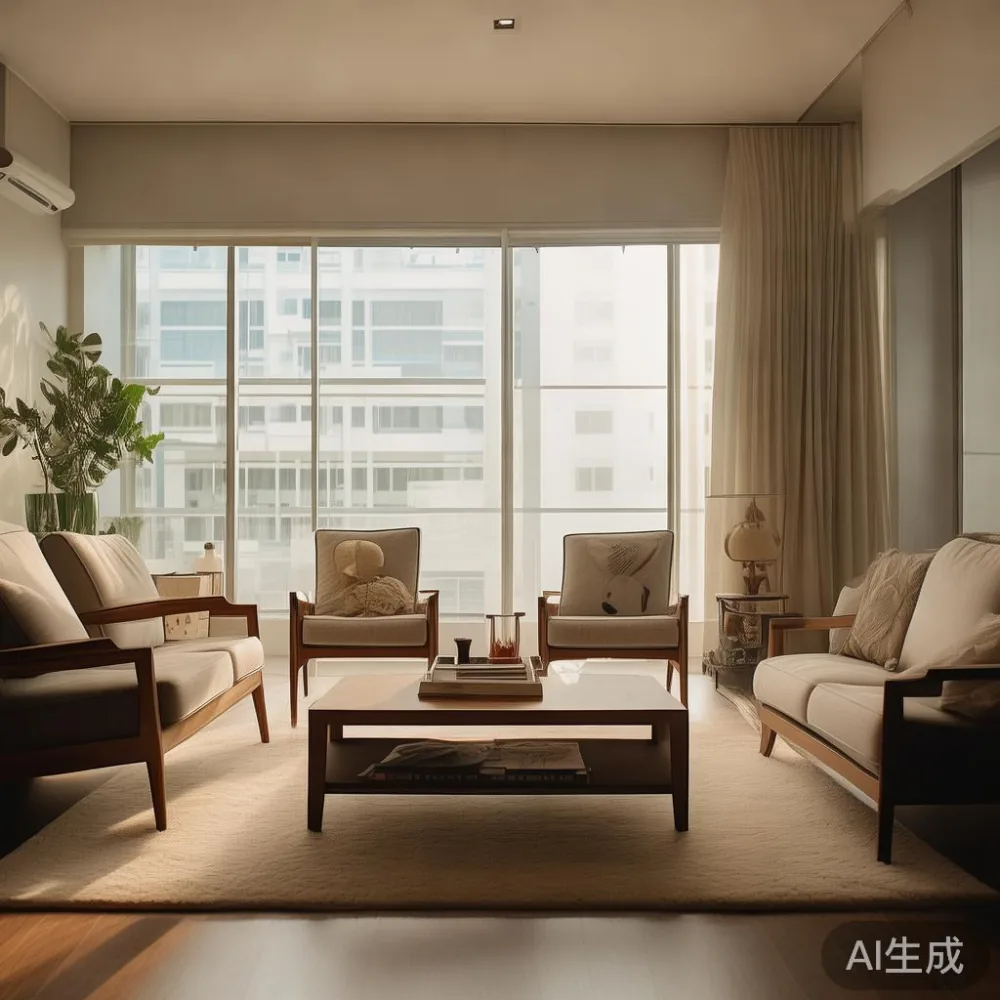
Upholstered pieces like a solid wood sofa benefit from kiln-dried hardwood frames, 8 to 12 percent MC, with sinuous springs or eight-way hand-tied coils wrapped in moisture-resistant batting. A breathable cotton or linen-blend slipcover, rather than a sealed PU backing, lets the frame breathe. For dining tables, table tops built from 20 to 25 mm planks with breadboard ends are far more stable than a single 60 mm slab, because the breadboard lets the centre field expand and contract without cracking. A 220 by 96 cm dining table from MIDHILL, in our American light luxury post-modern light luxury line, uses precisely this construction, with quartersawn oak and a hand-rubbed oil-and-wax finish that breathes with the wood instead of sealing it in plastic.
Is a dehumidifier really necessary, and how do I size one for my flat?
If your home spends more than 4 hours a day above 70 percent RH, yes. A 20 to 25 square metre HDB living-dining area can be kept in the 50 to 55 percent RH range with a 10 to 12 litre per day compressor dehumidifier running 6 to 8 hours, which costs roughly 1.10 to 1.50 SGD per day on Singapore's SP Group residential tariff of around 0.32 SGD per kWh. A 35 square metre condo in Punggol or the East Coast tends to need a 16 to 20 litre per day unit. Run it with doors closed, empty the tank or plumb it to a floor drain, and place it 30 to 50 cm away from solid wood pieces so the dry air does not shock one side of the wood faster than the other.
Air-conditioning alone is not enough. A typical 9,000 BTU split running at 23 degrees Celsius will drop indoor RH to about 55 to 60 percent on a 30 degree afternoon, but as soon as the unit cycles off and the room warms back up, RH climbs fast. The pairing of AC plus a dehumidifier is the only reliable way to keep a 4 piece bedroom set stable through monsoon season.
How do I get a 220 cm dining table or a 200 cm wardrobe up a HDB lift and corridor?
This is the question I get every week from clients in Tampines and Bedok, and the answer usually starts with the lift. Most HDB passenger lifts are 1.10 to 1.20 m wide by 1.40 to 1.50 m deep, with a door opening of 0.80 to 0.90 m and an internal height of 2.30 m. Corridors on the HDB void deck are typically 1.50 to 1.80 m wide, and the door into the flat is 0.90 m wide by 2.10 m tall. A solid wood sofa with a 220 cm long base will not fit flat in a standard lift; the legs and arms often have to come off and be reattached on site, which is why MIDHILL ships our frames KD, knocked-down, in 3 to 5 cartons per piece, with every bolt, dowel, and hex key labelled.
For a dining table, anything over 160 cm long will generally require a two-piece top, with a centre leaf or a detachable end leaf, so it can be carried as two 100 to 120 cm halves. A 200 by 60 cm wardrobe in three flat-pack sections, each under 30 kg, fits easily into the back of a standard MPV or a private-hire ride. Marble table tops are the one exception: a 120 cm round marble top weighs 55 to 70 kg and must travel on edge A-frame, P-banded to a pallet, then trolley-ed through the corridor with a dolly. We charge a flat 80 to 120 SGD for white-glove delivery inside Singapore, depending on the floor and whether a lift booking is required, and that is included on orders over US$350 once converted, which most sets clear with a single dining table.
What is a realistic budget in SGD for a 4 piece mid century modern bedroom set?
Prices below are landed in Singapore, inclusive of GST at 9 percent, and reflect MIDHILL's factory-direct model, shipping from Foshan to Singapore in 18 to 28 days by sea plus 3 to 5 days for last-mile delivery and assembly.
- Queen-size bed frame (165 by 210 cm), solid ash or walnut, with a platform slat system: 1,480 to 2,100 SGD.
- 6 drawer dresser (160 by 45 by 80 cm) with soft-close European hinges: 1,650 to 2,350 SGD.
- 2 drawer nightstand (50 by 40 by 55 cm), sold as a pair: 780 to 1,050 SGD per pair.
- 2 door wardrobe (200 by 60 by 220 cm) with adjustable interior: 2,200 to 2,950 SGD.
- Full 4 piece set in solid walnut: 6,200 to 8,400 SGD depending on configuration.
A solid wood sofa in three-seater American proportions (220 by 90 by 85 cm), with kiln-dried oak frame and removable linen-blend covers, lands between 2,800 and 3,600 SGD. A 6-seater dining table (220 by 96 cm) with breadboard ends and two extension leaves lands between 3,200 and 4,400 SGD. Marble accent tables start at 480 SGD for a 50 cm round side table. The site itself is www.midhill.co, where every specification, moisture-content reading, and finish sample is listed before you check out.
How do I compare a European light luxury sofa vs a mid century modern sofa for a humid HDB flat?
European light luxury and mid century modern share tapered legs and clean lines, but they sit on different ideas. A European light luxury sofa tends to be lower, deeper, and more enveloping, with a 90 to 95 cm seat depth and a softer, down-wrapped seat that breathes through a loose linen or boucle cover. A mid century modern sofa is shallower, 80 to 85 cm deep, firmer, with a tighter back and a visible wood frame. In a 12 to 14 square metre HDB living room in Bedok, the mid century modern sofa usually wins on proportion because it leaves 70 to 90 cm of walking room behind it and lets the room breathe.
The comparison comes down to reciprocity. Equivalently, when clients ask me about a light luxury bed vs a mid century modern bed for a 3.2 by 3.6 m HDB master bedroom, the mid century modern platform bed at 32 to 38 cm off the floor opens up vertical space and reads larger than a tall upholstered light luxury headboard that can make a small room feel crowded. The mid century modern palette of walnut, teak, and warm oak also ages gracefully under the kind of indirect natural light you get in a north-facing Tampines unit, whereas high-gloss lacquers can show humidity haze within a season.
Can I mix French provincial and mid century modern without clashing?
Yes, if you keep the structural language consistent. I had a client last month in a Punggol Waterway Ridge condo who wanted both a modern French provincial furniture dining sideboard, in chalky oak with brass cup pulls, and a mid century modern walnut dining table in the same space. We made it work by matching the leg geometry: tapered, faceted, 45 to 50 cm tall, with the same brass-on-walnut material story. The two pieces read as cousins, not strangers. The trick is to pick one accent metal, one wood undertone, and one leg shape, and let those three run through every piece.
If you are browsing for sale French furniture in Singapore, treat the listing photos as a starting point and ask the supplier for the actual moisture-content reading at the time of packing. Anything above 12 percent MC, sealed in plastic for sea freight, will arrive in trouble. At MIDHILL we kiln-dry to 8 to 10 percent MC, wrap in breathable cotton, and include a moisture meter reading inside every carton so the receiving team in Singapore can verify on the dock before the 14-day return window closes.
What about delivery and, also, does anyone actually use the space for a guest room?
Also worth mentioning is the guest room, which in many HDB and condo layouts is a 9 to 11 square metre spare bedroom that hosts visiting parents three or four times a year. The default is a Murphy bed or a cheap futon, but if you have the corridor width and the ceiling height, a compact American for guest room setup reads as a real second bedroom. A 140 by 200 cm solid ash bed frame at 920 to 1,250 SGD, a 100 by 35 by 45 cm wall-mounted console in lieu of a nightstand, and a single-door wardrobe at 1,150 to 1,500 SGD turns that spare room into something a mother-in-law will actually want to come back to. The American for guest room proportions are slightly narrower than a standard Asian queen, which is why they clear so much in freight cost and still feel generous.
Care routine: what do I actually do once the furniture is inside?
Weekly, run the dehumidifier to a target of 50 to 55 percent RH and check with a 12 to 25 SGD hygrometer placed 1 m off the floor. Monthly, wipe all wood surfaces with a dry or barely damp microfibre cloth, never a wet one, and avoid silicone sprays. Twice a year, in March and September, apply a hard wax oil such as Osmo or Rubio Monocoat to high-touch zones like dining table centres and sofa arm caps. Keep solid wood pieces 25 to 30 cm away from air-con vents so the cold, dry airstream does not crack one face of the wood. Never drag a 90 kg wardrobe across a marble tile floor; lift it with four people or use furniture sliders rated to 120 kg. Sunlight through a west-facing window will bleach walnut in 6 to 9 months; rotate accessories and use sheer linen curtains to cut UV by 60 to 70 percent.
What warranty and after-sales should I expect from a Foshan factory-direct brand?
A 10 year structural warranty on frames and joinery is the minimum I would accept on a piece that costs more than 2,000 SGD. Lifetime refinishing, meaning the factory will sand, re-stain, and re-oil your dining table at cost for as long as you own it, is the kind of offer only a factory-direct maker can sustain. Free shipping over US$350, roughly 480 SGD, makes sense on any order over a single dining table, and 14-day returns with the original cartons unopened protect you against the 2 to 4 percent damage-in-transit rate that sea freight through the Strait of Malacca unfortunately carries. MIDHILL offers all of the above, plus a Singapore-based assembly partner who can be on site within 48 hours of delivery for any warranty claim, which is rare in this category.
If you are weighing a European sofa vs mid century modern sofa for a humid HDB living room, weigh the construction story against the climate story. The mid century modern sofa, built on a kiln-dried hardwood frame with breathable covers and a 10 year structural warranty, will outlast a sealed-frame light luxury piece in 80 percent RH, simply because it is designed to move with the air. That same logic applies to every piece in the home: bed frame, dining table, wardrobe, nightstand, marble accent table. Choose wood that breathes, finishes that breathe, joints that allow movement, and a maker who measures moisture content before the crate is nailed shut.