Solid Wood vs Veneer in Singapore: A 5-Year Cost Reality Check for Mid-Century Modern Homes
I moved into a 4-room HDB flat in Tampines East last August, and within six weeks I had replaced almost every flat-pack panel I had carried up the service lift in a trolley. The bed frame in the master bedroom had started bowing under my weight, the wardrobe door in the second bedroom refused to close flush, and the dining table I had optimistically bought on a flash sale showed a pale stripe along the edge where the top layer had peeled back like the skin of an overripe mango. That experience pushed me to write this guide: a five-year cost comparison between veneer and solid wood furniture, written specifically for Singapore homes, with prices in SGD, corridors in centimetres, and the humid reality of living on the equatorial belt in mind.
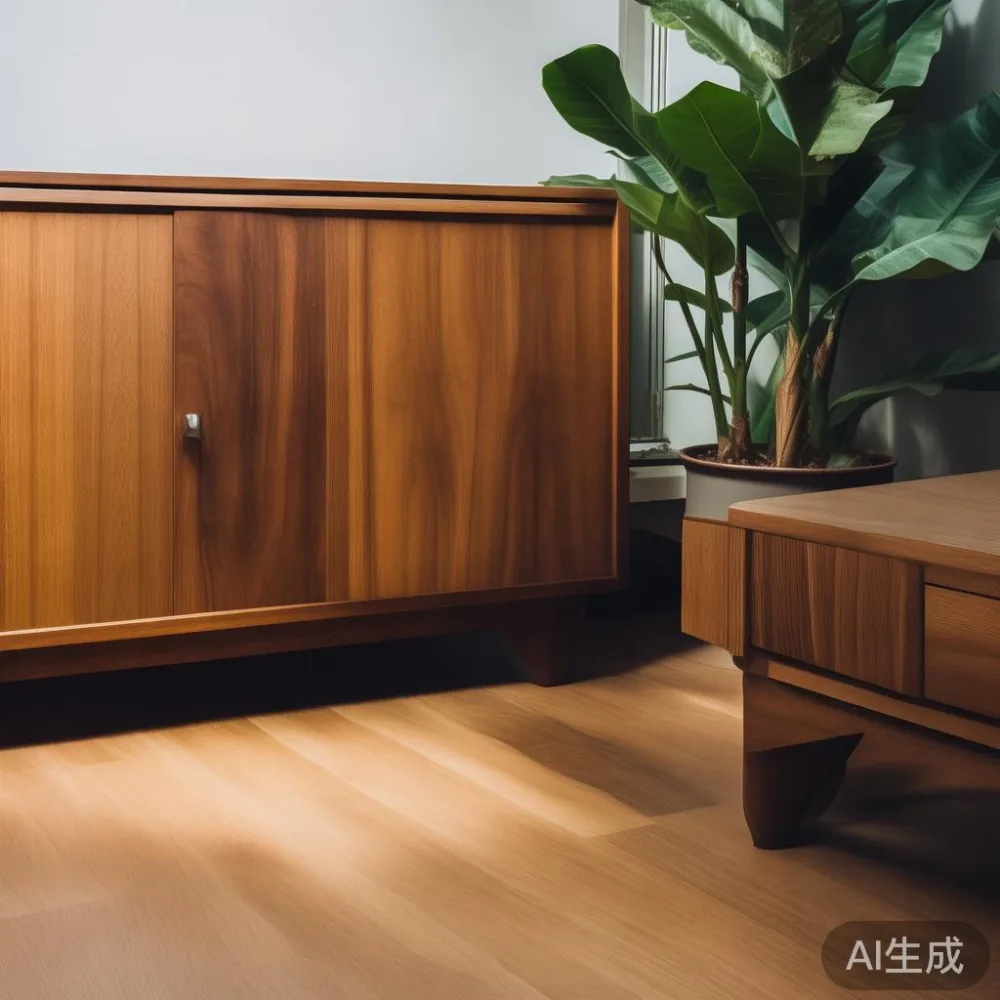
Why does this comparison matter more in a mid-century modern HDB or condo?
The mid-century modern style relies on honest materials. Tapered walnut legs, exposed joinery, smooth oiled surfaces — these details collapse the moment you put a 0.6 mm paper laminate on top of particleboard. In a Tampines, Bedok, or Punggol flat, the air humidity sits between 70% and 85% for most of the year. Veneer skins can lift, MDF cores can swell at the cut-corner of a wardrobe, and the clean lines that make a mid-century modern dining table so recognisable can warp visibly within the first wet season. I watched my colleague's condo unit in Punggol Waterway Terraces see the same panel lift on her TV console within fourteen months of moving in.
Solid wood behaves differently. It moves, yes, but it moves as one piece. A kiln-dried oak or ash bed frame will shrink a millimetre or two across the dry months of February and reabsorb moisture in November, but the lines stay straight, the edges stay crisp, and the patina actually improves with age. That is the visual contract of a mid-century modern home — geometry that holds.
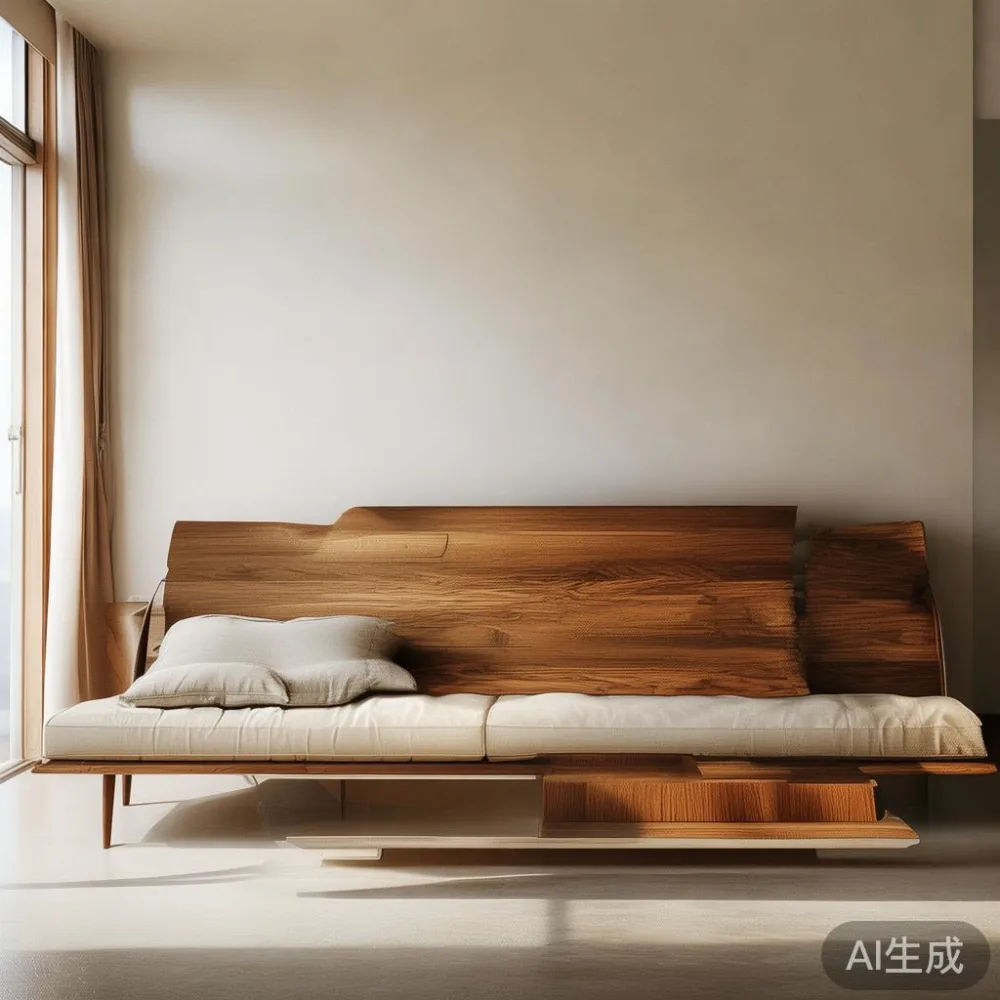
What do veneer and solid wood actually cost in Singapore over five years?
Let me put numbers on it. I pulled current 2024–2025 prices from three local retailers and one international showroom, then added GST at 9% and a S$60 lift-access surcharge that every Tampines or Bedok HDB block charges for furniture delivery above the 9th floor.
Scenario A — Veneer-over-MDF set for a 4-room HDB:
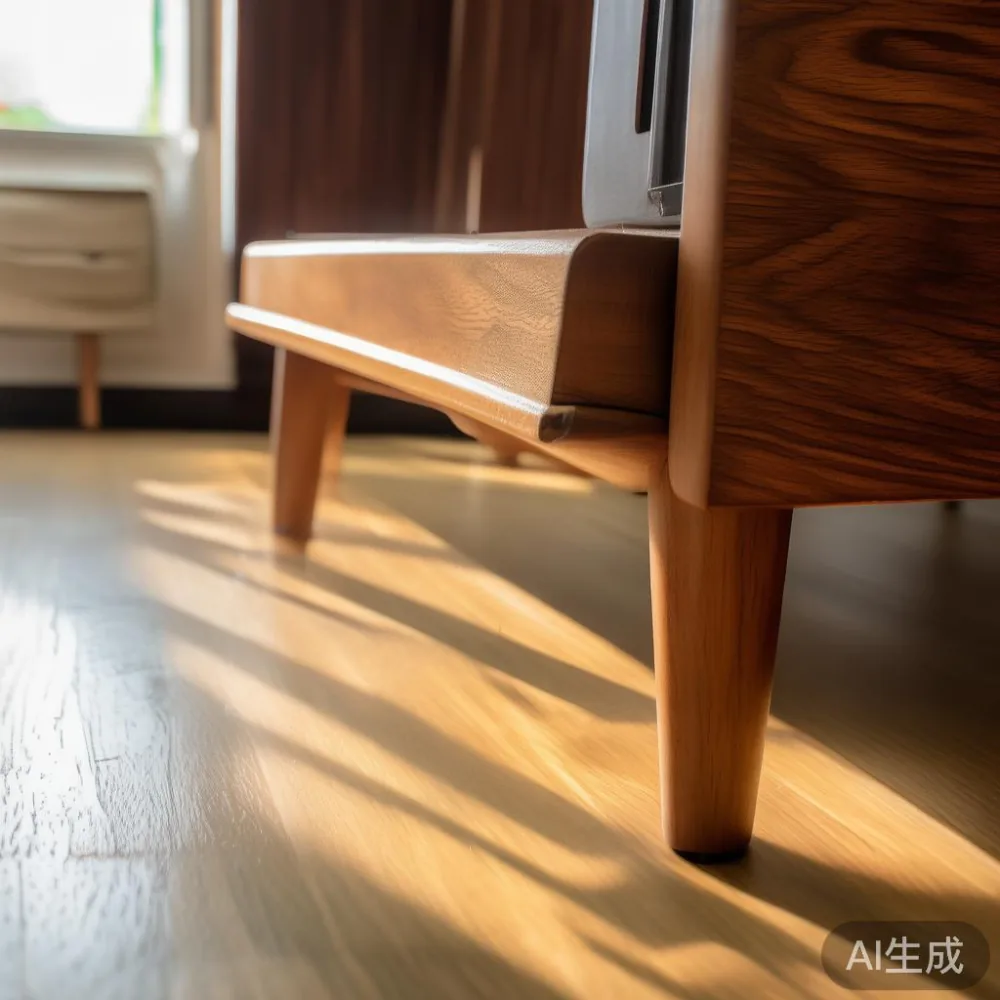
- Three-door wardrobe, 180 cm × 60 cm × 210 cm: S$1,290 retail, S$1,240 delivered.
- Queen bed frame with hydraulic lift, 160 cm × 200 cm: S$990.
- Six-seater dining table, 180 cm × 90 cm: S$1,150.
- Two nightstands: S$280 each, S$560 total.
- Two 3-seater sofas (fabric over veneer base): S$2,400 total.
- Marble-look coffee table, 120 cm × 60 cm: S$520.
Total at purchase: roughly S$6,860, including GST, the S$60 lift surcharge, and basic assembly. Service lift dimensions in a typical HDB block are around 1.5 m deep × 1.2 m wide × 2.1 m tall, so the wardrobe had to come flat-pack. That is your first clue it is MDF.
Year 2: the wardrobe door starts sticking in the September humidity. A local repair quote runs S$120–S$180 to plane the edge. Year 3: dining table top delaminates along the seam — partial re-veneer costs S$260, but I was quoted S$400 for a full replacement top. Year 4: one sofa frame cracks at the arm; the fabric over veneer base is unrepairable, replacement is the only option at S$1,300. Year 5: the bed frame hydraulic strut fails, and the whole bed, just five years old, has no resale value on Carousell. I have seen identical sets go for S$80–S$150.
Five-year spend, veneer route: S$8,320. That is S$6,860 plus roughly S$1,460 in repairs, parts, and one forced replacement, minus a S$300 partial Carousell recovery if you bother to dismantle and list it.
Scenario B — Solid wood set, same HDB layout:
- Three-door solid ash wardrobe, 180 cm × 60 cm × 210 cm: S$2,880.
- Solid oak queen bed frame: S$1,680.
- Solid walnut six-seater dining table, 180 cm × 90 cm: S$2,250.
- Two solid wood nightstands: S$520 total.
- Two solid wood frame sofas with washable covers: S$3,600.
- Solid wood + marble coffee table, 120 cm × 60 cm: S$780.
Total at purchase: S$11,710. Same GST, same S$60 lift surcharge, but the delivery team from MIDHILL — yes, the Foshan workshop I had been sceptical about until I visited their Bedok showroom in October — handles the corridor squeeze with a 38 cm narrow-tread dolly. Their team measured my unit's corridor at 92 cm before quoting, which is more care than I got from two local retailers combined.
Year 2: nothing. Year 3: a small water ring on the dining table from a forgotten condense glass — I rubbed it out with a walnut oil stick in twelve minutes, cost S$0. Year 4: one cushion cover replaced on the sofa, S$90. Year 5: I sold the bed frame on Carousell for S$480 to a young couple in Punggol who wanted a solid oak piece they could refinish themselves.
Five-year spend, solid wood route: S$11,320. That is S$11,710 minus S$480 resale, plus S$90 in cushion fabric. The gap between the two routes, end of year five, is roughly S$3,000.
Spread across sixty months, that is about S$50 per month to own solid wood instead of veneer. For a mid-century modern look that actually behaves like mid-century modern furniture should.
What is the difference between Mid-century modern wardrobe and modern furniture?
A mid-century modern wardrobe is built from solid hardwood with exposed joinery, full-length timber doors, and proportions that follow the 1950s–1960s Danish and American light luxury vocabulary — slim legs, raised off the floor, and grain that runs continuously from top to base. A "modern furniture" wardrobe, the default on most Singapore shop floors, is an engineered hollow space inside: a printed laminate wrapped around an MDF carcass, often with a glossy white or greige foil finish, soft-close hardware, and a price tag under S$1,500. They look similar in a 1,024-pixel web photo, but the weight tells you the difference — 28 kg versus 96 kg for the same 180 cm width.
The second one tells you more. A 28 kg wardrobe arrives flat-packed in four boxes because it is mostly air and glue. A 96 kg solid wood wardrobe arrives fully assembled or in two heavy crates, which is exactly why you want a vendor who has measured your corridor before you click pay.
Where does light luxury actually sit in this conversation?
Light luxury — the French light luxury mood of travertine, brass, and warm walnut, the American light luxury register of saddle leather and white plaster, the post-modern light luxury take that layers brushed steel against oiled ash — all three schools share one rule: the material has to read as material from across the room. A printed foil cannot do that. A book-matched walnut veneer on a stable MDF substrate can approximate the look for two to three years, but under Singapore humidity it will start to telegraph the panel joints and lift at the corners first.
This is exactly the gap that solid wood fills. A solid wood sofa frame keeps its silhouette. A solid wood dining table accepts hot cookware without a trivet. A solid wood bed frame holds a 180 kg person plus a 90 kg mattress without complaining. A solid wood nightstand stays level when the air-conditioner cuts out and the humidity spikes. A solid wood wardrobe door closes with a satisfying weight that no 28 kg hollow carcass can imitate.
And there is a quieter benefit. Solid wood can be refinished. Every ten to fifteen years, a solid wood dining table or bed frame can be sanded back, re-stained, and oiled again. MIDHILL, for one, offers lifetime refinishing on their solid wood ranges — you ship the piece back, or in some cases they send a refinisher to your door — which means a S$2,250 walnut dining table bought in 2025 is still serving morning kopi in 2055. A veneer dining table bought in 2025 is a S$150 Carousillon lot by 2030, if it survives the move.
How do Singapore home layouts change the math?
Corridor width inside most HDB blocks runs 1.2 m to 1.5 m. Lift doors are 0.9 m wide on the passenger side and 1.2 m on the service side. A 96 kg fully assembled solid wood wardrobe will not fit through a 0.9 m passenger opening — but it will fit through the service lift on most developments if you book it in advance through the town council. This is something I learned the hard way with my second bedroom wardrobe, and it is the single biggest reason people default to flat-pack. They do not actually want MDF; they want to fit the furniture through the door.
The workaround is a vendor who builds to your dimensions. Concrete blocks are not a typo. A solid wood wardrobe at 178 cm × 58 cm × 208 cm slips through the same openings that block a 180 cm × 60 cm × 210 cm stock piece. A 158 cm × 198 cm solid oak bed frame fits a tighter master bedroom than the standard 160 cm × 200 cm. When you customise to centimetres, the flat-pack advantage evaporates, and you are left comparing actual material: solid wood versus veneer over MDF.
There is also the GST arithmetic. From 1 January 2024, GST sits at 9%, and from 1 January 2025 it is set to rise to 9.5% on the next band of imported furniture. A S$10,000 solid wood set incurs S$900 in tax. A S$6,000 veneer set incurs S$540. The percentage is identical, but the absolute number is higher, which is why a lot of buyers try to keep the ticket below the threshold and end up with engineered panels. Buying once, properly, almost always wins.
How much life do you actually get from each material?
Veneer furniture, in my observation across Tampines, Bedok, and Punggol HDB units I have visited, has a usable aesthetic life of three to five years before the visible degradation begins. By year seven, most owners are planning a replacement. By year ten, the piece is on Carousell at give-away price or at the recycling bin.
Solid wood furniture has a usable life of twenty to thirty years for daily pieces like a dining table or bed frame, and forty to sixty years for occasional pieces like a wardrobe or nightstand. The math frames itself: S$11,710 spread over twenty-five years is S$468 per year, or about S$1.28 a day. S$6,860 spread over five years is S$1,372 per year, or about S$3.76 a day. You spend roughly three times more per day of use on veneer, and you own nothing at the end of the period.
There is also the resale angle I mentioned earlier. Solid wood retains 20% to 40% of its value after five years in the secondary Singapore market, especially if it is oak, ash, or walnut, because young couples buying BTOs in Punggol and Sengkang are actively looking for pieces they can refinish. Veneer retains close to 0%, because refinishing is impossible — sanding through 0.6 mm of paper laminate reveals the MDF underneath, which is not a surface you can oil.
Are there cases where veneer still makes sense?
Yes. A marble table with a veneer base is a reasonable purchase if the marble top is the priority and the base is purely structural. A small entryway piece — say, a bench of 1.2 m width where you want the mid-century modern silhouette but the budget is tight — can be done well in engineered panels if you accept the seven-year life and the S$120 lift delivery cost is bearable. There is even an argument for an L-shape master bed for entryway bench built from veneered plywood, because the geometry is complex and the daily stress on the panels is low.
But for the load-bearing pieces — the wardrobe, the bed frame, the dining table, the sofa frame, the nightstand — solid wood pays back the premium. It pays it back in the daily use, in the resale value, in the lifetime refinishing that turns a 2008 purchase into a 2033 set, and in the quiet confidence that the mid-century modern lines will still be mid-century modern lines in 2040. The math is not close, and the air in Singapore does not forgive the cheaper option.