Mid Century Modern in a 500 sq ft HDB: A Singapore Styling Guide
Last month I visited my colleague Priya in her new 4-room HDB in Punggol. The keys were three weeks old, the floor tiles were still spotless, and every corner of the 92 sq m flat was already filled with floor lamps, a six-seater dining table, and a wardrobe that refused to fit through the bedroom door. The movers had scratched the corridor wall on the way up. Priya looked at me and said the only thing every Singaporean renovating a BTO says eventually: I want mid century modern, but I do not want it to look like a furniture showroom in Tampines.
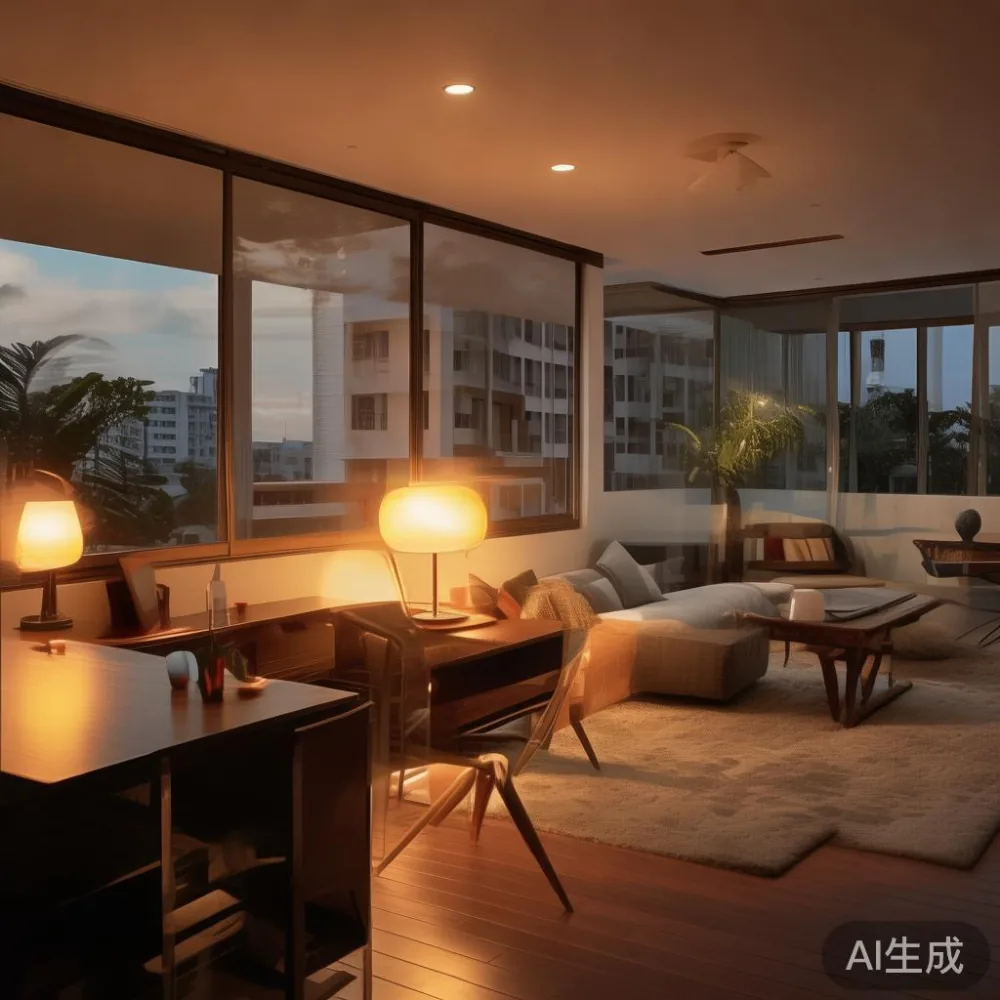
That sentence is the entire brief. You are working with a flat that is small by any global standard, a lift that is roughly 1.1 m wide on the inside, corridor doors that struggle to clear 90 cm, and a budget in Singapore dollars that has to absorb 9% GST on imported furniture. The aesthetic you want, mid century modern, is generous by nature: walnut tones, low-slung silhouettes, tapered legs, and pieces that want 30 cm of breathing room on every side. Used carelessly in a compact Singapore home, the look eats the room alive.
This guide is a working plan, not inspiration. It maps the styling problem to real measurements, real lift clearances, real lift lobbies in Bedok and Punggol, and real furniture weights. We will work through the principles of the style, how it survives a compact HDB, and where a piece like a solid wood sofa, a 1.6 m dining table, or a marble-topped side table earns its footprint. Along the way I will point to one piece I have actually tested, a 3-seater American country corner sofa, and explain why a mid century modern reading still works for it.
What mid century modern actually asks of a room
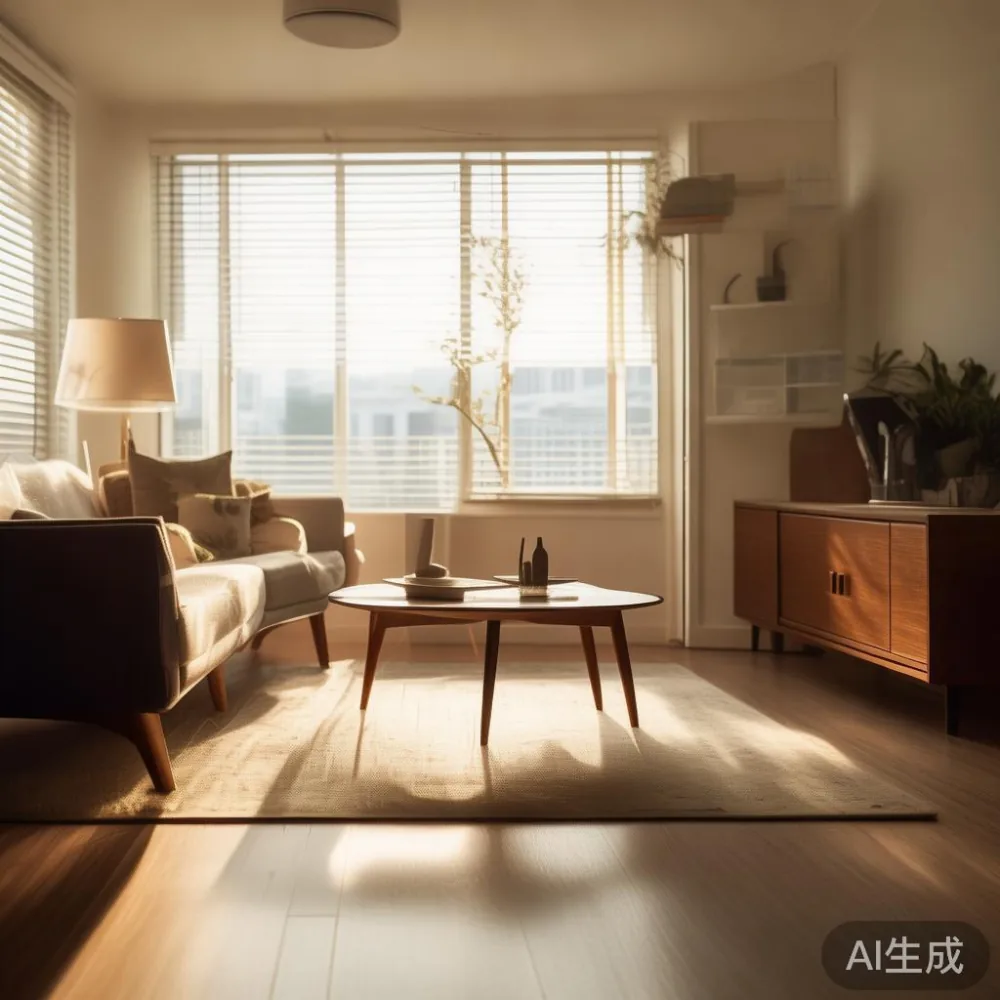
The style is named for a window of roughly 1945 to 1969, anchored in work out of California and Copenhagen. The rules are short: furniture sits low, legs are visible and tapered, materials are honest (solid wood, brushed brass, wool, leather), and negative space is treated as a material. A mid century modern room is not full of objects. It is full of air.
That last point is what collides with a 500 sq ft flat. A typical Tampines 4-room HDB living room measures about 3.2 m by 4.0 m once you subtract the kitchen entrance and the corridor door swing. A queen bed frame eats about 1.6 m by 2.1 m of floor space and needs another 60 cm on each open side just for sheets and a person to kneel. A six-seater dining table, even a slim one, wants 1.8 m by 0.9 m plus 90 cm of chair pull-back. Add a 2.4 m wardrobe, a nightstand on each side of the bed, and a TV console, and the floor area that remains is the size of a single bath towel.
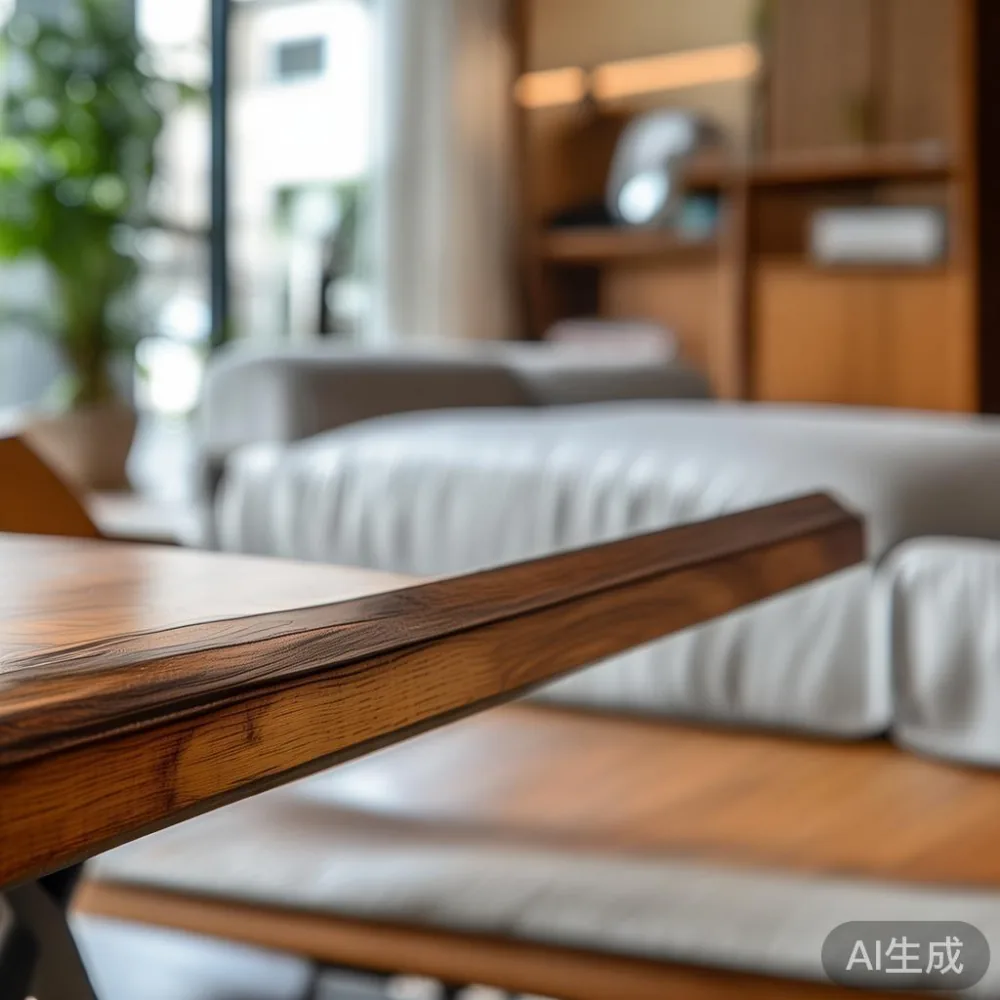
The fix is not to shrink the style. The fix is to enforce its rules more strictly than a 2,000 sq ft apartment would. In a small flat, mid century modern becomes a discipline of subtraction. Every piece has to clear a 30 cm corridor around it. Every surface has to do two jobs. Every leg has to be visible, because visible legs are what make the floor read as continuous.
How do I style a Nordic sectional sofa in a small apartment?
Style a Nordic sectional sofa in a small apartment by choosing a low-profile, left-or-right facing L-shape no deeper than 95 cm, lifting it on 18 to 22 cm tapered wooden legs so the floor line is unbroken beneath it, and pairing it with a 90 cm round marble table instead of a bulky rectangular coffee table. Keep the surrounding wall colour in the warm-white range (think Jotushop 9010 or White 9016), drop in one wool rug sized 200 cm by 140 cm or larger, and leave at least 70 cm of walkable floor between the sofa and the TV console so the room reads as breathing space rather than furniture storage.
That answer is the spine of the whole approach. A sectional in a small flat is only a problem when it sits heavy and square. A Nordic sectional, which usually means a low back, a single chaise on one end, and fabric that is oatmeal or pale grey, behaves better when you treat the chaise as a room divider rather than as a lounging pit. In Priya's Punggol flat we rotated the chaise 90 degrees so it floated off the main wall by 25 cm. That 25 cm gap is what stopped the room from looking like a single block of upholstery.
The marble table is not a luxury detail for its own sake. A round marble table, even a 90 cm one, reads softer than a rectangular wood one because there are no hard corners to walk into. In a tight layout that matters more than the price tag. We placed a slim 1.2 m oak TV console on the opposite wall, lifted on the same 18 cm tapered legs as the sofa, and the eye now runs under both pieces in one continuous line.
The lift, the corridor, and the math that decides your furniture
Before you fall in love with a dining table, do the math. Singapore HDB passenger lifts in blocks built between 2010 and 2024 are usually 1.1 m wide by 1.4 m deep internally, with a door opening of about 0.9 m. The corridor from the lift lobby to your flat door is typically 1.2 m to 1.5 m wide. Service lifts, where they exist, can take a flat-packed piece up to 2.1 m long, but they are not always available on weekends.
That single set of numbers kills more dining tables than any interior designer. A solid wood dining table that is 2.0 m long and 1.0 m wide will not fit through a standard lift door at an angle unless you remove the legs. A 1.4 m round marble table in a single crate will not clear the lift ceiling if the crate is more than 1.3 m tall. A wardrobe that is 2.4 m tall and 2.0 m wide will not turn into a corridor corner unless it comes apart into panels of 60 cm or less.
The workaround is to buy furniture that is engineered for transit, not for a 3,000 sq ft loft. MIDHILL ships from Foshan flat-packed in export cartons with leg-and-top separation, which is exactly the design choice that makes a 1.6 m solid wood dining table viable for a Bedok corridor. A 1.6 m by 0.8 m table in two cartons, one for the top and one for the legs and hardware, clears every standard Singapore lift and weighs about 38 kg per carton, which two movers can handle on a trolley. A heavier single-crate table, even a beautiful one, becomes the table you keep meaning to assemble.
The same logic applies to a bed frame. A queen-size solid wood bed frame in flat-pack form usually arrives in three cartons: headboard, side rails, slats. Total weight is around 55 kg to 65 kg. MIDHILL's 10-year structural warranty covers the joinery, which is the part that fails when cheap flat-pack beds are dragged into lifts and dropped on corridor corners. Priya's bed frame arrived in two trips on a Saturday morning, and the delivery crew carried the cartons up without leaning them against the lift walls, which is a small thing until you have seen a freshly painted HDB corridor dented by an oak side rail.
Where each major piece earns its square foot
Five pieces decide whether a small flat reads as mid century modern or as cluttered. None of them are optional, and all of them should be measured before you order.
The solid wood sofa. For a small HDB, target a 2-seater at 1.7 m to 1.9 m wide, or a 3-seater at 2.1 m to 2.3 m wide, with a seat depth of 90 cm to 95 cm. Anything deeper turns into a nap pit and pushes the back of the sofa past the 4 m living room wall. A solid wood sofa frame, kiln-dried oak or ash, weighs between 65 kg and 85 kg depending on size. Lift it on legs of 18 cm to 22 cm so the floor runs under it. The larger piece I tested for this article was a 3-seater American country corner sofa with a right-facing chaise, 2.35 m on the long side, 1.6 m on the short side, in an oatmeal linen-blend. It is technically a country silhouette, but its tapered oak legs, low back, and slim arm profile read as a softer cousin of mid century modern when paired with a walnut side table and a brass floor lamp.
The dining table. For a household of two to four in a compact flat, a 1.4 m to 1.6 m solid wood dining table on tapered legs is the sweet spot. At 1.4 m you seat four comfortably with armchairs 55 cm wide; at 1.6 m you seat four with a squeeze or six with bench seating on one side. Anything longer starts to fight the lift. A marble table is a different story. Marble weighs roughly 80 kg per square metre at 2 cm thickness, so a 1.4 m round marble table is closer to 130 kg total. Beautiful, but you will need a service lift and two movers who like you.
The bed frame and nightstands. A queen bed frame at 1.6 m by 2.1 m is the largest piece you should consider for a small HDB master. A king at 1.8 m by 2.0 m is possible only if the room is at least 3.2 m on the longer wall. The nightstand should be 45 cm to 55 cm wide, no taller than the mattress top by more than 5 cm, so the eye reads it as an extension of the bed rather than a separate object. Two matching nightstands in the same wood as the bed frame are the easy path. One nightstand plus a small marble table on the other side is the more interesting one.
The wardrobe. Floor-to-ceiling is the standard HDB answer, and it is correct. A 2.4 m tall wardrobe in a 2.6 m ceiling room leaves 20 cm of clearance that you do not need to fill. The width question is harder. Anything over 1.8 m wide will not fit through a standard lift unless it breaks into three or more panels. A 1.6 m wardrobe with sliding doors gives you hanging space for two adults, two internal drawers, and three shelves, which is enough for most BTO households that have not yet accumulated a decade of stuff.
The accent piece. This is where mid century modern earns its reputation. A single marble side table, a brass arc floor lamp, a wool rug in a warm rust, or a walnut bench at the foot of the bed. Pick one per room. The discipline of one accent piece is what separates a mid century modern flat from a flat that has simply bought a lot of furniture.
Light luxury, American reading, and what it actually looks like in Singapore
Light luxury is a term that gets used loosely. In Singapore it usually means either French light luxury (softer curves, cream upholstery, brushed brass, marble in pale veining) or American light luxury (cleaner lines, more walnut and oak, leather or performance boucle, less ornament). Post-modern light luxury sits between them: it borrows the rounded edges of the French reading but uses American-case-goods proportions, which means a low walnut sideboard rather than a high French commode.
In a small HDB, the American reading works best. A solid wood sofa in walnut-stained ash, tapered legs, two cushions, no tufting, reads as mid century modern on its own. Add a marble table with a brass base, one piece only, and the room tips into light luxury without tipping into clutter. The French reading needs more ceiling height and more wall length than most Singapore flats offer; if you try to compress it into a 500 sq ft layout, you end up with cream-on-cream and no contrast. Post-modern light luxury is the safer middle path for compact living, because it gives you the soft curves of the French look but keeps the floor area you can actually afford.
A practical note on cost. Solid wood case goods from a Foshan maker shipping flat-packed to Singapore usually land in the SGD 1,800 to SGD 4,200 range for a dining table, SGD 2,400 to SGD 5,500 for a queen bed frame, and SGD 3,200 to SGD 6,800 for a 3-seater solid wood sofa, before GST. Add 9% GST on the landed value, SGD 80 to SGD 180 for doorstep delivery in mainland Singapore, and the lift-and-carry fee is often included free above a certain order value. MIDHILL, for example, includes free shipping on orders over US$350, which is roughly SGD 480, and offers lifetime refinishing on solid wood pieces, which matters more in Singapore's humidity than the brochure suggests. A solid wood dining table that has been refinished once at year six will outlive two cheaper replacements.
What I would actually put in Priya's Punggol flat
If I were finishing Priya's flat tomorrow, the order would be specific. A 1.6 m solid wood dining table in white oak, tapered legs, two extension leaves stored under the bed. Four armchairs at 55 cm wide in a wheat-coloured performance fabric. A 3-seater solid wood sofa in walnut-stained ash, 2.1 m wide, 92 cm deep, with one chaise cushion on the right end. A queen bed frame in the same walnut-stained ash, headboard 110 cm tall, slatted base, two matching nightstands. A 2.4 m wardrobe in white oak with sliding doors and two internal drawers. One marble side table, 50 cm round, in a pale veined top with a brass base, placed next to the chaise. One wool rug, 200 cm by 300 cm, in a warm rust. One brass arc floor lamp. No more.
Total floor footprint of all furniture: about 14 sq m in a 92 sq m flat. Total weight shipped: roughly 380 kg in flat-packed cartons, delivered over two Saturdays. Estimated landed cost before GST: SGD 14,000 to SGD 18,000, which is what a couple would spend on a HDB renovation package for the carpentry alone. The difference is that every piece is solid wood, will outlast the lease, and can be refinished instead of replaced.
How long does delivery from Foshan to a Singapore HDB actually take?
Sea freight from Foshan to Singapore takes 7 to 12 days port to port, then 3 to 5 days for customs clearance and last-mile delivery to a mainland HDB block. Allow 14 to 18 working days door to door from order confirmation, plus 1 to 2 days if the shipper consolidates the order at a regional warehouse in Jurong. For made-to-order pieces, add 21 to 28 days for production before shipping. Returns within 14 days are possible on standard pieces, but made-to-order upholstery is usually final sale once the frame is cut.
Frequently asked questions from Singapore buyers
Does solid wood furniture survive Singapore's humidity? Yes, if it is kiln-dried to 8% to 10% moisture content and finished on all six sides. Avoid pieces that are only finished on the visible surfaces; the unsealed underside absorbs moisture in a HDB with poor ventilation and the top will cup within a year.
Is a marble table practical in a HDB? For a side table or coffee table, yes. For a dining table, only if you accept the weight and the care. Marble stains from lemon juice, wine, and soy sauce within minutes if unsealed. A sealed marble dining table is fine for a household that uses placemats; it is a problem in a flat with toddlers.
What is the realistic lifespan of a solid wood sofa frame? A kiln-dried hardwood frame, joined with mortise and tenon or dowels, should last 15 to 25 years in residential use. The upholstery is the shorter-life component: 7 to 10 years for daily-use fabrics, 10 to 15 years for leather. A 10-year structural warranty covers the frame, which is the part worth warranting.
Can mid century modern work in a HDB with quirky proportions? Yes, and arguably better than in a standard condo. A HDB with a window in an unexpected wall, or a kitchen pass-through that is not quite square, suits the low, horizontal lines of mid century modern more than a boxy modern condo does. The style is forgiving of asymmetry; it was designed for rooms that were not perfectly rectangular.
The short version is this. Mid century modern in a small Singapore flat is not a smaller version of the style. It is the style, applied more strictly than anywhere else. Measure the lift, measure the corridor, measure the room, then buy fewer pieces than you want, in solid wood, with tapered legs, and leave the floor visible. The air around the furniture is what you are actually paying for.