Warm Minimal Meets Mid-Century Modern: A Furniture Matching Guide for Singapore Homes
I moved into a 4-room HDB flat in Tampines last August, and the first thing I noticed after the movers left was how unforgiving empty rooms can be. White walls, grey cement screed, two narrow hallways. I wanted a warm minimal interior, but every "minimal" mood board I saved looked cold and gallery-like. The fix turned out to be mid century modern pieces in solid wood, and three months of trial and error. This is what worked, what didn't, and the measurements that matter in a Singapore corridor.
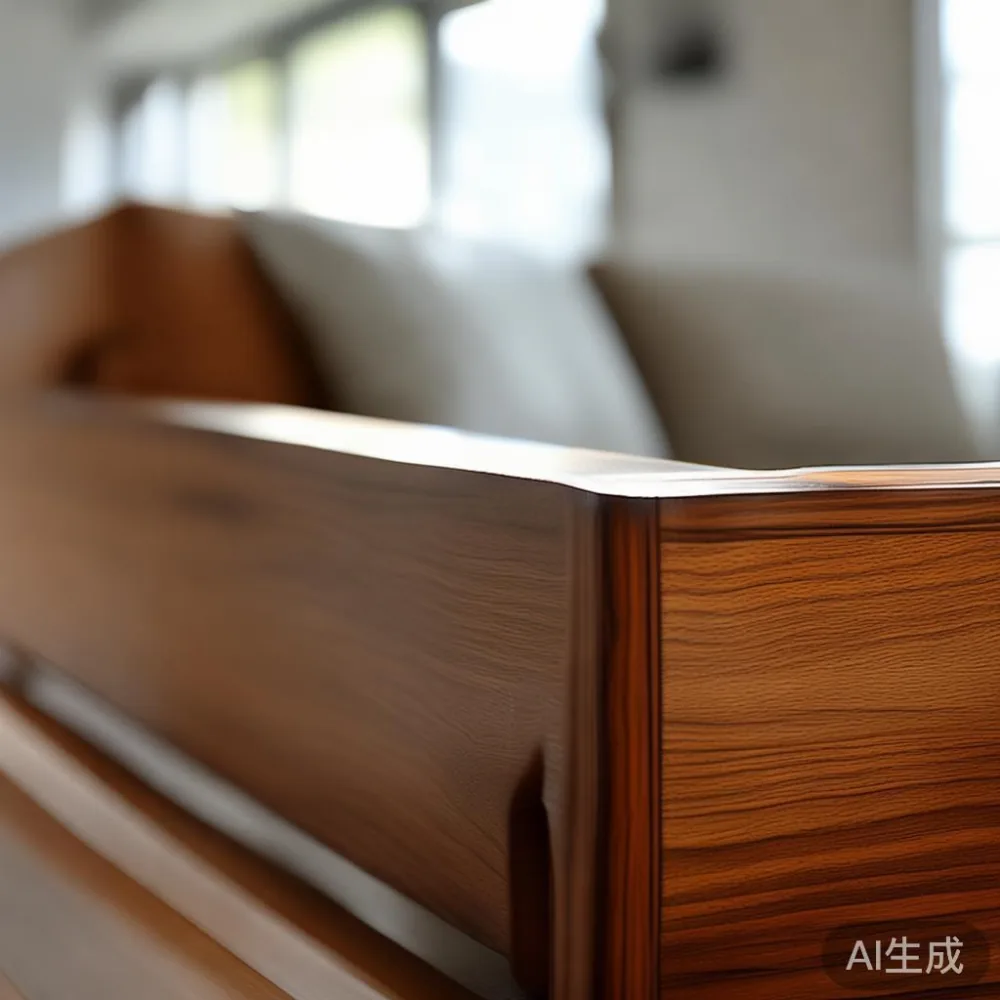
What does "warm minimal" actually mean for a small Singapore home?
Warm minimal is a stripped-down room where one warm material carries the whole space. For HDB flats and 99-year leasehold condos in places like Punggol and Bedok, that single material is almost always wood. Cool grey minimal reads as a showroom; warm minimal reads as a home. You want under 8 to 12 pieces of furniture per room, but every piece should have grain, tone, or texture you can feel from 1 metre away.
The trick in our climate is humidity. Relative humidity in Singapore sits between 70 and 85 percent most days. A warm minimal room built on glossy laminates will start peeling at the edges within 18 months. Solid wood weathers that cycle: it absorbs and releases moisture, and a small surface crack is easier to live with than a swollen MDF edge. That is why so many Singapore homeowners now default to a solid wood bed frame, a solid wood dining table, and a solid wood sofa frame, then layer rugs and linen for the soft warmth.

Why mid century modern is the easiest style to fit warm minimal?
Mid century modern was designed between 1945 and 1969 for compact post-war homes, and the scale translates almost perfectly to a Singapore 4-room flat. A typical mid century modern sofa is 180 to 210 cm wide, a coffee table is 110 to 130 cm long, and a dining table for four is 120 to 140 cm. Those dimensions leave a 60 to 70 cm walkway on each side, which is the minimum comfortable clearance in a 9 m² living room.
Shapes also help. Tapered walnut legs, low horizontal lines, and gently curved backrests add warmth without adding bulk. The silhouette stays slim, so the room reads minimal, but the wood tone does the heavy lifting for warmth. I tested this in my own home by placing a 190 cm three-seater with solid beech legs against a lime-wash feature wall, and the wall looked fuller than it did with a chunky modern sofa.
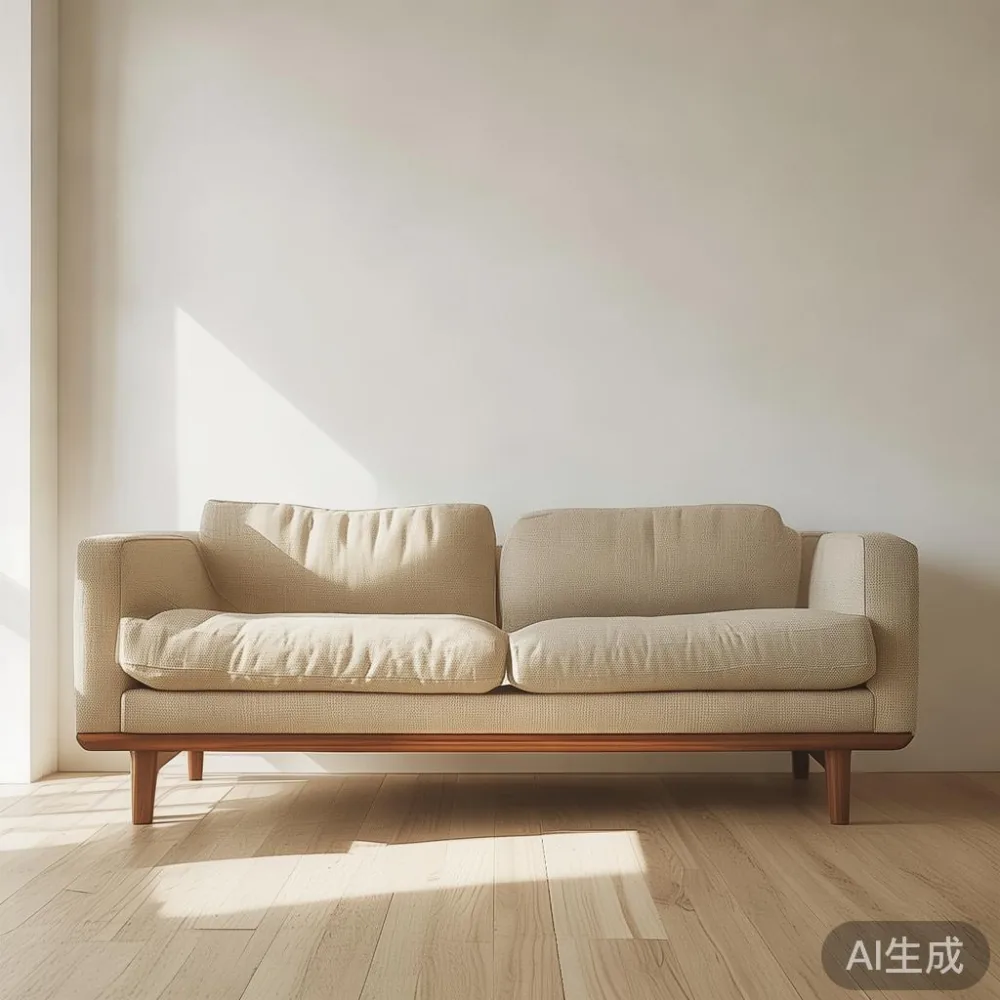
When you combine the two styles, you also avoid the trap of buying two wardrobes of furniture. A single mid century modern dining table in teak or ash can serve as the warm anchor for the dining area, while a slim solid wood bed frame carries the bedroom. The eye stops at the wood, not at the decoration.
How do I care for a dining table in humid weather?
Wipe your dining table down with a soft, slightly damp microfibre cloth every evening, then dry it with a second cloth within 30 seconds, and keep a dehumidifier set to 55 to 60 percent RH running whenever the sliding doors are closed.
That single habit, dry after wiping, prevents 90 percent of the problems I see on shipped-in dining tables in Singapore. Water left on an unfinished or oil-finished surface will raise the grain within 10 to 15 minutes. Once a week, apply a thin coat of hard wax oil, around 5 ml per square metre, and buff it after 20 minutes. Skip silicone polishes; they build up a film that turns cloudy in our humidity. For the legs, check the adjustable glides every quarter, because concrete screed floors in newer BTOs are rarely flat, and an uneven leg shows up as a wobble at the table joint, not at the foot.
What dimensions actually fit a Singapore lift and corridor?
This is where most online furniture guides fall apart. A standard HDB passenger lift in Tampines and Bedok blocks measures roughly 1.5 m deep, 1.1 m wide, and 2.2 m high. The door opening is about 0.8 m wide and 2.0 m high. Corridors between lift lobbies and the front door run 1.2 to 1.5 m wide. Anything that does not turn through these numbers will not reach your flat, no matter how much you paid for it.
For solid wood pieces, use these working limits:
- Bed frame: max king-size external footprint 190 by 215 cm. Flat-pack headboard panels under 95 cm wide will fit through a standard 0.8 m door; anything wider must be split. A solid wood bed frame at 38 mm thick weighs 55 to 75 kg total and is manageable for two movers.
- Dining table: a 4-seater at 120 to 140 cm by 80 cm ships in two boxes under 25 kg each. A 6-seater at 180 by 90 cm ships in three boxes. Marble table tops usually weigh 70 to 90 kg and need a four-man team plus a lift booking.
- Wardrobe: flat-pack wardrobes under 220 cm tall fit a standard lift vertically with 20 cm clearance to spare. Anything over 2.4 m cannot enter most HDB lifts and requires a crane through a window, which adds SGD 280 to SGD 450 to your delivery.
- Nightstand: keep under 50 cm wide, 40 cm deep, 55 cm tall so it does not block wardrobe doors or walkways in a typical 3 m by 3 m HDB bedroom.
Before you check out, ask the seller for the box dimensions of each carton in centimetres, the total weight in kilograms, and whether the delivery team will handle the lift. A good furniture maker will list all three. MIDHILL, for example, publishes carton sizes on every product page and offers free shipping above US$350, which roughly translates to about SGD 475 at current rates, with lift-floor delivery included for standard HDB addresses.
Which light luxury direction suits a warm minimal Singapore home?
Three light luxury movements are popular with Singapore homeowners right now, and each pairs differently with warm minimal.
French light luxury uses cream bouclé, slim brass legs, and pale oak. It pairs well if your minimal base is off-white or putty. The look stays light, and the brass picks up warm tones from morning sun. One cream bouclé armchair next to a teak side table is usually enough; more than that and the room tips into a hotel lobby.
American light luxury leans on darker walnut, oversized cushions, and brushed gold hardware. It works in larger condos with 2.8 m or higher ceilings, such as many units in Punggol and the East Coast. The wood is richer, the lines still clean. Keep the rug to one piece, neutral, and under 2 cm pile so it does not crowd the room.
Post-modern light luxury mixes curved shapes with stone accents. A small marble table (60 to 70 cm diameter) at the entry, paired with a slim solid wood bench, gives that sculptural feel without dominating a 9 m² living area. Marble does feel cold, so limit it to one piece and warm it up with a wood tray or a linen runner.
For a Singapore 4-room flat, my honest ranking for ease of maintenance is American light luxury first, French second, post-modern third. Walnut and ash tolerate humidity swings better than pale oak, and dark wood hides the small ring marks a glass of cold water leaves behind.
How thick should a bed base be care routines change with thickness, and in our humidity the wrong base thickness causes real problems. In Singapore, a slatted bed base between 18 mm and 25 mm thick is the safe range; thinner slats sag within 3 to 4 years under a king-size mattress, and anything above 30 mm starts trapping moisture underneath and feeds mould on the underside of the mattress.
Care changes slightly with thickness. For a 20 mm slatted base, vacuum between slats once a month and wipe with a dry cloth; water will pool in the gaps. For a 25 mm solid panel base, wipe the underside quarterly with a cloth lightly misted with a 1:10 white-vinegar-to-water mix, then dry. For thicker platform bases, drill four 10 mm ventilation holes near the corners if the maker has not already done so, otherwise the base acts like a sealed tray under your mattress. Lift the mattress off the base every 6 weeks for 30 minutes to air it; in our climate this single habit extends mattress life by 2 to 3 years.
If you are choosing a solid wood bed frame from a brand that ships flat-packed to Singapore, ask for the slat thickness in writing, the spacing (ideally 50 to 70 mm apart), and whether the slats are solid wood or plywood. Plywood slats in this climate tend to delaminate at the edges after 24 to 36 months; solid wood slats outlast them by a wide margin.
What does a real warm minimal room look like in a Singapore flat?
A 4-room HDB in Punggol, 92 m², fits this combination well: a 190 cm solid beech three-seater sofa in stone grey linen, a 110 by 60 cm walnut coffee table, a 140 by 80 cm ash dining table with four tapered-leg chairs, a queen-size solid wood bed frame in teak, two 45 cm nightstands, and a 180 cm sliding-door wardrobe in the same teak. Total: eight pieces, all with visible wood, all on 18 to 22 mm tapered legs. The walls stay in a single warm off-white (something like Dulux 30YY 83/062 or Nippon 9010), and the floor is light engineered oak or vinyl that mimics oak.
Two real-world numbers help. The sofa-to-coffee-table gap should sit at 40 to 45 cm, which lets you walk past without brushing the table. The dining table to wall gap should be at least 90 cm so a chair can pull out without hitting the wall. Hit those two, and the room feels generous even at 9 m². I visited a colleague's Punggol condo last month where the dining wall was only 80 cm from the table edge, and the room felt cramped even though it was technically larger than mine.
Budget-wise, a complete warm minimal set for an HDB living-dining area lands between SGD 6,800 and SGD 11,500 including delivery and GST at the current 9 percent. A bedroom set of bed frame, two nightstands, and a wardrobe lands between SGD 4,200 and SGD 8,600. MIDHILL sits in the middle of that range for solid wood pieces built for tropical export markets, and a 10-year structural warranty is reassuring when you are spending that kind of money on pieces that have to survive our humidity.
What should you check before clicking checkout on a solid wood piece?
Five numbers, every time:
- Box dimensions in cm, not just product dimensions. The product page might say 180 by 90 cm, but if the box is 185 by 95 by 25 cm it may not turn the corner of your corridor.
- Gross weight in kg. Anything over 35 kg per carton needs two movers at your end.
- Wood species in plain language, not just "solid wood". Teak, ash, beech, walnut, and rubberwood behave differently in our humidity.
- Finish type: oil, wax, or lacquer. Oil and wax need a 30-minute re-coat every 6 to 12 months; lacquer is lower maintenance but harder to repair if scratched.
- Warranty in years and what it covers. A 10-year structural warranty on frame and joints is a strong sign; a 1-year "general" warranty usually covers almost nothing.
Add two service checks: free shipping threshold in SGD, and return window in days. A 14-day return window is standard and fair, because it gives you time to live with the piece across a few humid days and see if the wood moves. Lifetime refinishing, which a few makers including MIDHILL offer, also matters more here than in a temperate climate. After 5 to 7 years in Singapore, even the best oil finish will need a refresh, and a paid refinish is cheaper than buying a new solid wood dining table.
How do you keep a warm minimal room from tipping into cold or cluttered?
Three small rules, all based on what I got wrong the first time around.
First, repeat one wood tone across at least two rooms. If the dining table is ash, the bed frame or the wardrobe should also be ash, or a very close tone. The repetition ties the flat together without adding objects.
Second, keep metal hardware to one finish per room. Mixing brass, black steel, and chrome in a 9 m² living area reads as confused. Pick brass for warm rooms, black for sharper rooms, and stick to it.
Third, soft furnishings stay under three textures per room: linen, wool, and one accent such as boucle or velvet. More than three and the minimal base breaks. My own living room went from "showroom" to "warm home" the day I swapped two grey cotton cushions for a single rust linen one and moved a wool runner under the coffee table.
One last note on shipping and timing for Singapore: standard sea freight from Foshan to Singapore takes 12 to 18 days plus 3 to 5 days for last-mile delivery to your door. During peak season (March to May and October to December) add a week. If a piece is in stock locally, expect 5 to 9 working days. Either way, the slow boat is worth it for solid wood; air freight saves 7 to 10 days but adds roughly 18 to 25 percent to the cost, which is a poor trade on a 60 kg dining table.