Singapore's Sofa Selection: Must-Check Buying Points
Buying a sofa online without sitting on it first feels strange to most people. You cannot feel the foam density, you cannot test the bounce-back of the cushions, and you cannot tell if the back height suits your frame. In Singapore, where most of us live in HDB flats in Tampines, Bedok, or Punggol, the problem is sharper still. A 3-seater that looks perfect on a screen may not even fit through your corridor, let alone into the lift. The whole exercise becomes a question of measurement, material logic, and brand accountability rather than first-hand comfort.

At MIDHILL, a Foshan workshop that has been making solid wood furniture since 2008 and now exports to more than fifteen countries, the team treats sofa-buying as a paper-and-rule exercise long before it becomes a money decision. Their two-storey warehouse at 11 Kian Teck Crescent ships consolidated containers to Singapore every fortnight, with free delivery for orders above US$350 (about S$475) and a fourteen-day return window. Those structural promises matter when you cannot test the piece. They are not advertising flourishes; they are the very things you lean on when the sofa arrives in a box and you have not touched the fabric in person.
So before you tap "add to cart," here is the working checklist a light-luxury buyer in Singapore should run through. I tested most of these on my own move from a 4-room HDB in Bedok to a condo in Punggol last month, and the gaps I left on my first measurement sheet cost me a wasted trip up the service staircase.
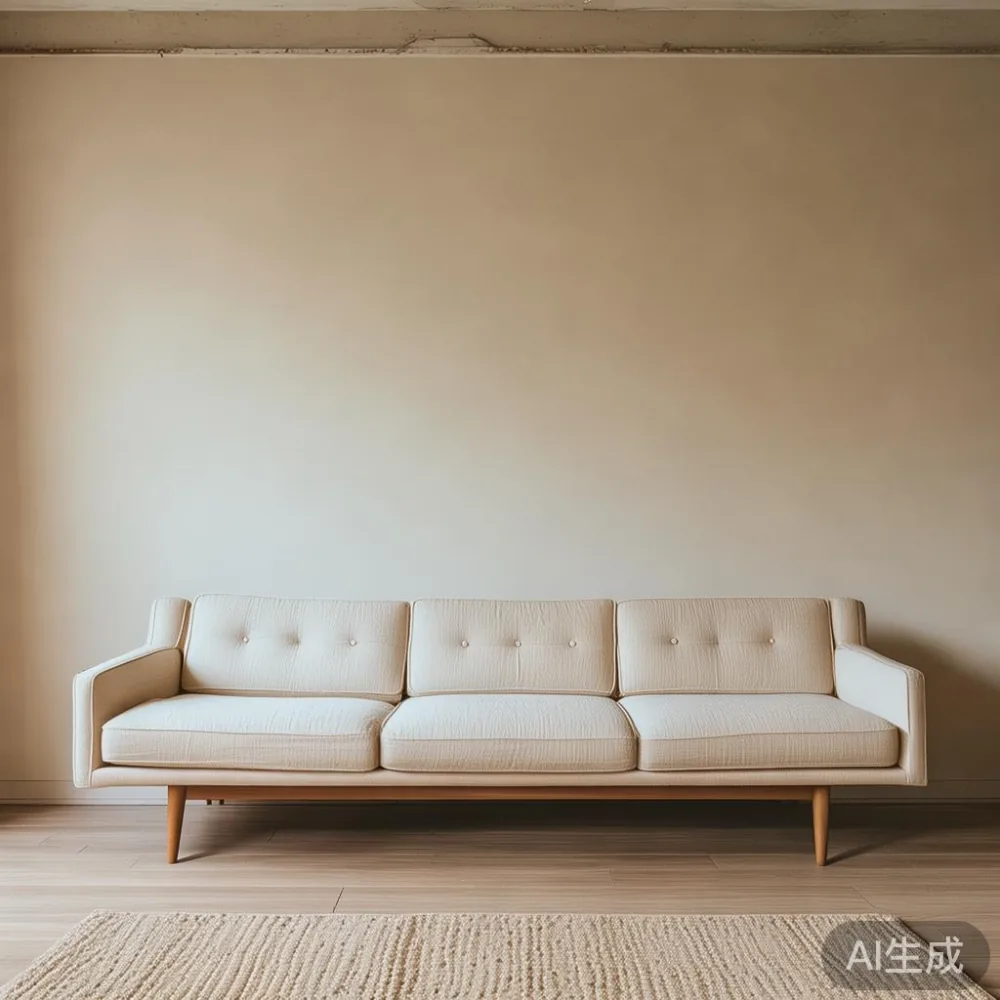
Will the sofa physically fit into your HDB lift and corridor?
This is the single most common reason a sofa order goes wrong in Singapore. Measure the inside of your service lift first, not the doorway of your unit. In most HDB blocks in Tampines and Bedok, the lift car interior is roughly 1.1 m wide by 1.4 m deep by 2.1 m tall, while private condo service lifts run between 1.3 m and 1.6 m wide. A 2.4 m L-shaped sectional will simply not enter, no matter how you tilt it. Confirm the diagonal of the largest single carton in centimetres, then compare it to the diagonal of the lift car. If the carton is bigger, the sofa will not fit, and the driver will not improvise a hoist up the fire stairwell.
Corridor width matters just as much. Older HDB corridors in Bedok and Ang Mo Kio can be as narrow as 1.2 m, and turning into a unit doorway typically needs at least 30 cm of clearance past the door. A 2.6 m three-seater at 88 cm deep can be stood on its end and walked through a 1.2 m corridor, but a 2.2 m chaise-end sofa with a 160 cm depth cannot. Ask the seller for the assembled dimensions and the carton dimensions separately. The two numbers will not match, and only the carton numbers decide whether the piece enters the lift.
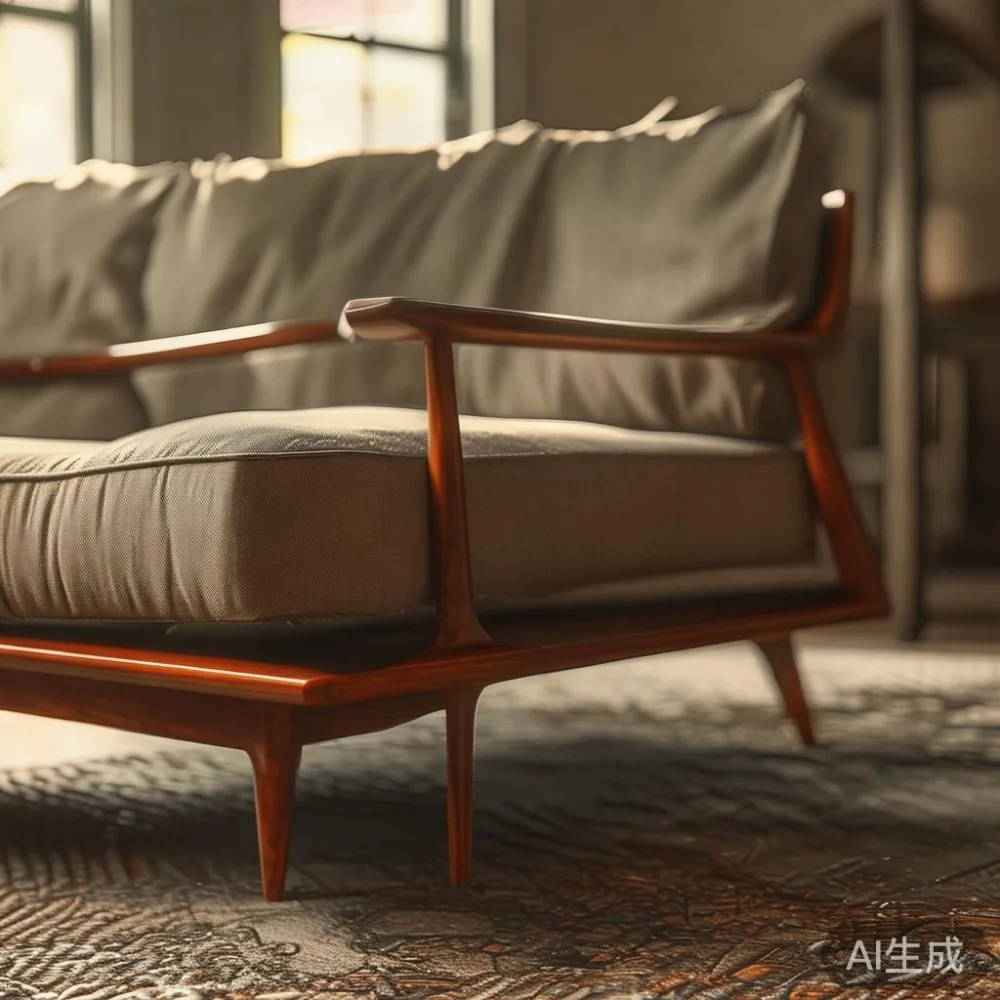
What is the difference between Nordic wardrobe and modern furniture?
The short answer: Nordic wardrobe and modern furniture share a clean silhouette, but Nordic wardrobe design leans on solid pine, oak, or ash with exposed joinery and pale, matte finishes, while modern furniture, including most mid century modern pieces, favours a tighter geometry, mixed materials such as solid wood with marble table accents or upholstered panels, and a warmer colour palette tuned for living spaces rather than bedrooms.
Why this matters on a sofa page: many Singapore buyers confuse the two when they shop across categories. A Nordic wardrobe is usually 60 cm deep with hinged doors and a tight 45 cm hanging rail, built for storage efficiency. A modern sofa, by contrast, lives at 85-95 cm deep with a 50-55 cm seat depth, and is engineered for posture, not folding clothes. Knowing the difference keeps you from being upsold a "modern wardrobe" that turns out to be a Nordic piece with a different handle. MIDHILL stocks both lines, and the spec sheets label the construction method (solid wood frame versus engineered board) so the distinction stays clear.
Is the frame really solid wood, and how is that verified without sitting on it?
Ask for the frame species and the joinery method in writing. A genuine solid wood sofa will specify ash, oak, beech, or rubberwood, with mortise-and-tenon or dowel-and-glue corner blocks, plus a sinuous spring or webbing suspension rated in cycles (typically 30,000 to 50,000). Particleboard or plywood frames are not solid wood, no matter how the product page is worded. A 10-year structural warranty, like the one MIDHILL offers on its solid wood sofa, bed frame, dining table, wardrobe, and nightstand ranges, is the cleanest indicator that the maker is willing to back the joinery for the long haul, not just the upholstery.
The second check is weight. A 2.2 m three-seater with a solid ash frame should weigh between 55 kg and 70 kg before packaging. If the listed weight is 32 kg, the frame is hollow or made of MDF. In Singapore, where delivery teams charge per trip up the lift, a heavier carton also signals that the makers did not strip the structure to save on freight.
How do you judge fabric and foam without touching them?
Demand a swatch, even if you have to pay S$8 to S$15 for postage. A reputable seller will mail a 10 cm by 10 cm cut of the cover fabric, with the foam density printed on the back of the card. For daily-use sofas in a Singapore home, look for foam density of 30 kg/m³ or higher on the seat cushions, with a 50/50 feather-and-fibre wrap if you want the soft sit, or pure high-resilience foam at 35 kg/m³ if you prefer the firm sit that holds its shape after the kids have jumped on it. Back cushions can sit lower at 25 kg/m³ because they carry less load.
Fabric choice matters for our climate. A boucle or linen blend breathes well at 28°C, but stains in a HDB with small children. A performance polyester at 40,000 Martindale rubs handles red-wine incidents, and a treated velvet wipes clean with a damp cloth. The light-luxury positioning popular in French light luxury and American light luxury showrooms usually pairs a tight-weave boucle or a brushed chenille with a slim solid wood frame; that combination is what gives a mid century modern silhouette its soft, lived-in feel without looking overbuilt.
What does "post-modern light luxury" actually look like on a sofa?
Post-modern light luxury, as a styling phrase, describes a sofa that mixes a slim solid wood frame, a low arm, tapered legs in walnut or natural ash, and a single accent material such as a marble side table or a brass foot cap. The silhouette is mid century modern at heart, but the finishes push slightly warmer and more tactile than a pure Scandinavian build. Think of a 2.1 m three-seater at 82 cm deep, on 18 cm legs, in a sage boucle with a curved back that nods to 1970s Italian work without going heavy. In a Singapore condo, the proportions read well against floor-to-ceiling windows and pair easily with a marble table lamp or a travertine coffee table.
Where buyers get hurt is when "light luxury" is used to dress up an ordinary engineered-wood frame. Real light luxury sits on a kiln-dried solid wood skeleton, not on a hollow core. If the price seems too gentle, ask whether the frame is solid wood, and ask for the kiln-dry certificate. The honest sellers will have one on file.
Will the sofa survive Singapore humidity, and what does the warranty actually cover?
Singapore sits at 80 percent relative humidity for most of the year, and an untreated solid wood frame can cup or crack within six months if it is not kiln-dried to 8 to 10 percent moisture content. Ask the maker what moisture content the wood leaves the factory at. A workshop that exports to temperate climates usually targets 10 percent; one that ignores humidity ships at 14 percent, and that is where problems begin. MIDHILL kilns its ash and oak to between 8 and 12 percent before assembly, and the ten-year structural warranty covers joint failure, frame warp, and spring sag, while lifetime refinishing covers the surface scratches every HDB household collects over a decade.
Read the warranty small print for what is excluded. Most lifetime or ten-year warranties exclude foam compression, fabric pilling, and damage from direct sunlight or air-conditioning drafts. None of those exclusions is unreasonable; a foam cushion at 30 kg/m³ will still soften by 15 percent over seven years of daily use. What matters is that the structural side is covered, because the structural side is what you cannot test on day one.
How long should delivery take, and what about GST on imported furniture?
From Foshan to Singapore, a consolidated sea shipment takes 12 to 18 days, plus 3 to 5 days for last-mile delivery to HDB blocks in Tampines, Bedok, or Punggol. Allow 21 working days from order to doorstep as a working estimate, and 28 days during the peak pre-CNY rush in December and January. Since 2023, Singapore applies a 9 percent GST on imported goods above S$500, and most sellers collect this at checkout. If a price looks dramatically lower than a competitor, check whether GST is included.
Free shipping over US$350 (about S$475) usually covers the landed cost before GST but excludes lift-level delivery above the ground floor, which can add S$40 to S$80 per floor if the lift cannot be used. If your block has a goods lift, book it for the delivery slot; weekend slots in Punggol and Sengkang fill up two weeks ahead.
Can you return a sofa you have never sat on?
A fourteen-day return policy is the practical answer here, and it works only if the sofa is still in its original packaging and the courier can collect it from the same floor. Once assembled and used, most sofas become non-returnable for hygiene reasons, even if the fabric is fine. The trick is to open the carton, assemble the frame, sit on it for ten minutes, and decide within forty-eight hours. If the foam feels wrong, the depth feels off, or the colour clashes with your marble table, repack it into the carton and arrange collection. MIDHILL's fourteen-day window covers exactly this scenario, with the team picking up from any HDB or condo lobby in Singapore at no extra charge.
For households with a dedicated play corner or a reading nook, a large loveseat for kids room or a study can be a smarter second purchase than stretching the budget on a single three-seater. The smaller footprint (typically 1.6 m wide) enters any HDB lift, costs 30 to 40 percent less than a 2.4 m sofa, and lets you test the brand's build quality on a lower-risk order before committing to the main piece.
What paperwork should you keep after the sofa is delivered?
Keep the invoice, the warranty card, the moisture-content sheet if one was issued, and a photograph of the frame stamp or label under the cushion. These four documents cover 95 percent of any future claim. If a corner block loosens at year four, the warranty card proves the start date; the moisture-content sheet shows the wood was within spec at delivery; the frame stamp confirms the species; and the invoice proves GST was paid and the seller is on the record.
Finally, set a calendar reminder at month six to inspect the cushions, the legs, and the rear seam. Most frame issues surface in the first six months as a slight wobble or a 2 mm gap at the corner. Catch it early, and a refinishing or a tightening is usually covered. Catch it late, and you may be outside the claim window. A solid wood sofa from a workshop that has been building since 2008 should give you at least a decade of daily sitting; the paperwork simply makes sure the maker keeps that promise.