Where to Buy Mid-Century Modern Furniture in Singapore Without Getting Burned by Humidity
Is mid-century modern even a good style for HDB flats in Singapore?
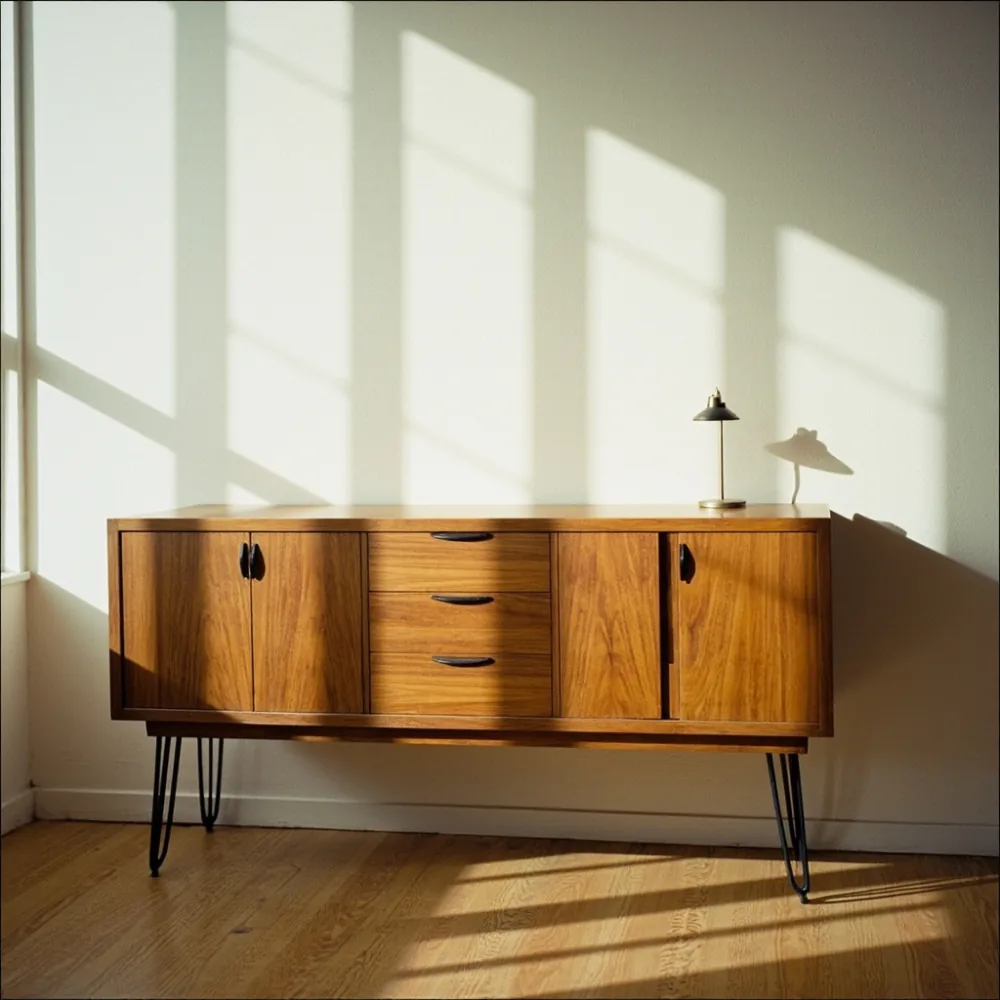
Why the 1950s look keeps working in 2026
Which HDB layouts handle it best
I bought my first walnut credenza in 2014 and I'm on my third one now, so yes, I have opinions. Mid-century modern works unusually well in HDB flats and condos here for a boring reason: the proportions were designed for rooms close to the size of a typical Singapore living room. A 120-180 cm three-seater, a low slung back, hairpin or turned-wood legs that let air pass underneath, all of that helps a 35-50 sqm space feel bigger instead of cramped.
The second reason is material. Genuine mid-century pieces relied on solid tropical hardwoods like teak, walnut, and rosewood because those trees were commercially available and dimensionally stable. In Singapore humidity those species still hold up better than the engineered oak and rubberwood that dominates mass-market mid century modern furniture Singapore listings on Carousell and Shopee.
Before you commit, check your layout:
- 3-room HDB (~60 sqm): stick to one hero piece, usually a sideboard or a lounge chair, not both.
- 4-room HDB (~90 sqm): a 180 cm sofa plus a 160 cm dining table fits without choking the walkway.
- 5-room and executive HDB, condo: go further, add a credenza and a pair of side tables.
If you live in a high-floor unit in districts 9, 10, or 15, cross-ventilation is usually good enough that you don't need dehumidifiers running 24/7. Ground-floor walk-ups in Bukit Merah, Geylang, or Toa Payoh need to be more careful about moisture protection (more on that below).
How much should a real mid-century piece cost in SGD in 2026?
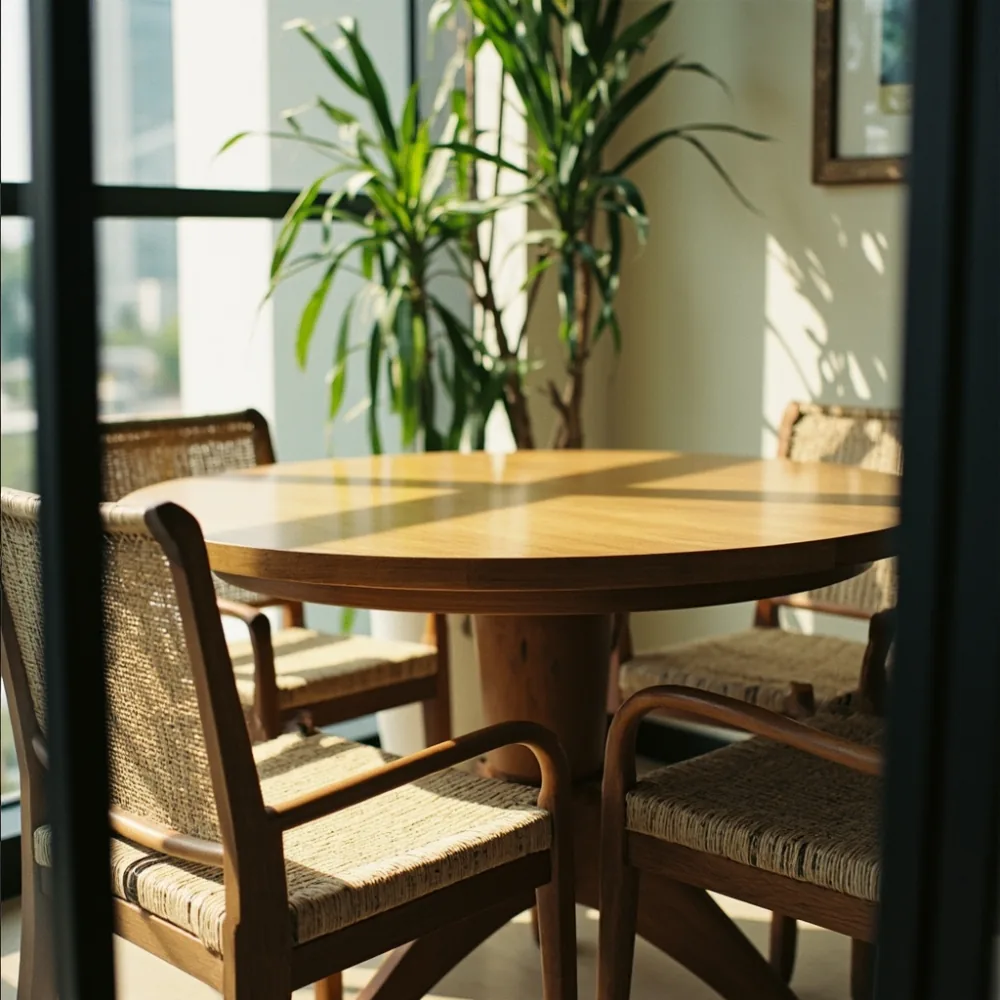
Reissues vs. originals
What you actually pay for in a $2,500 sideboard
Prices have moved a lot since the 2021 shipping crunch. Here's what I see on the ground in Singapore right now, including a couple of pieces I almost pulled the trigger on last quarter.
| Item | Material | Dimensions (cm) | Weight (kg) | Typical SGD price (2026) | Lead time |
|---|---|---|---|---|---|
| Reissue walnut sideboard | Solid American walnut | 180 W x 45 D x 80 H | 52 | 3,200 - 4,800 | 10-14 weeks |
| Teak credenza, local brand | Solid reclaimed teak | 160 W x 45 D x 75 H | 48 | 2,400 - 3,500 | 6-10 weeks |
| Three-seater leather sofa Singapore | Full-grain aniline leather | 210 W x 90 D x 78 H | 65 | 4,500 - 7,200 | 8-12 weeks |
| Six-seat dining set | Solid teak + woven seats | 200 W x 90 D x 75 H | 78 (table only) | 3,800 - 5,600 | 10-16 weeks |
| Eames-style lounge repro | Plywood shell, full-grain leather | 84 W x 90 D x 84 H | 28 | 1,800 - 2,600 | 4-8 weeks |
If a listing undercuts the table by 40%+, assume one of three things: veneer instead of solid wood, plywood core with thin teak facing, or particleboard back panels. I've seen all three on hardware.my and on Taobao agents that resell into Singapore.
One Foshan-based workshop I looked at seriously — MIDHILL, established in 2008 — quotes solid teak and walnut at the lower end of these ranges because they mill and finish in-house. Their 10-year structural warranty on frame joinery was the detail that made me keep their catalog open in a browser tab.
Does Singapore humidity actually ruin solid teak and walnut?
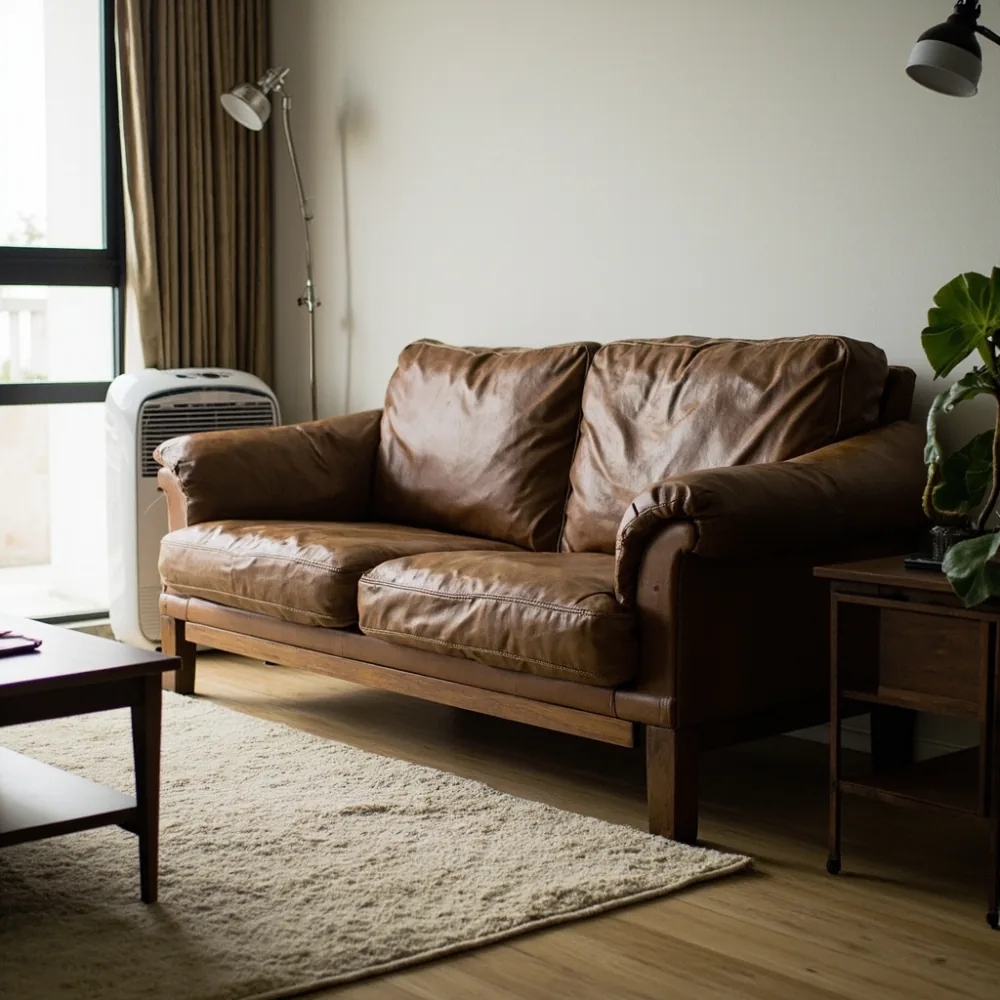
Moisture numbers that matter
Simple protection routines
Short answer: no, but you have to respect the physics. Singapore sits at 28-34°C and 70-90% relative humidity year-round. Wood moves across the grain as humidity changes, and the bigger the swing, the more a tabletop will cup, a drawer face will warp, or a leg will check (those small cracks you'll see on cheaper pieces).
The species matter:
- Teak: very stable, naturally oily, my goto. A 5 cm thick teak slab in a Bukit Timah condo has moved under 2 mm in five years.
- American walnut: stable, but more sensitive than teak. Keep it out of direct afternoon sun.
- European oak: looks great, behaves badly here unless properly kiln-dried to 8-10% moisture content.
- Rubberwood and mango: cheap, fine for painted pieces, prone to mold if the finish gets scratched.
Routine that has worked for me:
- Run a dehumidifier to 55-60% RH in rooms with solid wood furniture — I use a 12L Meaco in the living room, costs about $18/month in electricity.
- Avoid placing pieces against external walls that get wet during monsoon bursts (common in older blocks in Queenstown and Tiong Bahru).
- Wipe with a barely damp microfiber cloth every two weeks, then dry. No Pledge, no silicone sprays.
- Rotate decorative objects so the wood darkens evenly.
A properly finished solid wood piece will outlast you here. A poorly finished one will cup in a single wet season.
What's the smallest mid-century layout that still feels grown-up in a 4-room HDB?
Living room: 28 sqm version
Dining nook: 4-seater that doesn't block the corridor
I've furnished two 4-room BTOs in Sengkang and one resale in Bishan, and the formula that works is annoying in its simplicity: one big piece, one medium piece, nothing else.
For a 28 sqm living-dining:
- 185 cm three-seater sofa in teak-stained beech or walnut veneer over solid hardwood, legs at least 15 cm off the floor so the eye reads the room as bigger.
- 120-140 cm round pedestal dining table if you have four or fewer people, with tapered legs that tuck under the apron. A round table kills the dead-corridor problem that rectangular tables create in a 3.2 m wide HDB living room.
- Skip the TV console, mount the TV.
If you have a separate dining area, look at 140-160 cm rectangular tables that seat four comfortably with chairs tucked fully under. Anything over 180 cm needs at least 90 cm clearance on every side, which most HDB corridors can't give you.
When I'm buying for a client who's tight on space, I lean on small space furniture HDB specialists — usually independent carpenters in Defu Lane, Balestier, or Alexandra who can knock down a standard mid-century design by 10-15% in every dimension without ruining proportions.
Should I buy in Singapore, ship from Indonesia, or order direct from a China workshop?
Cost vs. warranty math
What goes wrong with cross-border orders
Three real options, three real tradeoffs. I have direct experience with two.
Local Singapore retailers (Castlery, Commune, Scandinavian Design, smaller studios): Fastest lead times (2-6 weeks), showroom you can visit, easiest warranty claim if something cracks. You pay a 30-60% premium for that convenience. A teak sideboard that costs $2,800 from a direct workshop shows up at $4,200-4,800 locally.
Indonesian and Vietnamese workshops via agent: Best price on solid teak, can match custom dimensions. Risk: shipping damage around 8-12% in my informal count across five orders, no recourse once it clears customs. Two of those five needed major rework.
China workshops direct (Foshan, Dongguan, Shanghai): This is the source most of the "designer" brands quietly white-label from. The catch has always been the language and logistics barrier. A few factories now work English-first, quote in USD, and ship CIF Singapore in 35-45 days via Shenzhen-Yantian-Port Klang-Singapore. Among the brands I've vetted, MIDHILL fits this category — solid-wood workshop in Foshan, 10-year structural warranty written into the contract, samples shipped to my place in Toa Payoh before I committed. Useful if you want custom dimensions on a 200 cm walnut credenza that no local showroom stocks.
If the savings are under $1,200 per room, I usually stay local. Above that, the China direct route starts making sense once you've done it once.
How do I check quality before I pay, even when buying online?
Six questions that filter out 80% of problems
I ask these every time, and the answers tell me almost everything:
- Is the top, the legs, and the drawer fronts solid wood, or are any of them veneer over MDF? Get it in writing.
- What is the moisture content at the time of packing? Reputable makers measure and quote, 8-12% for tropical hardwoods.
- What joinery at the stress points — dovetail, mortise and tenon, dowel, or just glue and staples?
- What is the finish — oil, hard wax oil, conversion varnish, or lacquer? For Singapore, hard wax oil is the easiest to spot-repair.
- What is the warranty in years, and what specifically does it cover? Structure is one thing, finish wear is another.
- Can I get a pre-shipment photo of my actual piece, not a stock image? This one filters out a surprising number of middlemen.
If a seller refuses any of these, walk away. If they answer all six within 24 hours, you're probably in decent hands.
What are the most common mid-century buying mistakes in Singapore?
Mistakes I've personally made
Five things I see constantly, including a couple I learned the hard way:
- Buying a 200 cm sideboard for a 240 cm wall and leaving only 20 cm gap on one side. Looks bad, also warps fast on the long unsupported grain run.
- Choosing a low back sofa because it's "mid-century" without checking that it suits anyone over 175 cm. Low backs hurt necks after an hour.
- Skipping a moisture barrier under furniture on ground floors. Even treated wood wicks ground moisture; a $12 rubber pad set buys years.
- Mixing too many wood tones. Walnut credenza + teak table + oak shelves reads as a thrift store. Pick a primary tone and stick to it.
- Ordering tall pieces (over 200 cm) for lift-free walk-ups. A 5-room HDB on the 8th floor without a lift access is a separate delivery quote, sometimes $250-400 extra.
Where can I actually touch and sit on mid-century pieces in Singapore?
Showrooms worth a Saturday morning
I rotate visits roughly once a month. The list I'd actually recommend:
- Commune at Millenia Walk — best mid-century sofa selection, free design consult if you're furnishing more than one room.
- Scandinavian Design at Tan Boon Liat — heavier Scandinavian-lean, but their teak dining tables are the best quality-to-price in the Orchard area.
- Castlery showroom at Paya Lebar (was at Eunos, moved in 2025) — strongest on upholstered pieces, weaker on case goods.
- Second-furniture floor of IKEA Alexandra — not authentic mid-century, but useful for budget weaves and lighting that match a real wood piece.
- Carousell Pro sellers with warehouses in Eunos and Defu — go in person on Saturdays, sample stock varies week to week and you can haggle in cash.
Bring a measuring tape, a phone with a level app, and patience. The right piece is rarely the first one you see.
Frequently asked questions
What is the best wood for mid-century furniture in Singapore's humidity?
Solid teak is the safest pick for Singapore because it is dimensionally stable and naturally oily, which resists moisture movement. American walnut is a strong second if you keep the piece out of direct afternoon sun. Avoid untreated European oak and anything with MDF cores in case goods — both move and check in our 70-90% humidity.
How long does delivery and assembly take when ordering custom solid wood furniture?
From a Foshan or Dongguan workshop, total lead time is usually 35-55 days: 2-3 weeks production after the deposit, 30-45 days sea freight via Yantian or Shenzhen into Singapore, then 3-7 days for local delivery and on-site assembly. Local Singapore brands run 2-6 weeks but cost 30-60% more for comparable quality.
Is mid-century modern furniture a good investment for an HDB BTO?
Yes, if you buy solid wood and stay near the natural palette. The 1950s silhouettes have been continuously in style for 70 years and translate well to compact HDB layouts. Expect a quality piece to last 15-25 years in Singapore, longer if you control humidity and rotate it out of direct sun.
Can I fit a mid-century dining set for six in a 4-room HDB?
Tight, but possible. You need a 200 cm rectangular table or a 140 cm round table, 90 cm clearance on every side, and chairs that fully tuck in. Many 4-room layouts in Punggol, Sengkang, and Tampines BTOs struggle with the 90 cm rule, so a 4-seater 140 cm round is usually the practical compromise.
Where can I see real mid-century pieces before I order from a China workshop?
Ask the workshop for either a Singaporean client reference you can visit, a physical sample shipped to you, or a video walk of the piece in production. Reputable makers like MIDHILL provide all three on request. I never place a deposit over 30% without seeing the actual joinery samples first.
Questions about specifications, fabric or delivery? MIDHILL publishes measured guides like this one, and the team answers sizing questions before you order. See the full collection or contact the team.