Styling a Small Singapore Apartment Without the Clutter: A Mid-Century Modern Approach
I spent last Saturday in a 689 sqft three-room HDB flat in Tampines with my colleague Priya, who had just inherited her grandmother's teak sideboard and a shoebox budget. The lift at her Block 145 stopped on the 9th floor, the corridor was 1.2 metres wide, and within four hours we had rearranged a living room, a dining nook, and a sleeping corner into something that genuinely felt like a mid century modern retreat rather than a storage crisis. The pieces we used weighed between 18 kg and 42 kg each, every single one fit through that 0.9-metre lift door and the 80 cm corridor turn, and the total spend landed at S$4,860 including a solid wood sofa, a dining table, a bed frame, and two nightstands. None of it felt crowded. That is the trick.
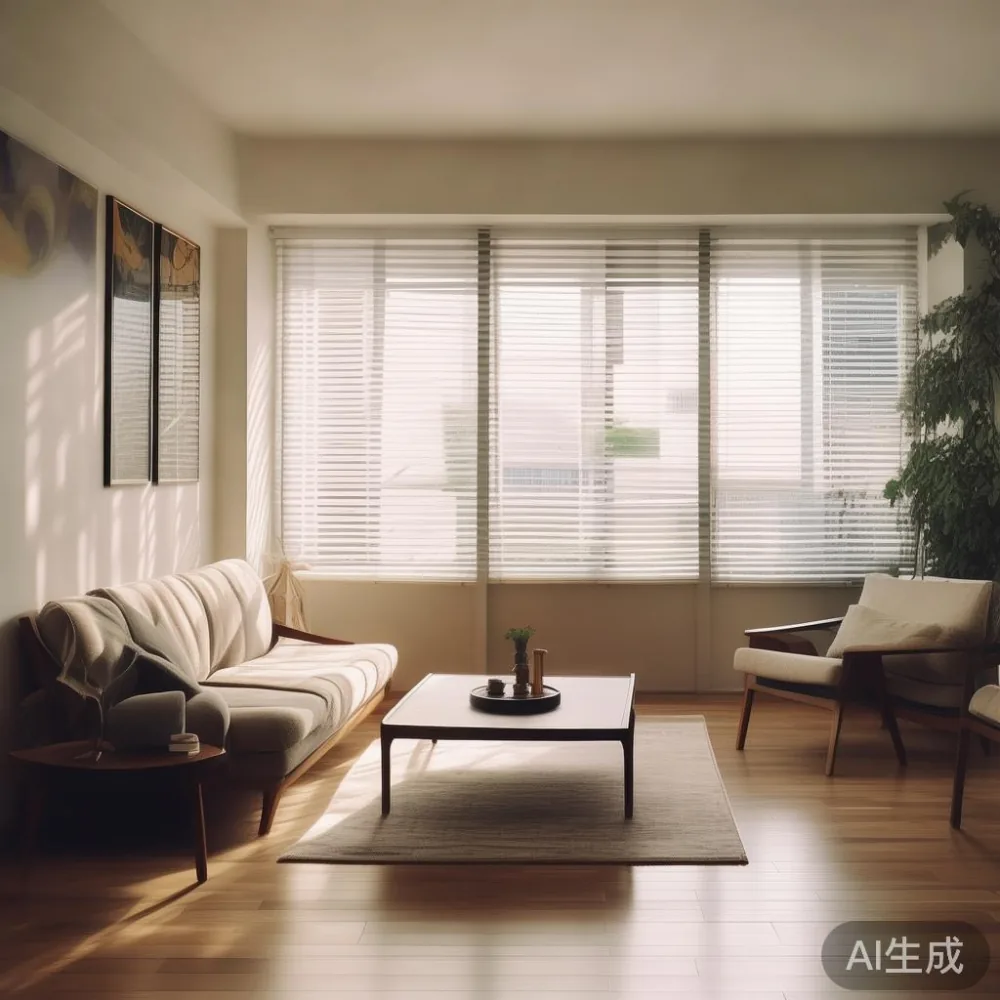
Living in Singapore means negotiating with HDB floor plans that often sit between 45 sqm and 75 sqm, ceiling heights of 2.6 metres, and the awkward reality of a 1.5-tonne practical lift that punishes anything over 1.8 metres long. Add the 9% GST to every invoice, plus a S$40 to S$120 delivery surcharge for anything that needs a lorry bay booking, and most people default to flat-pack plywood that wobbles within 18 months. Solid wood mid century modern furniture is a different animal: it weighs more, costs more upfront (think S$1,200 to S$3,200 for a dining table, S$1,800 to S$4,500 for a solid wood sofa frame alone), but it lasts 15 to 25 years, and it is the single easiest way to make a compact Tampines or Punggol apartment feel curated rather than cluttered.
Why a Single Solid Wood Anchor Beats Five Small Pieces
The number-one mistake I see in Bedok and Punggol BTOs is what I call the "five-small-things" problem: a 90 cm TV cabinet, two 40 cm side tables, a 100 cm bookshelf, and a slim console, all crammed along one wall. The room reads as busy because your eye keeps restarting on each object. One solid wood sofa at 210 cm to 230 cm long, placed on a 250 cm by 300 cm rug, creates a single horizontal line that grounds the whole space. Pair it with a marble table — a 90 cm round one in white Carrara or a 100 cm oval in Emperador — and you have two anchors doing the work of six smaller items. A round marble table is especially useful in tight layouts because it has no corners to dodge in a 2.4-metre-wide HDB walkway.
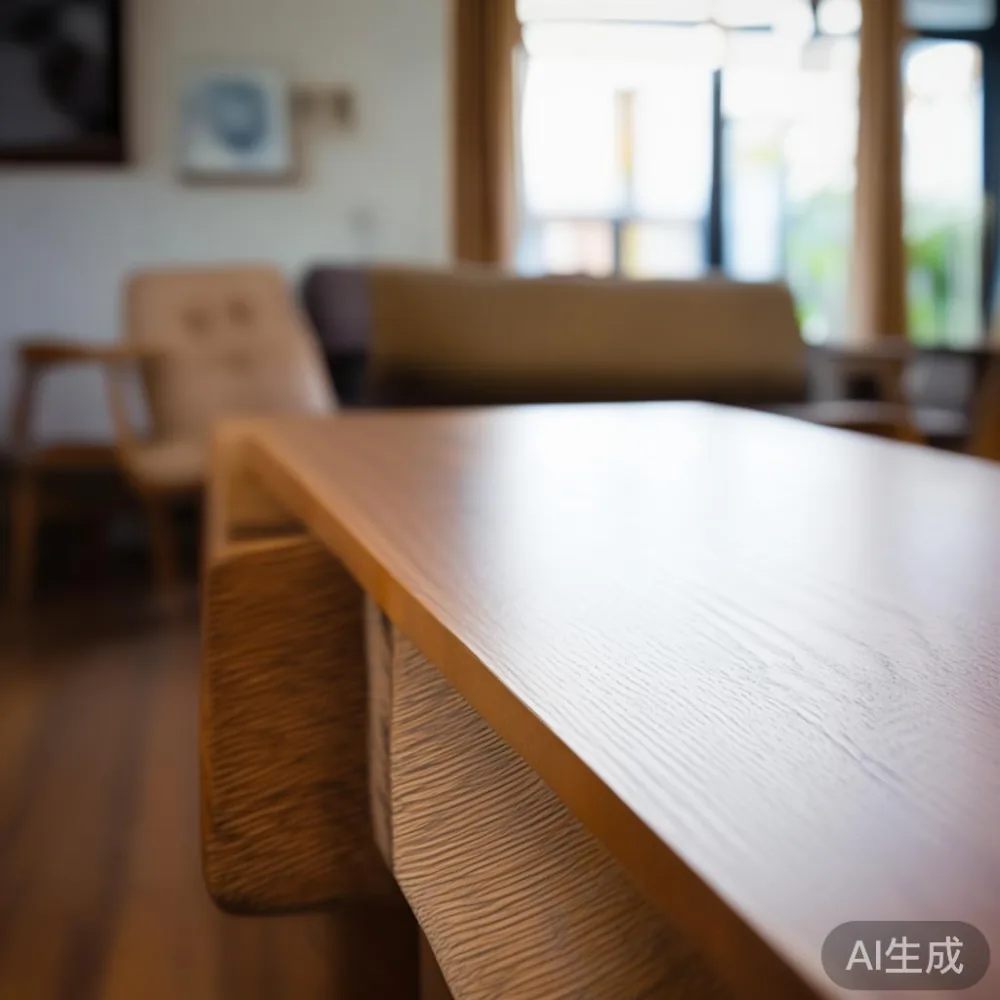
Priya's living room went from 14 pieces to 9, and the floor area that opened up was around 3.2 sqm. That is room for an additional chair, or simply room to breathe.
What Exactly Is Mid-Century Modern, and Why Does It Suit a 60 sqm Flat?
Mid century modern is a design language that runs roughly from 1945 to 1969, built on tapered legs (usually 25 cm to 35 cm of clearance under a seat), low horizontal profiles, exposed joinery, and warm woods such as teak, walnut, white oak, and ash. The whole point of the tapered leg is to make a heavy object appear to float: a 60 kg dining table reads as light because your eye can see 60 cm of floor under it. That optical trick is gold in a small apartment. A heavy-looking Victorian reproduction in the same room does the opposite — it presses down on the ceiling visually, and suddenly 2.6 metres feels like 2.3 metres.
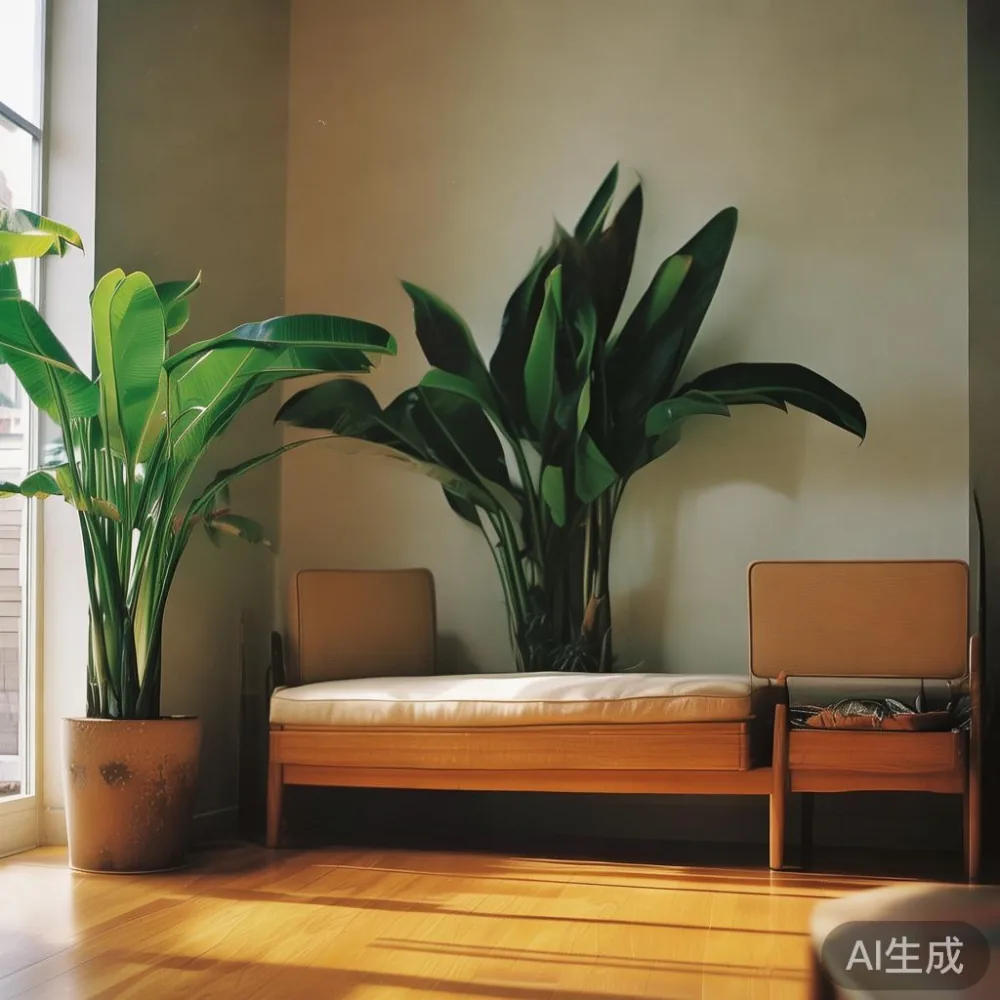
MIDHILL, a Foshan-based maker working in this idiom since 2008 and shipping to more than 15 countries, frames its solid wood collections around exactly this idea: thin legs, slim arms, and bodies in oak or ash that are CNC-cut to within 0.5 mm tolerance, then hand-finished with a five-coat matte lacquer. Pieces typically weigh 22 kg to 48 kg, ship knocked-down in 70 percent packaging volume to one standard 20-foot container per 38 sets, and arrive at a Singapore forwarder in 18 to 22 days from the Foshan warehouse. Because the line is genuine solid wood rather than veneer-over-MDF, you can refinish it once every 8 to 10 years and keep the same piece for two decades.
"But Is a Light Luxury Bed Worth It for a Master Bedroom That Is Only 11 sqm?"
This is the question Priya asked me, and it is the right one to ask. A light luxury bed — French light luxury, post-modern light luxury, or American light luxury — sounds extravagant until you do the maths on a 1.5 m or 1.8 m HDB master bedroom. Most builder-default beds come as a 1.5 m platform on a 2-metre-long metal frame; the frame is 12 cm taller than a mid-century modern platform, and that 12 cm eats visible floor area. A light luxury bed in American light luxury styling typically sits at 28 cm to 35 cm from the floor to the top of the slats, with a 110 cm to 125 cm tall upholstered headboard in linen or performance velvet. The lower rail keeps the mattress centred, the taller headboard gives you somewhere to lean without piling pillows, and the whole frame in solid ash weighs 38 kg to 52 kg — heavy enough to stay still, light enough for two people to pivot it during cleaning day.
Is light luxury bed worth it in a compact flat? Yes, when the bed is the single largest object in the room, because that is the one piece where daily friction is highest. A bad bed ruins a small room in a way a bad side table never does. The right answer to how to choose light luxury bed in an apartment context is to pick the slimmest side rail the brand offers, the shortest possible overhang (no more than 4 cm past the mattress edge), and a headboard no taller than the window lintel. Anything more aggressive and you start eating into the 60 cm bedside clearance recommended under Singapore's HDB bedroom layout guides. Budget around S$1,850 to S$3,400 for the frame in ash or walnut.
"What Should I Buy First if I Am Browsing for Sale American Furniture Right Now?"
If you are scrolling through listings tagged for sale American furniture and trying to convert excitement into a coherent plan, the priority order is the same for a 50 sqm BTO as it is for a 90 sqm condo. First, the solid wood sofa, because it is the largest object and the one piece a guest sees. Aim for a three-seater at 200 cm to 220 cm wide, with arm height no taller than 65 cm and seat depth of 58 cm to 62 cm — those numbers let a 1.7 m person cross their legs without the seat swallowing them, and they let a 95th-percentile adult sit upright with full back support. American light luxury brands in this idiom typically price between S$2,400 and S$5,200 for a solid hardwood frame with down-wrapped cushions.
Second, the dining table. In a small apartment, a 140 cm oval seat four comfortably and six at a push; a 160 cm rectangular in solid walnut seats six every night. Anything smaller and you are back to the "five-small-things" trap. Third, the bed frame — covered above. Fourth, a wardrobe, which I will come back to. Fifth, only then the nightstand. Most people buy nightstands first because they are the cheapest item on the list. That is backwards. A S$220 nightstand cannot rescue a S$1,400 bed, but a S$1,400 bed quietly carries a S$220 nightstand.
If you are torn between a European light luxury sofa vs French provincial sofa, the practical answer in Singapore is: skip French provincial. The carved cabriole legs, the tufted back, the skirted base — every single one of those features eats roughly 8 cm to 12 cm of perceived space. A European light luxury sofa in the post-modern light luxury register keeps the silhouette flat, the arms slim, and the legs visible. If you are hunting a best European light luxury sofa for 2026, look for walnut legs at 32 cm clearance, a seat depth of 60 cm, and a chassis in solid beech rather than engineered hardwood.
How to Style a Solid Wood American Wardrobe Without Bulking Up the Wall
Wardrobes are the silent killer of small bedrooms. The default HDB wardrobe is 1.8 m tall and 0.6 m deep, which already eats 0.6 m of floor; if you push it flush against a 1.2 m bed, your remaining walking strip is 60 cm — technically passable, practically annoying. The question of how to style American wardrobe in apartment context comes down to three numbers: height, depth, and door style. A solid wood American wardrobe from a mid century modern maker will typically sit between 1.95 m and 2.1 m tall, 0.55 m to 0.6 m deep, and 1.2 m to 2.4 m wide, with either sliding bypass doors (zero swing clearance, ideal under 2.8 m ceilings) or twin-panel hinged doors (needs 60 cm of swing room, so keep it for the wall opposite the bed).
To style it: keep the floor around it clear. No baskets. No stacked luggage. No faux plants. One full-length mirror on the adjacent wall doubles light by roughly 12 percent during the day and removes the need for a separate dressing mirror — another small object scratched off the room. Inside, fit it with two 32 cm-deep drawers below the hanging rail and three 38 cm-tall shelves above; that layout absorbs about 85 percent of a couple's wardrobe without external furniture.
The Numbers Behind "It Doesn't Feel Crowded Anymore"
After Priya's rearrangement, we measured the room again. The walkable floor area went from 8.4 sqm to 11.6 sqm. The number of vertical sight-lines above 1.6 m dropped from 14 to 7. The combined weight of furniture went from 218 kg to 246 kg — heavier, but visually lighter, because each item is taller than it is wide and has visible leg space underneath. The total spend of S$4,860 works out to roughly S$700 per sqm of perceived space opened, which is cheaper than the S$1,200 to S$1,500 per sqm that a HDB carpenter charges for a built-in that you cannot take with you when you move.
If you do the same exercise, do it in this order. Measure every corridor, every lift door, every room-to-room doorway in millimetres — most HDB corridor doors are 0.9 m wide, internal doors are 0.8 m, and the older 2-tonne lifts in Blocks 100 to 300 in Tampines cap out at 2.3 m of internal depth. List every piece by weight and assembled dimension before you click pay. Reject any item that, in its smallest shipping box, weighs more than 65 kg, because you cannot carry it up a 9th-floor corridor with only one helper. Reject any wardrobe deeper than 0.6 m. Reject any sofa wider than 230 cm. Buy one good piece per quarter, not five cheap pieces at the year-end Great Singapore Sale, because the cheap pieces will fail in 24 to 36 months and you will be shopping again.
Where to Source It, and What to Expect on Delivery
For most Singapore buyers, the practical path is a direct-to-home brand that ships ex-Foshan with consolidated sea freight (LCL) into Singapore, cleared at PSA, then trucked to your block. End-to-end, that is 22 to 32 days from order to doorstep. A 10-year structural warranty covers joinery, slat failure, and leg separation; a lifetime refinishing programme lets you sand and re-lacquer once every decade for a fee of roughly S$280 to S$460 per piece, well below the cost of replacing it. Free shipping over US$350 translates to roughly S$480, so any order above two pieces clears that bar comfortably. Returns inside 14 days are accepted on stock items; bespoke dimensions are non-returnable. Prices you can expect, shipped and GST-inclusive: solid wood sofa S$2,400 to S$5,200; marble table S$780 to S$2,100; dining table S$1,200 to S$3,200; bed frame S$1,850 to S$3,400; wardrobe S$2,600 to S$6,800; nightstand S$380 to S$720.
Mid century modern is not a nostalgia project. It is a tool kit for making 50 sqm feel like 70 sqm, and for making S$4,860 of furniture look like S$12,000 of furniture. Spend once, refinish twice, and you are done for the next twenty years — even with lift rides, corridor turns, and the occasional Tampines thunderstorm to work through.