Veneer vs. Solid Wood Home Cost Comparison in Singapore
For a Singapore family, the choice between veneer and solid wood is rarely decided by the showroom tag alone. A dining table may look substantial on the first day, yet the daily realities of HDB humidity, lift dimensions, corridor turns and weekend cleaning can change its value over 5 years. The same applies to a solid wood sofa, bed frame, wardrobe, nightstand or marble table: the purchase price is only one line in a longer ownership account.
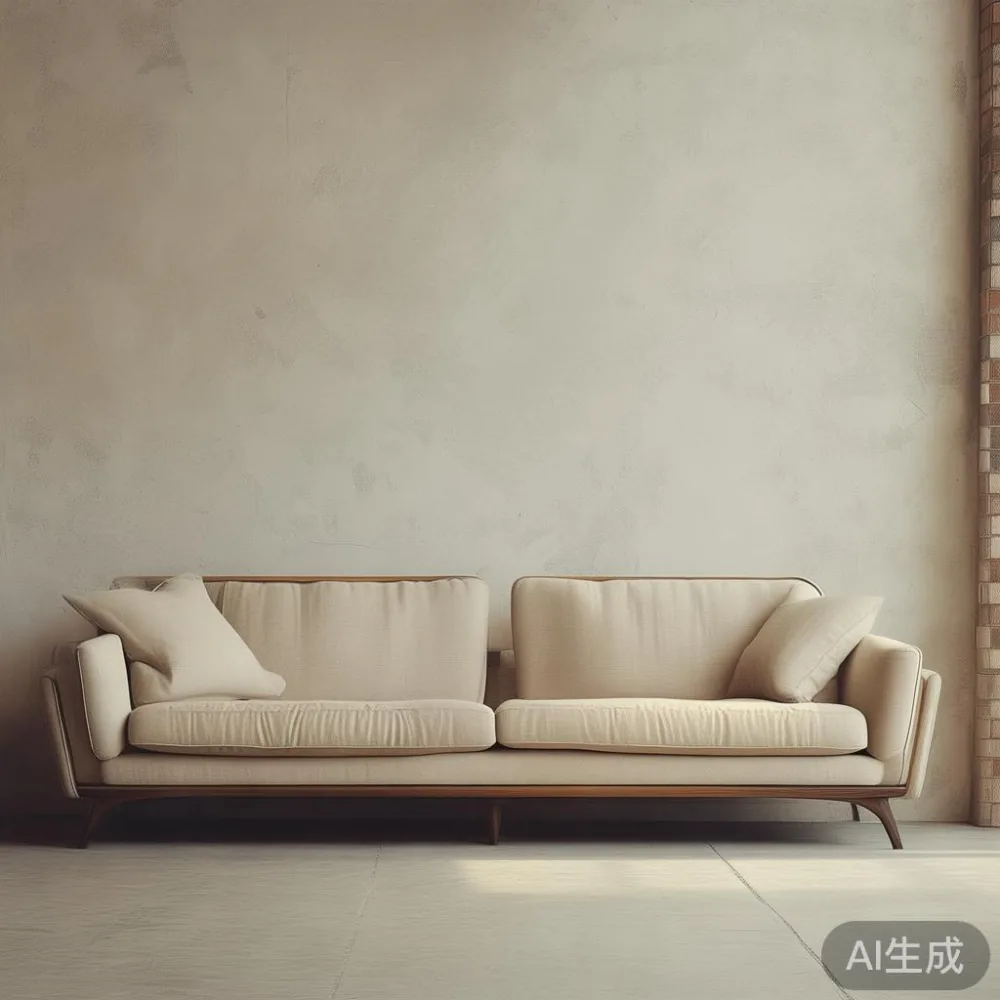
I last month visited a customer in Tampines who had fitted out a new BTO flat with a mid century modern dining set. Her dining table was 180 cm long, 90 cm wide and weighed 46 kg as a veneer model; the replacement she was considering was 54 kg in solid wood. The heavier table looked richer, but the 90 cm-wide lift door at her block required the carton to travel diagonally. She also compared 2.4-metre wardrobes for a Bedok condo, where the service corridor narrowed to 108 cm. That practical experience shaped the figures below, alongside Singapore delivery, GST and maintenance costs.
This 5-year comparison uses indicative retail prices in SGD, a 6% GST where applicable, delivery charges, care products and realistic repair assumptions. Furniture dimensions, weights and labour vary by model, so each figure should be treated as a planning range rather than a quotation. The purpose is to show why the lower sticker price does not always mean the lower 5-year cost.
What is the real 5-year cost difference between veneer and solid wood?
Veneer uses a thin layer of real wood, usually 0.6 to 1.2 mm, bonded to a manufactured core such as MDF or plywood. A 180 × 90 cm dining table may therefore retail from SGD 1,080 before GST, while a comparable solid hardwood table may begin near SGD 1,680. Over 5 years, the potential saving is clearer, but it must include edge peeling, veneer replacement, moisture-related swelling and the labour involved in moving or refinishing the piece.
Solid wood is not automatically immune to movement. Singapore’s relative humidity, air-conditioning cycles, coastal condensation and direct sunlight can still cause checking, movement or surface wear. However, a solid timber panel can often be sanded and refinished without rebuilding the whole surface. That recoverability is one reason a piece can retain value even after scratches, drinks and moving day.
For a fair comparison, consider these assumptions:
- Ownership period: 60 months.
- GST: 6% on taxable household purchases.
- One delivery within Singapore and one future replacement or repair visit.
- Cleaning supplies and minor consumables included.
- No flood, fire or deliberate physical damage.
- Currency held at the same rate for both options, with no exaggerated inflation claim.
A practical 5-year cash model for one dining table is:
- Veneer: SGD 1,080 + SGD 65 delivery + SGD 95 for care products and one SGD 180 repair = SGD 1,420 before GST; about SGD 1,505 with GST.
- Solid wood: SGD 1,680 + SGD 65 delivery + SGD 45 for care products and one SGD 95 local repair = SGD 1,885 before GST; about SGD 1,998 with GST.
- Difference: roughly SGD 493 over 5 years, or SGD 98.60 per year.
The result changes with quality. A low-grade veneer dining table that needs its top replaced in year 3 can cost more over time than a properly made solid wood table. The edge band, substrate and veneer thickness matter more than a broad “wood” label.
How much do veneer and solid wood furniture cost after 5 years?
Here is an indicative Singapore price and ownership comparison for common mid century modern pieces. Pre-GST prices are shown so that a 6% GST can be added consistently. Delivery assumptions are SGD 65 for a standard HDB delivery, SGD 120 for a condo with lift booking or stairs, and SGD 90 for a narrow-access surcharge.
| Item | Veneer price | Solid wood price | 5-year likely extra cost for veneer |
|---|---|---|---|
| Solid wood sofa or sofa frame, 210 cm | SGD 1,780 | SGD 2,980 | SGD 200 to SGD 700 |
| Bed frame, queen 150 × 200 cm | SGD 980 | SGD 1,680 | SGD 100 to SGD 450 |
| Dining table, 180 × 90 cm | SGD 1,080 | SGD 1,680 | SGD 120 to SGD 500 |
| Wardrobe, 180 × 60 × 220 cm | SGD 1,580 | SGD 2,580 | SGD 180 to SGD 800 |
| Nightstand, 45 × 40 × 55 cm | SGD 280 | SGD 480 | SGD 30 to SGD 160 |
These are planning ranges, not fixed retail prices. A 210 cm three-seat sofa may need a stair or corridor check, especially in older blocks. A 220 cm-tall wardrobe must be tilted, and one-piece construction may be impossible in a 95 cm-wide lift. Before ordering, measure the lift door, cabin depth and corridor turns rather than relying on package dimensions.
The 5-year cost should also include appearance. Solid wood can be spot-repaired and refinished. Veneer cannot usually be patched invisibly if the outer layer lifts, because a matched sheet and skilled labour are needed. This matters for a dining table with daily use, a nightstand beside a bed and a wardrobe with visible end panels. If the repair quote is SGD 280, the veneer saving of SGD 200 on a wardrobe disappears immediately.
Resale is harder to price than repair. A well-maintained solid wood dining table may attract more interest from buyers searching for under 2000 Scandinavian furniture, although its actual sale price depends on condition, design and local demand. A distinctive mid century modern shape can have more value than a generic flat-pack item, but furniture owners should not assume a guaranteed return.
Is veneer cheaper for HDB flats and condos?
Usually, yes at purchase. A veneer bed frame for a queen room may be SGD 980, compared with SGD 1,680 in solid wood. That difference of SGD 700 remains meaningful after 5 years if the veneer piece stays intact. In a compact Tampines or Punggol HDB flat, lighter products are also easier for two people to carry from the loading area.
Weight makes a bigger difference than many shoppers expect. A 150 × 200 cm queen veneer bed frame may weigh 28 kg, while a solid wood version may weigh 52 kg. A solid wood wardrobe in a 180 cm configuration may weigh 112 kg, compared with 76 kg for a veneer unit. Two-person delivery can add SGD 40 to SGD 90 to a basic delivery charge, especially if a lift is unavailable.
Check these dimensions before purchase:
- HDB lift door: commonly 80 to 95 cm wide, but verify the block.
- Service corridor: often 100 to 140 cm wide, with turns near the staircase.
- Condo loading bay: confirm the booking time and maximum vehicle length.
- Stairwell landing: measure both length and turning clearance.
- Packaging: allow 4 to 8 cm around a disassembled frame.
Large wardrobes are usually delivered in modules, but modular construction is not automatically easier. A 60 cm-wide carcass may fit a lift while a single 120 cm panel will not. Ask for the dimensions and weight of every carton, not just the assembled size. Flat-pack furniture also creates packaging waste; a flat-packed veneer wardrobe can leave 8 to 14 kg of foam and cardboard for disposal, while a flat-pack solid wood bed frame may leave 4 to 9 kg.
Singapore’s 6% GST adds about SGD 58.80 to a SGD 980 bed frame and SGD 100.80 to a SGD 1,680 one. It does not change the ranking, but it makes the initial difference clearer. For a family furnishing 3 rooms, a combined saving of SGD 1,000 before GST becomes SGD 1,060 after GST.
How do humidity, sunlight and daily use affect 5-year costs?
Singapore conditions can expose weak construction faster than dry climates. HDB flats experience humidity changes between ventilated rooms and air-conditioned bedrooms. Condos near the coast may face more salt in outdoor air, while west-facing windows can heat a dark oak finish to over 40°C by late afternoon.
For veneer, the vulnerable areas are edges, seams and exposed end grain. Watch for a lifted edge band 2 to 4 mm wide, a bulge near a moisture source or a dull mark that remains after cleaning. Solid wood furniture may develop fine surface checking under repeated temperature swings, but a stable solid panel can accept localized sanding and refinishing.
Use a moisture meter if you want an early warning. A reading around 12% is generally more stable for many indoor wood products than a reading near 20% in a frequently damp location. Do not treat a single number as a universal limit; the wood species and manufacturer’s guidance still matter. Keep furniture at least 30 cm from windowsills and 20 cm from air-conditioning vents where possible.
A simple care budget works as follows:
- Feather-dust microfibre cloths: SGD 18 for 3 cloths.
- Wood cleaner suitable for the finish: SGD 25 to SGD 38.
- Felt pads for 4 legs: SGD 8.
- Annual inspection and tightening: SGD 40 to SGD 90 per item.
- Full veneer refinishing in year 3: SGD 280 to SGD 650 per major surface.
- Local solid wood scratch repair: SGD 65 to SGD 150 per section.
Place coasters and trivets on a solid wood dining table or nightstand. Wipe spills within 5 minutes. Use a pH-neutral cleaner rather than vinegar or ammonia, and test it on a 10 cm square. Direct sunlight should be filtered during the brightest hours, ideally between 11 am and 3 pm.
Light-luxury positioning affects cost as well as taste. French light luxury often uses pale oak, walnut accents and curved profiles. American light luxury leans toward clean silhouettes and durable finishes, while post-modern light luxury can pair warm timber with restrained geometric details. The words “light luxury” describe a visual direction, not a structural specification, so the drawer boxes, joints and finish system still need checking.
What should you buy for a mid century modern Singapore home?
Choose based on the weakest point in the furniture’s expected life. If a piece receives daily hard use, sits near a window or has visible edges, solid wood may offer the more predictable 5-year outcome. If the piece is decorative, lightly used and replaced within 5 years, good-grade veneer can be financially sensible.
For a solid wood sofa, inspect the frame joints, seat support and finish flexibility. A solid wood sofa may weigh 70 to 110 kg, so confirm the lift and corridor route. If the sofa is upholstered, fabric replacement can cost SGD 450 to SGD 1,200, which may outweigh the frame advantage. For a solid wood bed frame, check centre support, floor contact and the warranty on joints, not only visible timber.
For a dining table, compare total table weight, extension method and repair access. A 200 cm solid wood table may weigh 62 kg; a veneer table may weigh 41 kg. Ask whether the top can be refinished without replacing the apron. For a wardrobe, check the 180 to 220 cm height, hanging rail spacing, drawer runners and modular packaging. For a nightstand, a 45 cm width is useful beside a queen bed, and soft-close drawers can reduce daily stress.
A marble table occupies a different risk profile because the stone surface, base and transport are separate cost elements. A 120 cm round marble table may retail from SGD 1,380 with a stone top, and the top may weigh 42 kg. A solid wood base may improve serviceability, but seams and professional stone handling can add SGD 120 to SGD 300. Marble is neither veneer nor solid timber, so do not include it as a direct wood comparison.
Design references can help narrow the look. If you are learning how to style French provincial bed in room, pair carved details with plain bedding and avoid crowding the headboard. If you are considering french sofas for sale, compare the frame warranty, cushion density and available width before the silhouette. A request for the best Coastal sofa for 2026 can be answered by checking fabric abrasion ratings, frame construction and actual dimensions, not by a marketing label.
For storage, research how to style light luxury wardrobe in bedroom. A pale, handleless veneer wardrobe may suit a compact Punggol bedroom, provided the door clearances and internal drawers are well engineered. A solid wood wardrobe with adjustable shelves may cost more but can be repaired over time. In a room labelled “French for guest room” by the designer, vintage-style pieces can work when proportions stay disciplined: a 140 cm bed, 45 cm nightstand and 160 cm wardrobe leave enough circulation.
Which option gives Singapore homeowners better value over 60 months?
For a medium-use dining table, a full solid wood set might cost about SGD 1,998 over 5 years after GST, compared with about SGD 1,505 for veneer. That gap of SGD 493 buys repairability and potentially better resale. For a low-use nightstand, veneer can remain the more practical choice if the finish is stable and the edge band is well made. The answer is not a universal winner; it is a maintenance and location decision.
Use this 60-month rule:
- Choose veneer when the piece is lightly used, kept away from damp areas, moved rarely and the buyer values a lower initial outlay.
- Choose solid wood when the piece is used daily, exposed to visible wear, likely to be refinished or intended to remain beyond 5 years.
- Choose neither automatically: check the construction. A plywood-core veneered dining table with sealed undersides can be more stable than a poorly engineered solid wood table.
MIDHILL offers solid wood furniture with a 10-year structural warranty and lifetime refinishing, which changes the repair calculation in favour of solid timber. The company has exported to more than 15 countries since 2008, and its delivery and returns terms are relevant to Singapore buyers: free shipping applies over US$350, and returns are accepted within 14 days under the stated policy. For local delivery, confirm the quoted SGD amount, lift conditions and installation requirements before payment.
Ask for a written 5-year estimate that lists the item, dimensions, weight, material, finish, warranty, GST, delivery date and repair coverage. Delivery timing matters: local production and stock can shorten the wait to 7 to 14 days, while made-to-order pieces may require 6 to 10 weeks. If a move-in date is fixed in June, order at least 3 weeks ahead.
One final detail is the number of people willing to move the furniture. In a narrow HDB corridor, a 54 kg solid wood dining table may need 3 people and 25 minutes to position, while a 36 kg veneer table may need 2 people and 15 minutes. That labour saving can be worth SGD 40 to SGD 80. More importantly, a lighter item reduces scratches to walls, lift thresholds and door frames.
Across 5 years, veneer often wins on cash outlay. Solid wood often wins on repairability, tactile quality and long-term flexibility. In a Singapore home, the sensible choice is the one that fits the room’s humidity, the family’s daily habits and the delivery route—not simply the label on the price tag. For questions about a specific dimension, finish or local quotation, contact midhillco@gmail.com.