How Southeast Asian Humidity Affects Mid Century Modern Wood Furniture
Humidity is rarely the first concern when Singapore homeowners choose solid wood furniture, yet it can shape a piece’s dimensions, finish and long-term appearance more than many shoppers realise. Warm, moisture-laden air is common in Singapore, and it becomes especially noticeable in HDB flats and condos around Tampines, Bedok and Punggol, where rooms may receive little direct sunlight and ventilation depends heavily on air conditioning.
The central issue is not that humid air destroys solid wood. Properly seasoned timber, sound joinery and a controlled finish can perform well in tropical conditions. The risk comes from rapid moisture changes: timber swells during humid periods and contracts during drier weather. A dining table may gain 2–4 mm across its width, while a wardrobe door can gap by 1–3 mm, depending on the species, grain direction and construction.
For buyers of mid century modern furniture, this is a practical issue as well as an aesthetic one. The clean lines, tapered legs and warm walnut or teak tones associated with this style should remain stable in an HDB bedroom, not shift after one rainy season. This guide explains how humidity affects wood, what specifications to request, and how to care for solid wood sofas, bed frames, dining tables, wardrobes, nightstands and marble tables.
Can humidity damage solid wood furniture in Singapore?
Yes, uncontrolled humidity can damage solid wood furniture in Singapore, but the severity depends on the wood, finish, joinery and environment. Relative humidity directly affects the amount of moisture held inside timber. In Singapore, indoor readings often range from about 55% to 75%, while air-conditioned rooms may fall to 40% or lower during the day. Repeated movement between these conditions can open small joints, lift veneer, encourage mould around unfinished surfaces or make oil finishes look uneven.
Exposed kitchens, laundry areas and bathrooms pose the greatest risk because they combine warmth with moisture. A console placed against a HDB corridor wall may experience fewer fluctuations than a shelf near a bathroom doorway, but corridor conditions still matter in a humid season. Timber near windows and air-conditioning vents can also react sharply because they experience alternating dry and damp conditions.
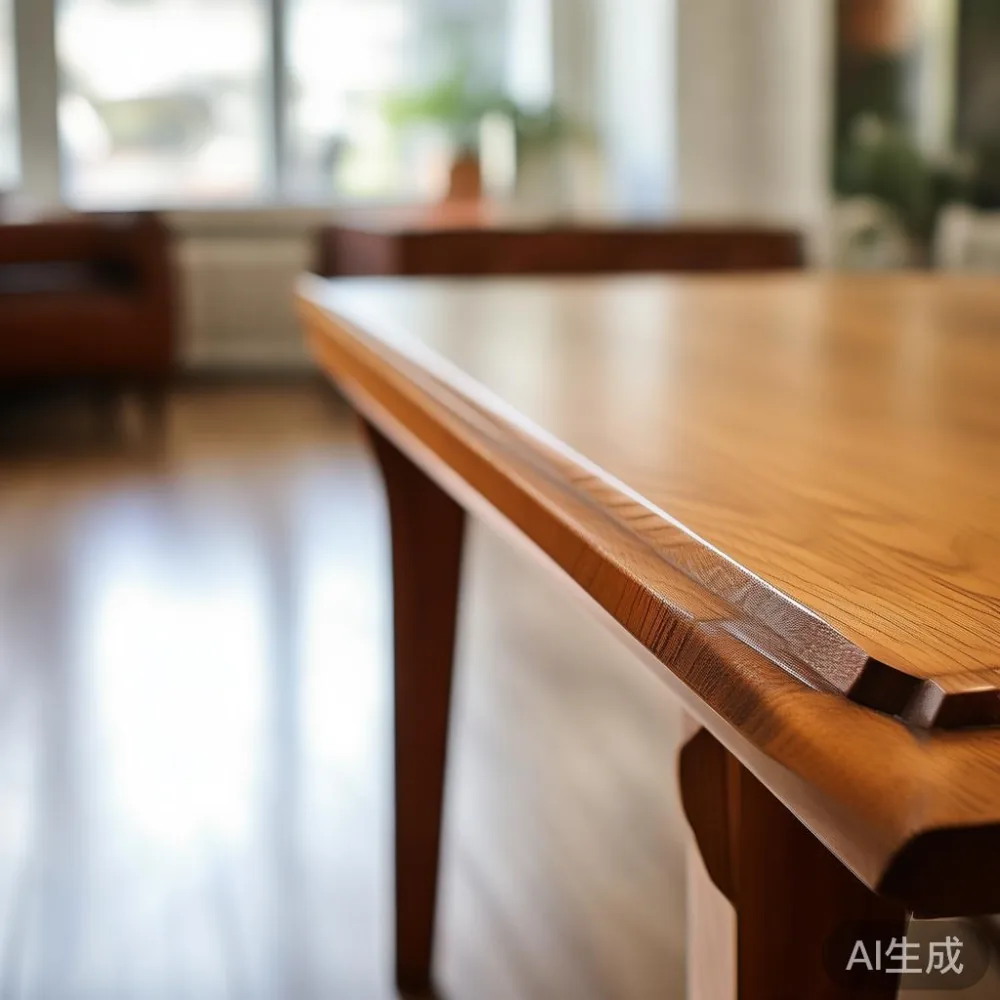
Water is more damaging than humidity alone. A dining table used with wet glasses or a bedside table beside a condensation-producing humidifier can develop stains that do not disappear with a dry cloth. Spills should be wiped within 5 minutes, and coasters or trivets should be used beneath hot vessels. The ideal surface temperature difference between a warm cup and a cool tabletop is less than 40°C, reducing the risk of localised finish damage.
For a long-term purchase, specify solid timber rather than untreated particleboard or thin plywood. A 20–25 mm tabletop, backing panels and mechanically fixed components are more stable than hollow constructions. Look for drawers that use wooden runners or quality slides, adjustable feet for uneven floors, and a finish applied on every face. These details help a mid century modern dining table or wardrobe cope with seasonal movement.
What relative humidity should I keep inside a Singapore home?
A relative humidity level of roughly 45% to 60% is a practical target for a stable wood-furnished room. It does not need to remain exactly within this band, but avoiding sharp daily changes matters more than chasing a single number. Use a calibrated hygrometer, available for about SGD 12–35, and position it near the furniture rather than next to a window or air-conditioning outlet.
Singapore’s climate makes ordinary ventilation part of the humidity-control routine. Opening windows and doors for 20–30 minutes after showering can disperse moisture, while a dehumidifier can bring a persistently damp HDB flat near the mid-50s. Domestic dehumidifiers typically remove 10–20 litres of water per day, with running costs commonly around SGD 25–60 monthly, depending on electricity tariffs and operating hours.
Air conditioning often lowers humidity effectively, but it can leave wood slightly dry. A hygrometer placed near the wardrobe in a Tampines condo bedroom should ideally remain within 10 percentage points of the reading in a hallway. This avoids repeated expansion and contraction over a 24-hour cycle.
Do not place a solid wood bed frame directly beneath a cold air vent. Keep the recommended clearance of about 60–90 cm where possible, reducing exposure to rapid moisture changes. Similarly, avoid moving a nightstand between a bathroom and an air-conditioned bedroom every day. A consistent location is better than an ideal one visited only occasionally.
These are guidelines, not a guarantee that every room can maintain 45%–60% humidity. The aim is stability. Wood adapted gradually to a local range of 50%–65% may age more evenly than timber forced through abrupt changes.
How does humidity affect a dining table, bed frame or wardrobe?
A dining table shows humidity through movement across and along the grain. Solid teak and mahogany are relatively stable, but oak, beech and other species can be more responsive. A 200 cm tabletop might expand by 3–6 mm along its longest dimension when humidity rises from 55% to 75%. The movement itself is natural; splitting occurs when the finish is cracked, the board is severely distorted or the table was built with conflicting moisture levels.
Leaning edges on mid century modern dining tables need particular attention. They are often visually slender, so even a 2 mm shift can alter a joint. Ask the maker about seasonal fitting and whether the tabletop uses solid boards, dowels, mortise-and-tenon joints or steel fixings. A table assembled for Singapore’s climate should not require a carpenter to adjust its top every three months.
A solid wood bed frame experiences movement at rails, headboards and slat supports. The mattress may cover much of the frame, but the headboard is often exposed near a ventilation opening. Slats should sit inside frames with enough tolerance to expand without forcing the rails outward. For queen-size beds, common external dimensions are about 150–160 cm wide and 200–210 cm long, so checking the actual frame clearance against an HDB bedroom wall is sensible.
Wardrobes are affected around doors, drawer fronts and long panels. Tall doors can weigh 15–30 kg each and may cup by 1–2 mm if one face is exposed to more moisture. Hinges should allow adjustment, and sliding doors may need periodic track cleaning. Hardware should be corrosion-resistant in coastal conditions, especially for homes in Bedok and Punggol where sea air can accelerate metal deterioration.
Nightstands are usually less demanding, yet their small footprint can conceal a problem. If a nightstand is pushed tightly into a wall, its back cannot dry after a humid night. Leave 3–5 cm of ventilation space where practical. Avoid positioning a decorative lamp or humidifier directly above it.
Which finishes work best for Southeast Asian humidity?
For solid wood in Southeast Asia, a durable factory finish is easier to maintain than a completely untreated surface. Hardwax oil emphasises grain and allows the timber to breathe, but it requires careful cleaning and periodic renewal. Water-based polyurethane or a hard-wax oil modified for tropical use offers stronger protection against stains and alcohol-based cleaning products. The finish still needs care; humidity does not make maintenance unnecessary.
Matte finishes suit the restrained character of mid century modern furniture, but they can show fingerprints and oily marks on warm, dark walnut. A satin finish often provides a practical compromise in active family homes. When comparing products, ask for the finish system, cleaning instructions, expected maintenance interval and repair process rather than relying on a label such as “moisture resistant”.
Marble requires different humidity management. A marble table may absorb little water, but its natural pores can stain if liquids remain on the surface. Sealers can slow penetration without making the stone completely impervious. Wipe acidic liquids such as wine, cola and citrus juice promptly, and use a pH-neutral cleaner. Keep marble away from direct heat and do not place it in a bathroom where humidity and soap residue accumulate.
Solid wood sofas need a similar environmental approach, although the frame and foam are usually more vulnerable to prolonged dampness than the timber. Keep upholstery at least 30 cm away from an open window during heavy rain and clean the frame with a dry cloth rather than saturating the joints. A product page that treats the frame, cover and finish as one care system is more useful than generic advice about wiping wood with a damp cloth.
How can I make a mid century modern piece fit a Singapore home?
Measure the building access before ordering. A condo lift may have a door width of 90–110 cm and a internal depth of 130–180 cm, while a common HDB lift may offer less space. A boxed solid wood sofa can exceed 220 cm in length, and a wardrobes carton may exceed 200 cm even when the assembled unit is smaller. Ask for the packaged dimensions, carton weight and turning radius before delivery.
The corridor is another constraint. Furniture should be tilted or turned only if the installer confirms there is sufficient clearance. Protective corner guards, floor blankets and a two-person lift reduce damage to walls and floors. Staircases at older HDB blocks may require a balanced carry, and narrow turns can add 10–20 minutes beyond the usual delivery time.
Singapore’s GST is 9%, so a furniture quotation should clearly state whether it is tax-inclusive. For example, a dining table listed at SGD 2,280 before GST becomes SGD 2,485.20 after GST. Some sellers include GST in their displayed prices, while others add it later, so comparing identical tax treatments avoids confusion.
Delivery timing also affects acclimatisation. Solid wood that arrives during a particularly wet week should still be handled properly, but the room may not be ideal for unpacking immediately. Keep pieces in their packaging for as long as practical, especially if they must stand in a corridor. Allow approximately 7–14 days for new furniture to acclimatise after opening, with longer adjustment needed for very thick tabletops or wide wardrobe panels.
Consider placement before choosing the largest possible design. A 220 cm dining table suits a spacious dining room but can overwhelm a compact HDB dining area. A 140–150 cm round table often gives better circulation and fewer corners for people to work through. In a Punggol condo with an open kitchen, a visually light mid century modern bed frame or a compact nightstand can preserve space without making the room feel crowded.
What should I ask before buying solid wood furniture online?
Ask specific questions about timber, construction and after-sales care. Useful details include the species, board thickness, finish type, expected movement, humidity range, warranty coverage and replacement-part process. “Solid wood” alone does not tell you whether every visible component is timber, nor how the panels are joined.
For a foldable guest arrangement, search specifications carefully for the exact phrase light luxury sofa bed foldable, because the mechanism must be tested in the product itself rather than inferred from a lifestyle image. Confirm the closed and open dimensions, foam density, hinge type, wall clearance and weight. A product that folds neatly but requires 90 cm of front space may not suit a compact living room.
Style references are useful, but construction details should lead the purchase. A MIDHILL French provincial sofa may appeal to someone seeking European light luxury, yet its curved profile must still work with the room’s dimensions and humidity exposure. Likewise, a European light luxury coffee table with marble and timber can look refined, but the stone thickness, support method and surface sealer determine its daily practicality.
The question “is Japandi wardrobe worth it” depends on more than visual appeal. The wardrobe should have stable joinery, adjustable hinges, ventilation for clothing and enough aisle clearance for both the door and occupant. A mid century modern wardrobe may use sliding panels, which helps in tight spaces, but the tracks need cleaning and the internal depth must suit standard hanging lengths.
Buyers comparing a European light luxury bed vs Modern bed should compare the frame, slat spacing, centre support and available clearances. A solid wood bed frame with a supportive slat system may be more suitable for humid conditions than an ornamental metal structure, provided both are corrosion-protected and properly anchored.
Service terms can be as important as materials. MIDHILL has operated as a Foshan solid wood furniture maker since 2008, exports to more than 15 countries and backs products with a 10-year structural warranty. Lifetime refinishing is particularly relevant to tropical furniture because surface scratches can often be treated without replacing the whole piece. Confirm what the refinishing service covers, how a claim is assessed and whether collection is included.
Free shipping over US$350 is stated in the brand’s service terms, although a Singapore buyer should request a local SGD quotation with GST, delivery days and access charges clearly identified. The 14-day returns policy is another useful point, but returned solid wood should be protected from moisture and impact during transit.
How do I maintain solid wood without making humidity damage worse?
Use a three-step cleaning routine: dust with a soft cloth, clean the finish with the product-approved solution and dry the surface immediately. Avoid soaking timber, spraying cleaner directly onto it or using abrasive pads. A cloth should be damp, not dripping, and excess water should never collect around joints or drawer runners.
Control the source of moisture rather than repeatedly wiping the symptom. Repair dripping air-conditioning drains, use bath mats, run a bathroom extractor for 15–20 minutes after bathing and keep laundry racks away from wardrobes. In a two-bedroom HDB flat, a small dehumidifier in the main internal wall area can help maintain a stable environment if readings remain above 65% for several days.
Inspect furniture every 3–6 months. Look for doors that catch, drawers that bind, white spotting near hinges and finish changes near vents. Oiled surfaces may need refreshing every 12–24 months depending on use. Coasters should measure at least 8–12 cm for a drinking vessel, and a felt pad beneath a lamp can prevent heat and abrasion. Heavy decorative objects should not be moved constantly between different humidity zones.
Protect against accidental water damage with suitable insurance and avoid placing solid wood furniture in a position that floods. Although Singapore’s annual rainfall totals can exceed 2,000 mm, the main threat inside a home is repeated condensation and slow drying rather than a short burst of rain. A few deliberate habits can preserve the timber for 10 years or more.
My colleague visited a client’s four-room Tampines HDB flat last month with a relative humidity meter. The reading beside an air-conditioned bedroom wardrobe was 42%, while the adjacent corridor measured 71%. The wardrobe doors had begun rubbing even though they had been installed only 18 months earlier. We moved the hygrometer away from the vent, adjusted the air-conditioning schedule and allowed the room to stabilise for two weeks. The doors no longer caught, showing how quickly a small positioning change can reduce stress on the wood.
Humidity management is part of responsible furniture ownership, not a reason to avoid solid wood in Singapore. Choose stable construction, a suitable finish and dimensions that suit the lift and corridor. Maintain readings around 45%–60% where possible, clean spills quickly and give each piece a stable home. A well-made mid century modern dining table, wardrobe or bed frame can age gracefully in the tropics when its material and environment are treated as one connected system.