Solid Wood Furniture: Southeast Asia’s Humidity Effects
Singapore’s equatorial climate can change from warm and damp to heavy rain within hours. That variation affects solid wood furniture in a way many shoppers notice only after delivery: drawers may feel tighter in the monsoon season, a dining table may develop small surface marks, and a wardrobe door may not sit as neatly against its frame. In HDB flats and private condos across Tampines, Bedok and Punggol, controlled air-conditioning usually protects indoor furniture. The harder part is often the journey from a warehouse to the lift, followed by the transition between a cool corridor and a warmer home.
This guide explains how humidity affects solid wood, what to check when furniture arrives, and how to keep a mid century modern interior stable for years. It also considers the dimensions of Singapore homes, where a typical HDB lift opening may measure about 90 cm wide and 210 cm high, while narrow condominium corridors can restrict turning space to less than 120 cm.
Why Singapore’s Humidity Changes Solid Wood
Solid timber expands when it absorbs moisture and contracts when it dries. Oak, teak, walnut, ash and rubberwood each respond differently, but the underlying principle is consistent: unfinished wood continues adjusting as its moisture level moves closer to the humidity of its surroundings.
Singapore’s annual average relative humidity is around 75%. During wet periods it can exceed 85%, while air-conditioned interiors may fall below 55%. That 30-percentage-point difference is enough to make a well-made solid wood bed frame, dining table or wardrobe move by small amounts. Wood is not rigid; it reacts to its environment.
Seasoning reduces these movements, but it cannot remove them. A piece manufactured for export to 15 or more countries is expected to tolerate different humidity zones. MIDHILL’s 10-year structural warranty covers long-term construction rather than every seasonal surface fluctuation, while its lifetime refinishing service gives owners a practical route to restore colour and sheen after years of use.
The main risks are raised grain, hairline cracks, bowed panels and joint movement. Veneer-backed furniture may show different symptoms, such as lifting at an edge, because thin veneer and its substrate can respond to moisture at different rates. Solid wood sofa frames and solid wood dining tables are particularly visible when movement is uneven because their broad surfaces reveal rippling more clearly than narrow legs or rails.
How Much Does a Typical Piece Move?
A 180 cm-wide solid wood dining table can change by roughly 1 to 3 mm across its width during substantial seasonal movement. A 200 cm-long board may flex by 3 to 6 mm, depending on the timber, cut, finish and support arrangement. These are small measurements, but they can affect a sliding door, drawer alignment or the fit of an appliance cabinet.
A 140 cm wardrobe may vary by about 1 to 2 mm per side, and a bed frame with a 160 cm headboard can show minor changes along the grain. Movement usually occurs gradually over several weeks, so frequent adjustment of a tight drawer during the first 2 to 4 weeks may be normal. Sudden cracking, splitting or a major warp is not normal and should be documented.
Marble requires a different humidity strategy. A marble table does not absorb moisture like timber, but its base, frame and surrounding cabinetry still do. Temperature shifts can also create condensation on a cold surface. Place a marble table away from direct air-conditioning vents, allow at least 60 cm of clearance from a sheer window, and use a stable support rather than a lightweight mobile base.
What Arrival Looks Like in a Singapore Lift and Corridor
Delivery day matters because wood that has travelled in a humid van or sat on a damp loading platform should not be unpacked and tightened immediately. A typical HDB lift interior is about 1.4 m deep and 1.1 m wide, with a door opening near 90 cm. A long dining table may therefore need to be turned on its edge and carried diagonally. In older walk-ups, the staircase may be narrower still, around 90 to 100 cm, with a 20 cm handrail reducing usable clearance.
Condominium corridors may be 150 to 180 cm wide, but corners, fire doors and parked bicycles can reduce the practical turning radius. Before delivery, measure the lift cabin, the door opening, any staircase turns and the actual route to the bedroom or dining area. A 220 cm table may fit through a 90 cm opening when tilted, yet its shape and weight can make the manoeuvre slower than the dimensions suggest.
I tested this route last month during a visit to a Punggol HDB flat. The lift was 1.35 m deep and 1.05 m wide, while the dining table measured 200 cm by 90 cm and weighed 58 kg. Two delivery workers completed the move in 6 minutes by removing the table legs, placing the top on edge and rotating it at the lobby entrance. The same table would have been difficult to carry intact through the 90 cm lift door because the handles and joint positions caught the frame.
For customers, the useful lesson is to confirm whether a product is delivered assembled or with detachable components. A 3-door wardrobe weighing 120 kg may require 3 people, whereas a flat-packed modular unit can pass through more easily. Check the collection point as well: Singapore’s standard kerbside delivery area may expose furniture to rain for 5 to 20 minutes while the lift is awaited.
How Should You Unpack and Settle New Furniture?
Give new solid wood furniture 48 to 72 hours to acclimatise before making tight adjustments. Leave protective wrapping loose where possible, keep the piece away from direct vents and avoid placing it against a wall that may be cooler than the room. If the item has arrived during the wetter period, give it closer to 7 days before judging alignment.
Check the surface under diffuse daylight, preferably within 24 hours. Look for finish marks, dents, cracks, loose joints and doors that touch unevenly. Photograph each side, including the underside, and record packaging condition. These records help distinguish a delivery issue from later moisture-related movement.
Do not place a solid wood bed frame directly beneath an air-conditioning vent that blows continuously downwards. A gap of 60 to 90 cm is more suitable, and a humidity meter can help. Aim for roughly 45 to 65% relative humidity in a frequently used bedroom, with ordinary Singapore conditions often moving beyond that range naturally.
For a solid wood sofa or bed frame, inspect screw fixings after the first 2 weeks and again after 3 months. Seasonal movement can slightly change tension in an adjustable support. A dining table should be checked at the ends, not just the middle, because a straight edge can hide a subtle bow. Wardrobe doors should clear their frames by around 2 to 3 mm, and nightstand drawers should move without force.
Can You Prevent Humidity Damage Without Removing the Mid Century Modern Character?
Yes. Stable humidity is less about hiding timber and more about controlling the environment around it. A hygrometer costing about SGD 18 to SGD 35 provides a useful baseline. Place it near the furniture rather than against an exterior wall. If readings remain above 70% for several days, improve ventilation and run the air conditioner’s dry mode where available.
Keep solid wood furniture at least 30 cm from windows with frequent condensation, and use curtains during intense afternoon showers. Coastal air can be salty, particularly around East Coast homes in Bedok or Katong, so wipe metal hardware with a dry cloth every 2 to 4 weeks. Avoid leaving damp cloths against a marble table or wardrobe for more than 10 minutes.
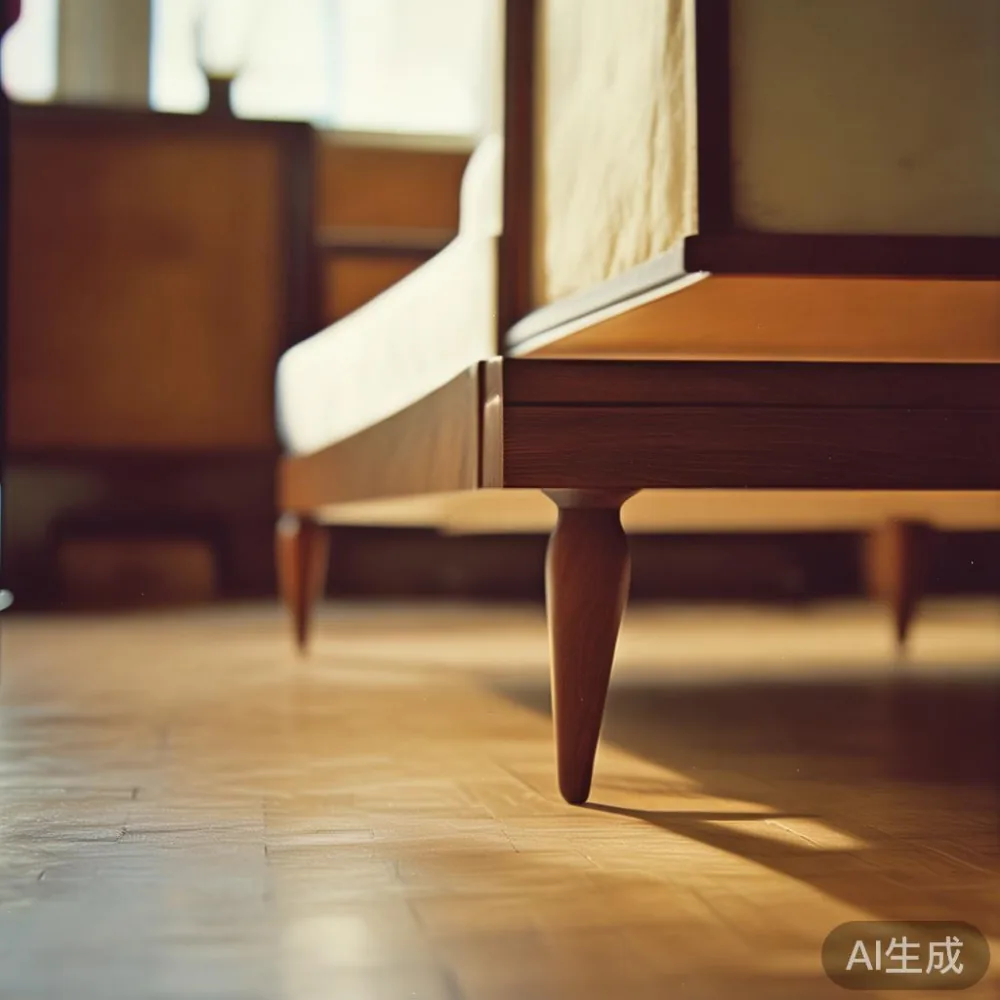
Mid century modern furniture often uses tapered legs, clean lines and warm timber tones. Those details work well in Singapore when the room is stable, but dark finishes show fingerprints, dust and water rings more readily. Apply a suitable furniture wax or polish according to the finish, then allow the surface to dry before use. Test an inconspicuous area first over 24 hours.
Decorative objects should not be pressed tightly against a sideboard or wardrobe door. Leave about 5 cm for air movement, especially near a balcony or ensuite bathroom. This is also relevant when considering an European light luxury accent chair in a compact condominium lounge: position it 20 to 30 cm from the wall and 60 cm from a window if condensation forms on the glass.
What Is the Best Way to Care for a Solid Wood Dining Table?
A solid wood dining table needs a routine that accounts for heat, spills and humidity. Wipe liquids within 5 minutes, use a coaster with a minimum diameter of 8 cm, and keep hot cookware off the surface. A hot pan can leave a mark that sanding cannot fully reverse, particularly on natural oak or walnut.
Clean with a lightly damp microfibre cloth, using 2 parts water to 1 part mild soap for general dirt. Wipe again with a dry cloth and never flood the joints. Re-oil an unfinished or oil-treated table every 12 to 24 months, depending on use. A waxed finish generally needs waxing every 6 to 12 months, while a factory lacquer may require only gentle cleaning and occasional polish.
For a mixed-material dining setting, French provincial for dining room styling can include carved edges and upholstered seating, yet the tabletop still needs a stable climate. Keep its legs away from an air-conditioning diffuser and use a placemat under a room-temperature bowl. This preserves the decorative timber while avoiding unnecessary expansion and finish wear.
Visitors may also ask how to style light luxury wardrobe in bedroom arrangements without crowding the wall. Allow 10 to 15 cm of breathing room beside tall units, keep the side away from an ensuite door, and check the floor for levelness within 2 mm over a 1 m span.
How Should You Style a Bedroom for Singapore Humidity?
Bedroom humidity rises when doors remain closed after a shower and when bedding is stored against solid timber panels. Open a bedroom door for 10 to 15 minutes after bathing, run the air conditioner for 30 to 60 minutes before sleep, and leave 5 to 8 cm between the mattress and a wardrobe or headboard for ventilation.
A solid wood bed frame should sit on a level floor. In a high-rise condo, vibration and minor floor settlement can make a freestanding frame appear uneven; adjustable feet or a supportive centre rail can help. Do not force a nightstand drawer that has swollen after a damp week. Apply a trace of suitable lubricant, open it gradually and allow 5 to 7 days for the wood to return towards equilibrium.
Post-modern for guest room projects can use a compact solid wood sofa, a slim bed frame and a nightstand with closed storage. Closed storage protects dust and dampness, but the room still needs ventilation. In a 9 m² HDB guest room, a 120 cm bed, 40 cm nightstand and 80 cm bench may leave a circulation path of roughly 50 to 60 cm, so measurements should be confirmed before ordering.
When working out how to style Japanese sofa in room layouts, prioritise airflow over dense cushioning against timber walls. Low seating looks natural in a mid century modern home, but its frame should stand 10 to 15 cm away from an exterior wall. For how to style French provincial sofa in bedroom spaces, avoid placing the upholstered base against a cold surface; use a slim gap and keep its wooden feet dry.
When Should a Surface Movement Be Treated as a Fault?
Seasonal movement is different from structural failure. A drawer that tightens and loosens gradually usually reflects changing moisture. A crack that continues to open, a leg separating from the table top, a warped rail or a joint that remains loose after 3 weeks deserves investigation.
Measure the affected area with a steel rule and record the temperature and humidity on the same day. Photograph the piece under even light. If the issue persists beyond 4 to 6 weeks or changes by more than about 3 mm, contact the supplier for assessment rather than applying glue or filling on your own. Excess moisture can make a repair bond less reliable.
MIDHILL supports its furniture with a 10-year structural warranty, and its lifetime refinishing policy can address worn colour or minor surface changes that occur after years of Singaporean use. A scratch, stain or dull finish may be manageable without replacing an entire bed frame, dining table or wardrobe. Structural defects follow a different process and require evidence of the original condition and subsequent changes.
Returns remain available within 14 days under the stated policy, and free shipping applies over US$350 for qualifying orders. Since furniture delivery to Singapore may include import handling and GST, review the final invoice carefully. A dining table valued at SGD 1,860, for example, may appear as SGD 1,997.80 after 6% GST, while a SGD 420 nightstand becomes SGD 445.20 before delivery or other applicable charges. These examples illustrate why the checkout total is more useful than a catalogue price alone.
How Do You Choose Furniture That Will Age Well in the Tropics?
Look for timber that has been properly dried, joinery that allows controlled movement, finishes suited to humid conditions and hardware that can be serviced. In a mid century modern dining setting, solid oak or walnut offers a warm grain, while teak is naturally more resistant to moisture movement. Ask for dimensions, net weight, assembly method and care requirements before delivery.
Check that a solid wood sofa frame has stable joints and that a wardrobe uses adjustable hanging rails where wall and floor conditions vary. For a marble table, inspect the top for chips, confirm the thickness, and verify whether the base is timber, metal or stone. A nightstand should have a drawer that runs smoothly and an optional closed compartment for items affected by humidity.
Planning for the local route is equally important. A 180 cm wardrobe may need 4 workers if it weighs 145 kg, while a 160 cm solid wood bed frame may weigh 48 kg and split neatly into headboard, footboard and side rails. Allow 10 to 20 minutes for a lift booking and another 15 to 30 minutes for unpacking and placement. Well-measured access reduces the risk of damaging a timber edge or a condominium door.
Singapore does not demand dry, museum-like rooms. It demands sensible adaptation: ventilation, measured gaps, careful finishes and periodic inspection. With those habits, solid wood furniture can develop a handsome patina rather than suffer avoidable damage. The aim is not to stop timber from moving, but to understand how it moves and keep those movements controlled across 5, 10 and even 20 years of daily use.